
Disclosure: This article is published by Datamagnet. Vendor claims about third-party products are self-reported by those vendors unless otherwise noted.
Waterfall Enrichment: How to Chain 3+ Vendors Without Blowing Your Budget
Chaining three or more data providers into a waterfall lifts your match rate - a five-provider stack hit 88% versus 78-84% for any single vendor tested alone in one 2026 test (Cleanlist, 2026). But every added tier is also another API call, another credit line, and another way to quietly double your enrichment bill.
Most teams get the sequencing right and the budget wrong. They chain vendors by "most complete profile first" instead of "cheapest confident answer first," and pay full price for records a $0.01 lookup would have resolved just as well. This guide covers how to order a stack, cap spend per record, and know when a fourth vendor is diminishing returns instead of real coverage.
Key Takeaways
Order a waterfall by cost-per-attempt, not completeness - route the cheapest confident source first and only pay for deeper lookups when it misses.
- A 5-provider waterfall resolved 88% of test contacts versus 78-84% for any single vendor, but coverage gains flatten fast after the third or fourth source (Cleanlist, 2026).
- Enrichment cost climbs with data depth: email-only lookups run roughly $0.10-$0.25, full contact data $0.70-$1.70, and full contact-plus-company data up to $3.75 per record (Cleanlist, 2026).
- Typical enrichment failure rates run 20-30% - build fallback logic that only charges for confirmed matches, not every attempt in the stack.
- Enterprise flat-fee data contracts range $15,000-$100,000+/year (Salesmotion, 2026), which is exactly the lock-in a pay-per-match waterfall is meant to avoid.
- 35% of IT and software-asset-management professionals say SaaS waste increased over the past year (Flexera, 2025) - an uncapped waterfall is an easy way to add to that number.
Why Do Waterfall Enrichment Budgets Blow Up Before Anyone Notices?
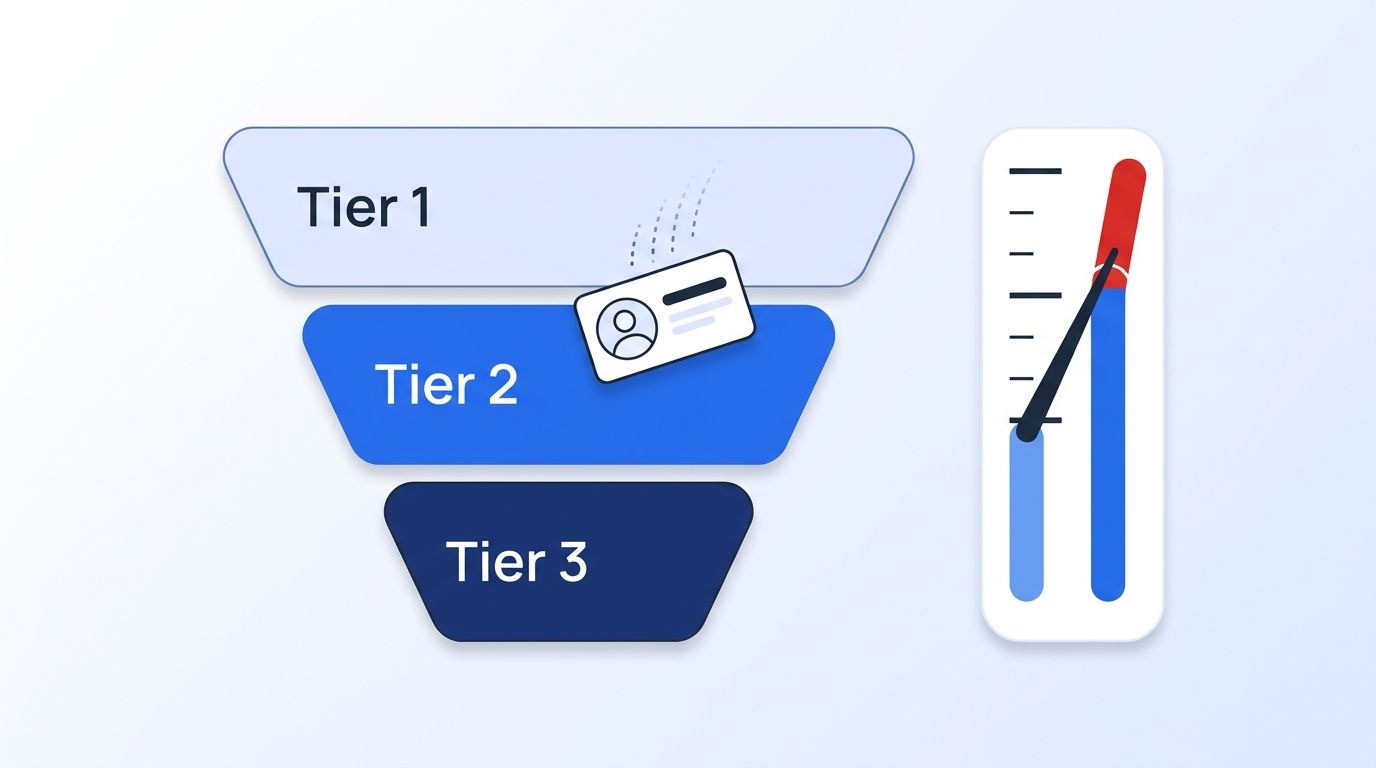
Waterfall budgets blow up because teams stack vendors for coverage and never model what a full pass costs at volume. In 2026, enterprise B2B data contracts alone can run $15,000 to $100,000-plus per year before a single waterfall credit gets spent (Salesmotion, How Much Does B2B Contact Data Cost?, 2026), and every added tier compounds that base cost per record.
That base-contract spend is only the floor. A three-vendor waterfall built on top of a ZoomInfo Platinum contract ($15,000/year plus per-seat fees) and a Cognism Grow plan ($15,000 platform fee plus $1,500 per user) starts accumulating fixed costs before you've enriched a single record (Salesmotion, 2026). Layer pay-per-attempt credits from a third, usage-based source on top, and nobody on the team can tell you the true cost of a resolved record without pulling three separate invoices.
Citation capsule: Enterprise B2B data contracts alone can cost $15,000 to $100,000-plus per year, before a single waterfall API credit is spent (Salesmotion, How Much Does B2B Contact Data Cost?, 2026). Stacking flat-fee vendor contracts with usage-based credits, without a shared cost model, is the single biggest reason waterfall budgets blow up unnoticed.
<!-- [UNIQUE INSIGHT] -->Here's the part vendor comparison charts skip: the martech landscape counted more than 15,500 tools as of the 2026 census, up from about 14,100 in 2024 (chiefmartec.com / MartechTribe, State of Martech 2026, 2026). Every one of those tools wants a seat in your waterfall pitch, and "more sources" sounds like a strict upgrade until you're the one reconciling five invoices for a match rate that only moved by a few points.
So where does the money actually leak? Mostly in the gap between a flat-fee database contract and a pay-as-you-go model - see how a request-time pricing structure compares to seat-and-database lock-in before you add a third or fourth vendor to the stack.
How Do You Order Vendors in a Waterfall to Control Cost?
Order a waterfall from cheapest-confident-source to most-expensive-fallback, not from most-complete-profile to least. In 2026, Apollo's email lookups run close to $0.01 per record on its Professional plan, while a full ZoomInfo contact averages roughly $0.42 when modeled against a typical annual contract (Salesmotion, 2026) - a 40x price gap for what's often the same field.
Putting the cheapest, highest-confidence source first means you only pay the expensive vendor's price for records the cheap one actually missed. That's the entire economic logic of waterfalling, and it only works if step one is genuinely cheap and genuinely first - not buried behind two pricier lookups because a legacy contract obligates you to route through it first.
Coverage matters as much as price when you're deciding what goes first, though. A five-provider waterfall configuration hit a 91.4% match rate in one 2026 test, versus 78.1-83.7% for any single vendor tested alone (Cleanlist, 10 B2B Data Providers Tested on 500 Contacts, 2026) - though it's worth flagging that Cleanlist sells enrichment tooling and ranked its own product first in that same test, so treat the exact ranking as directional rather than independently audited.
Citation capsule: A five-provider waterfall configuration resolved 91.4% of test contacts versus 78.1-83.7% for any single vendor tested alone (Cleanlist, 10 B2B Data Providers Tested on 500 Contacts, 2026). Ordering the cheapest, highest-confidence source first - not the most complete profile first - is what makes a waterfall's economics work.
For the ROI math behind filtering before you enrich at all, see how programmatic CRM enrichment cuts wasted spend - the same "cheapest signal first" logic applies before a record ever enters the waterfall.
How Do You Stop Paying for Every Miss?
Stop paying for every miss by choosing a waterfall platform that only charges credits on a confirmed match, not on every attempt across the stack. Clay removed charges for failed and no-result lookups starting in March 2026 (Cleanlist, Clay Pricing: True Cost Per Contact, 2026), after years of customers paying for tiers that came back empty.
That change matters more than it sounds. Typical enrichment failure rates run 20-30% depending on record type and geography (Cleanlist, 2026), so a pay-per-attempt model can quietly bill you for a quarter of your volume without returning a single usable field. Before signing with any waterfall tool, ask directly: do you charge for misses, or only for matches?
<!-- [PERSONAL EXPERIENCE] -->Watching teams audit credit usage after switching to a pay-per-match model is instructive. The same monthly volume that used to burn through a full credit allotment by the third week now stretches to month-end, because nobody's paying twice for a record two vendors both failed to resolve.
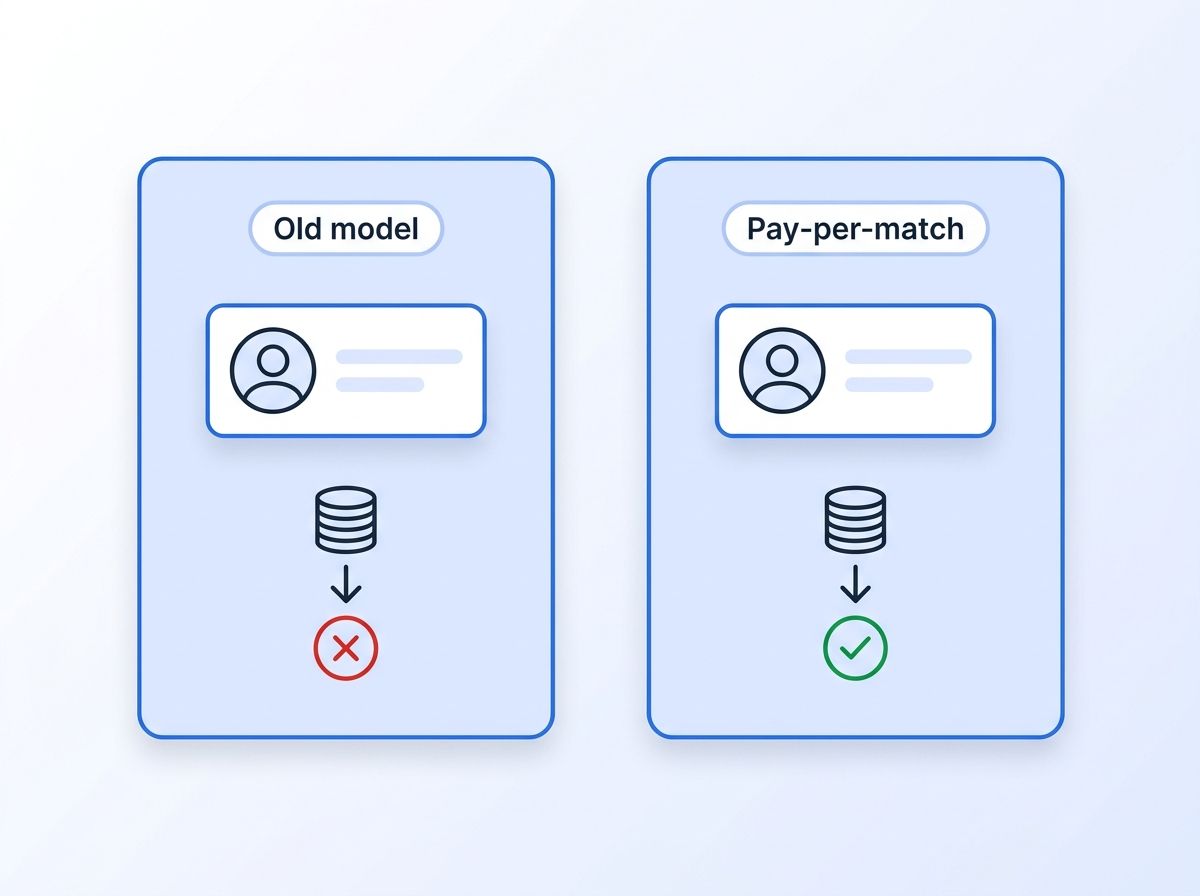
Citation capsule: Typical B2B enrichment lookups fail 20-30% of the time depending on record type and geography (Cleanlist, Clay Pricing: True Cost Per Contact, 2026). A waterfall platform that only charges for confirmed matches, not every attempt, can cut wasted spend by roughly that same margin.
Track how fast a pay-per-match model changes your burn rate with a credit balance check before and after you switch billing models.
How Many Vendors Should You Chain Before Returns Diminish?
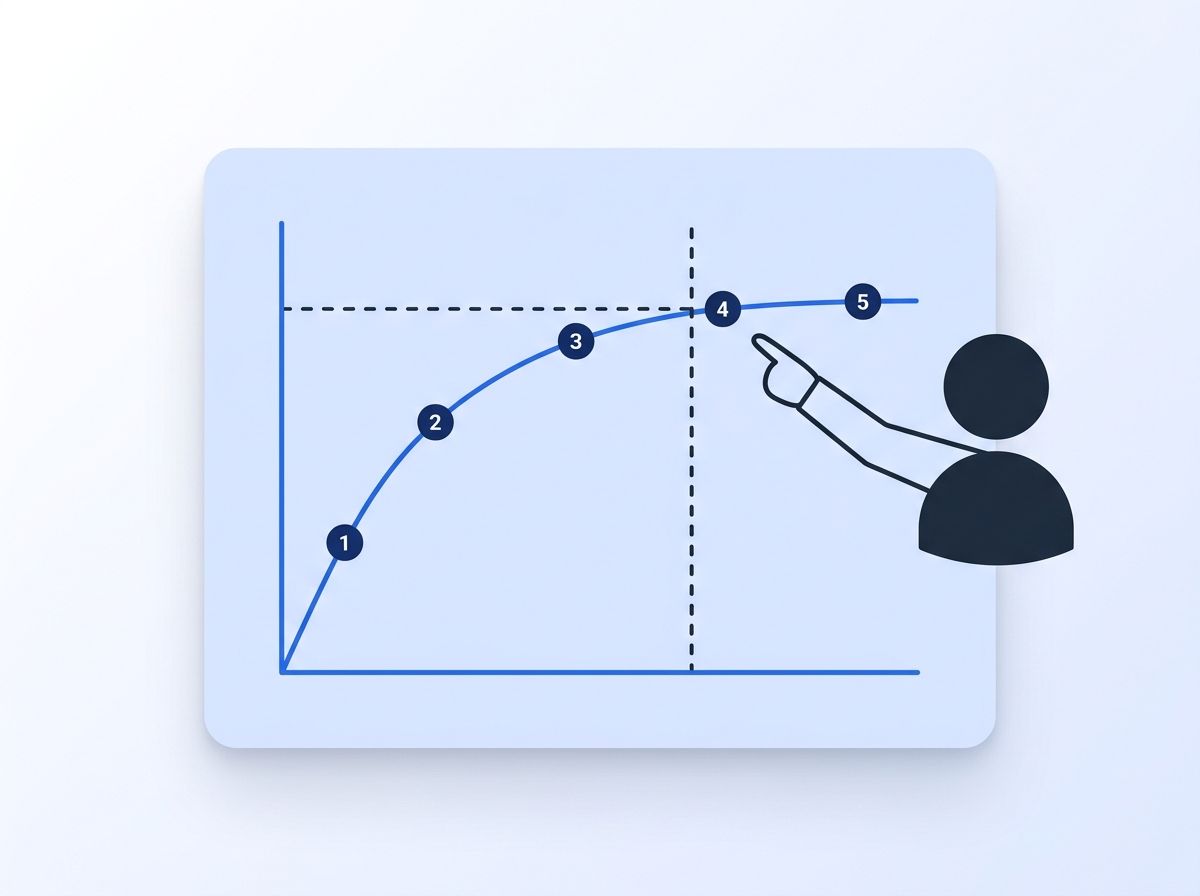
Most teams see diminishing returns after the third or fourth vendor, because each added tier resolves progressively fewer records at progressively higher cost. Enrichment cost climbs with data depth: an email-only lookup runs about $0.10-$0.25 per record, a full contact record (email, phone, title) runs $0.70-$1.70, and a full contact-plus-company profile runs up to $3.75 (Cleanlist, Clay Pricing: True Cost Per Contact, 2026).
The jump from email-only to full contact data is roughly 7x the cost. The jump from full contact to full contact-plus-company adds another 2x on top of that. Each tier you add to chase a marginal field - a mobile number, a firmographic detail - should be weighed against what that field is actually worth downstream, not just whether a vendor can supply it.
Is a fifth vendor ever worth it? Rarely, unless your record set skews heavily toward a segment - say, EMEA mid-market - where the first four sources in your stack all have known coverage gaps. Outside that kind of targeted exception, a fourth or fifth tier tends to buy single-digit percentage-point coverage gains at full marginal price.
Citation capsule: Enrichment cost scales with data depth, not just vendor count - email-only lookups cost roughly $0.10-$0.25 per record, full contact data $0.70-$1.70, and full contact-plus-company data up to $3.75 (Cleanlist, Clay Pricing: True Cost Per Contact, 2026). Chaining a fourth or fifth vendor for marginal fields usually buys single-digit coverage gains at full price.
How Do You Cap Spend Per Record So One Bad Batch Doesn't Wreck the Budget?
Cap spend per record by setting a hard maximum credit or dollar threshold per lookup before the waterfall runs, and let the pipeline stop routing to the next tier once that ceiling is hit. In 2025, 35% of IT and software-asset-management professionals reported rising SaaS waste over the prior year (Flexera, 2025 State of ITAM Report, 2025), and an uncapped waterfall is a textbook way to add to that number.
A per-record cap does two things a monthly budget alert can't. First, it stops a single bad upload - a list with an unusually high share of stale or mistyped records - from burning through a month's credit allotment in an afternoon. Second, it forces an explicit decision about what a record is worth: if the fourth tier in your stack would push a lookup past $3, is that record still worth resolving, or should it fall through to manual review instead?
| Enrichment Depth | Typical Cost/Record | When to Cap the Waterfall |
|---|---|---|
| Email only | $0.10-$0.25 | Rarely - it's already cheap enough to run on everything |
| Full contact (email + phone + title) | $0.70-$1.70 | Cap here for low-priority or unqualified list segments |
| Full contact + company data | $2.05-$3.75 | Reserve for your highest-intent segment only |
Citation capsule: In 2025, 35% of IT and software-asset-management professionals said SaaS waste increased over the prior year (Flexera, 2025 State of ITAM Report, 2025). A hard per-record spend cap - not just a monthly budget alert - stops one bad upload from burning through a full credit allotment in a single afternoon.
Where Does a Real-Time Source Fit in the Waterfall?
A real-time source belongs at the end of the waterfall, as the fallback stage that fires when every static provider misses or returns a stale answer. B2B contact and firmographic data decays at roughly 22.5% per year on average, and phone numbers decay even faster, at 25-35% per year, according to Dun & Bradstreet's benchmark (Cleanlist, citing D&B B2B Data Benchmark, 2026).
Every vendor in a waterfall stack, no matter how you order them by price, is still returning a snapshot from whenever that provider last captured the record. Stacking five snapshots gets you five chances at an answer that might already be wrong. A live source checked at request time doesn't have that problem, because there's no snapshot to go stale in the first place.
Datamagnet's People Profile endpoint fetches a LinkedIn profile's current role, headline, and company at request time, and the Company Profile endpoint does the same for headcount and industry - both checked live instead of served from a cached table. Slotting a live source as the last tier in your waterfall, rather than a sixth static vendor, closes the freshness gap the rest of the stack can't.
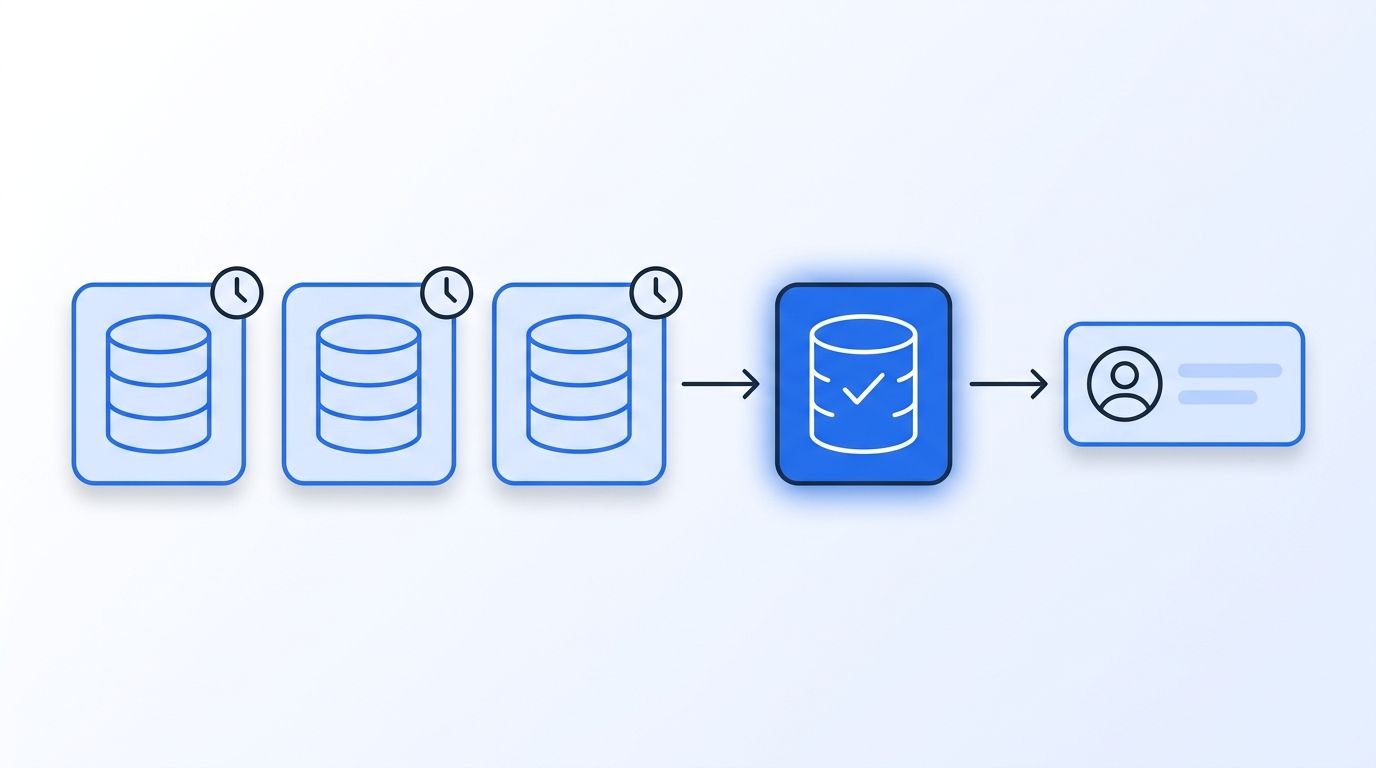
Citation capsule: B2B contact and firmographic data decays at roughly 22.5% per year on average, with phone numbers decaying even faster at 25-35% per year (Dun & Bradstreet B2B Data Benchmark, via Cleanlist, 2026). A live source checked at request time, slotted as the waterfall's final tier, closes a gap that stacking more static snapshots cannot.
Doesn't a sixth static vendor get you closer to the same result? Not really - it gets you a sixth snapshot, not a current one. Freshness and coverage are different problems, and only one of them gets solved by adding more static sources.
For a deeper look at how request-time lookups compare to a stored database, see how real-time B2B people enrichment closes the freshness gap. Between waterfall runs, a job-change signal delivered by webhook catches staleness the moment it happens, instead of waiting for the next scheduled pass.
What Does a 3-Vendor Waterfall Actually Look Like in Budget Terms?
A practical 3-vendor waterfall for a 10,000-record monthly list might route a cheap email-only source first ($0.01-$0.05/record), a mid-tier direct-dial provider second on the records that missed ($0.37/record, per published Lusha pricing), and a live source last for whatever still fails - keeping blended cost well under a flat enterprise contract's per-seat pricing (Salesmotion, 2026).
Run the math on that 10,000-record list. If tier one resolves 78% at roughly $0.02 average, that's 7,800 records for about $200. The remaining 2,200 records move to tier two at roughly $0.37 each - another $814, assuming most resolve there. Whatever's left after two tiers, typically a few hundred records, goes to a live source as the final check.
<!-- [UNIQUE INSIGHT] -->Most vendor pricing pages show cost-per-record for their own tier in isolation. Almost none show blended cost across a full waterfall, which is exactly the number a budget owner actually needs before signing anything. Building that model yourself - even a rough one, using published per-tier pricing - beats trusting a single vendor's headline rate.
| Tier | Source Type | Records Reaching Tier | Approx. Cost/Record | Tier Cost |
|---|---|---|---|---|
| 1 | Email-only, cheapest source | 10,000 | ~$0.02 | ~$200 |
| 2 | Mid-tier direct-dial source | ~2,200 (tier 1 misses) | ~$0.37 | ~$814 |
| 3 | Live source, final fallback | ~300 (tier 1+2 misses) | ~$1-2 | ~$300-$600 |
This is a simplified model built from published per-tier pricing, not an audited case study - your own match rates by vendor and record type will vary, so run the same math against your actual list before committing to a stack. Even with that caveat, the blended total (roughly $1,314-$1,614, or $0.13-$0.16 per record) sits well below what most flat-fee enterprise contracts charge for the same 10,000 lookups.
Citation capsule: A three-vendor waterfall modeled on published tier pricing can resolve a 10,000-record list for roughly $0.13-$0.16 per record blended, once tier one handles the bulk of matches cheaply and only the hardest records reach a pricier final tier. That blended rate beats most flat-fee enterprise contracts by a wide margin on a per-record basis.
For a similar cost-conscious approach applied to individual AE workflows rather than bulk lists, see how account research infrastructure supports AEs.
Frequently Asked Questions
What is waterfall enrichment?
Waterfall enrichment is the practice of routing a single data lookup across multiple vendors in ranked order, stopping at the first confident match. A 5-provider waterfall hit an 88% match rate in one 2026 test, versus 78-84% for any single vendor tested alone (Cleanlist, 2026), because each vendor's coverage gaps differ.
How many vendors should be in an enrichment waterfall?
Most teams see the best cost-to-coverage ratio with three to four vendors. Coverage gains flatten sharply after that point, while cost per added tier keeps climbing - a full contact-plus-company lookup can run up to $3.75 per record (Cleanlist, 2026), so extra tiers need a clear reason, not just availability.
How much does waterfall enrichment cost per record?
Cost depends heavily on data depth. Email-only lookups run $0.10-$0.25 per record, full contact data $0.70-$1.70, and full contact-plus-company data up to $3.75 (Cleanlist, 2026). A well-ordered 3-vendor waterfall on a mixed list often blends to $0.13-$0.16 per record.
Does waterfall enrichment fix stale B2B data?
Only partly. It improves match rates by trying more sources, but each static source in the waterfall can still return a stale snapshot. B2B contact data decays roughly 22.5% per year on average (Cleanlist, citing D&B, 2026), so pairing the waterfall with a real-time fallback source closes a gap stacking alone can't.
How do you avoid paying for failed lookups in a waterfall?
Choose a platform billed on confirmed matches, not attempts. Typical enrichment failure rates run 20-30% (Cleanlist, 2026), so pay-per-attempt billing can charge for a quarter of your volume with nothing returned. Also set a hard credit balance cap per batch to catch runaway spend early.
Sources
- Cleanlist, 10 B2B Data Providers Tested on 500 Contacts [2026], retrieved 2026-07-21, https://www.cleanlist.ai/blog/2026-03-27-b2b-data-providers
- Cleanlist, Clay Pricing [2026]: True Cost Per Contact (Real Math), retrieved 2026-07-21, https://www.cleanlist.ai/blog/2026-03-12-clay-pricing-changes-2026
- Salesmotion, How Much Does B2B Contact Data Cost? 2026 Pricing Guide, retrieved 2026-07-21, https://salesmotion.io/blog/b2b-contact-data-cost
- Cleanlist (citing Dun & Bradstreet B2B Data Benchmark), B2B Data Decay: Why Your Contact List Loses 22% Accuracy Every Year, retrieved 2026-07-21, https://www.cleanlist.ai/blog/2026-01-22-b2b-data-decay-statistics
- Flexera, 2025 State of ITAM Report, retrieved 2026-07-21, https://www.flexera.com/about-us/press-center/it-teams-losing-visibility-according-to-flexera-2025-state-of-itam-report
- chiefmartec.com / MartechTribe, The Number of Martech Tools Is Now 15,384, retrieved 2026-07-21, https://martech.org/the-number-of-martech-tools-is-now-15384/
- Datamagnet, People Profile endpoint, retrieved 2026-07-21, https://docs.datamagnet.co/api-reference/endpoints/people
- Datamagnet, Company Profile endpoint, retrieved 2026-07-21, https://docs.datamagnet.co/api-reference/endpoints/company
- Datamagnet, Credit Balance endpoint, retrieved 2026-07-21, https://docs.datamagnet.co/api-reference/endpoints/credits
- Datamagnet, Webhooks, retrieved 2026-07-21, https://docs.datamagnet.co/api-reference/webhooks
