
Disclosure: Datamagnet publishes this article. Product capabilities described below are based on public documentation, retrieved 2026-07-20.
7 Reasons Trigger Prospecting Tools Miss Buyers
A signal fires. Your tool logs it. By the time a rep opens the alert, the moment it was tracking has usually already passed. In 2026, sales teams run more trigger-based prospecting tools than ever, yet reps still miss buyers who were sitting right there in the data. The concept rarely fails - the execution layer underneath it does: stale records, slow delivery, tool sprawl, and signals stripped of context. Here are the 7 systemic gaps that cause trigger prospecting tools to miss buyers.
TL;DR
- B2B contact data decays 2.1% a month - 22.5% a year - so a trigger list built in January is already meaningfully wrong by summer (HubSpot, Database Decay Simulation, 2026).
- Reaching a lead within 5 minutes makes a rep 100x more likely to make contact and 21x more likely to qualify them, versus waiting 30 minutes (Harvard Business Review, Lead Response Management Study).
- 76% of organizations say less than half of their CRM data is accurate and complete, which means most triggers fire against an already-broken record (Validity, State of CRM Data Management, 2025).
- Sellers use 8 tools on average to close a deal, and 42% feel overwhelmed by tool sprawl - those reps are 45% less likely to hit quota (Salesforce, State of Sales).
- Gartner predicts AI agents will outnumber human sellers 10-to-1 by 2028, yet fewer than 40% of sellers expect it to improve their productivity (Gartner, November 2025).

Why Do Trigger Signals Go Stale Before Reps Ever See Them?
Trigger signals go stale because the databases underneath them decay faster than most refresh cycles run. As of 2026, HubSpot's Database Decay Simulation - built on MarketingSherpa's original research - puts B2B contact data decay at 2.1% a month, an annualized rate of 22.5%. A trigger tool pulling from a database refreshed quarterly is already working with meaningfully wrong information by the time a rep opens the alert.
Most trigger tools are built and marketed around detection speed - how fast they catch a job change or a funding event. Almost none are built around the decay clock that starts the moment that record is captured. A tool can detect a signal instantly and still deliver it against a stale company field, a wrong title, or a contact who's already left. Detection speed and data freshness are two different problems, and most vendors only solve the first one.
A trigger list refreshed quarterly has already absorbed roughly three months of unaddressed decay by the time reps act on it - nearly 6 percentage points of records already wrong, based on HubSpot's compounding 2.1%-a-month rate. Closing this gap requires checking a record's current state at the moment a signal fires, not trusting whatever snapshot the tool indexed last. Datamagnet's signal monitors query LinkedIn directly when a tracked event triggers, so the profile data attached to the alert reflects what's true right now, not what was true when the monitor was set up.
Why Are Job Changes Moving Faster Than Your Trigger List?
Job changes are moving faster than most trigger lists can track because both executive turnover and career mobility are accelerating at once. In 2025, Challenger, Gray & Christmas tracked 446 CEO exits at U.S. publicly traded companies - the highest annual total on record since tracking began in 2002 (Challenger, Gray & Christmas, 2025 CEO Turnover Report). A trigger tool built to catch a handful of executive moves a year isn't built for a record-breaking churn environment.
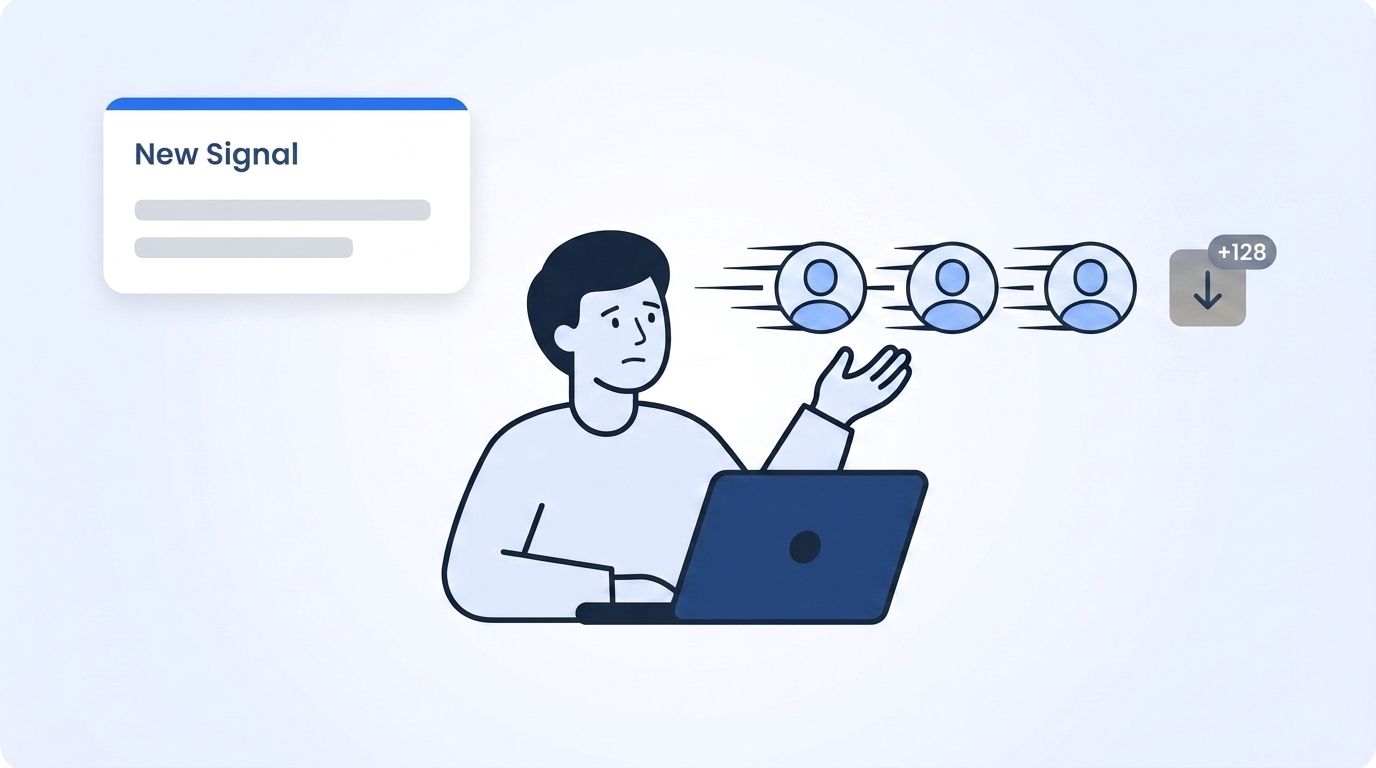
It isn't just the C-suite. Professionals entering the workforce today are on pace to hold twice as many jobs over their careers compared to 15 years ago (LinkedIn Economic Graph, Work Change Report, January 2025). Every one of those moves is a champion who might buy again at a new company, or a decision-maker whose old contact record just went dead - and a trigger tool that only checks weekly will miss a growing share of them before a competitor reaches out first.
Turnover moving this fast means a champion-tracking list needs continuous monitoring, not a periodic re-import. Datamagnet's Champion Tracker cookbook walks through setting up a job-change signal across an entire customer or champion list, so the alert fires the moment a tracked person's employer field changes rather than at the next scheduled review.
How Fast Does a Speed-to-Lead Window Really Close?
A speed-to-lead window closes in minutes, not days. Reaching a lead within 5 minutes instead of 30 makes a rep 100x more likely to make contact and 21x more likely to qualify them (Harvard Business Review, Lead Response Management Study). Most trigger tools were never built to hit that window - they batch alerts, sync to a CRM on a delay, or wait for a rep to check a dashboard.
Citation capsule: A rep who responds to a trigger within 5 minutes is 100 times more likely to reach the buyer and 21 times more likely to qualify them, compared with a 30-minute response - a gap wide enough that any tool adding batch delay or manual review between detection and delivery is quietly costing pipeline it never gets credit for losing.
The fix isn't a faster dashboard refresh - it's removing the dashboard from the critical path entirely. Datamagnet delivers signal events through webhooks, pushing the alert directly into a CRM, Slack channel, or outreach sequence the moment it fires, instead of waiting for a rep to notice it in a queue.
Is Your CRM Data Already Broken Before the Trigger Fires?
Your CRM data is often already broken before a trigger even fires, which means the alert is only as good as the record it's attached to. 76% of organizations say less than half of their CRM data is accurate and complete (Validity, State of CRM Data Management in 2025), and 37% of CRM users report losing revenue directly because of poor data quality. Gartner separately estimates the average financial impact of poor data quality at $12.9 million a year per organization (Gartner).
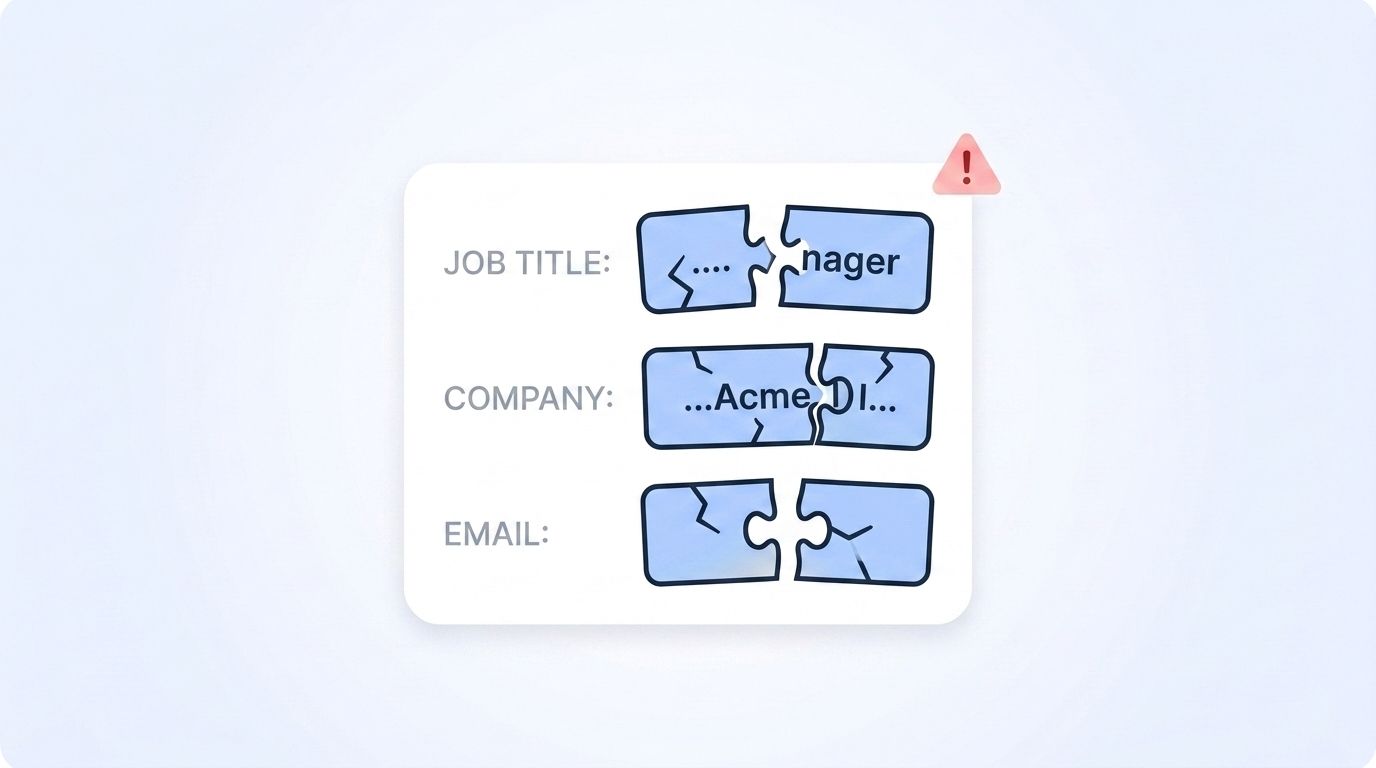
A job-change trigger firing against a record with a wrong title or an outdated employer isn't a near-miss - it's a wasted send. That's a different failure than data decay over time (Reason 1); this is data that was already inaccurate before any signal touched it, which no amount of monitoring speed can fix on its own. Isn't it strange how much budget goes into catching the moment a buyer moves, while the record describing who they were before the move often goes unchecked?
Cross-referencing a trigger against a live source closes that gap. Datamagnet's People Profile endpoint fetches a contact's current role, headline, and company at request time, so a signal alert reflects who the person is today rather than whatever the CRM last imported. For a deeper look at applying that same principle across an entire enrichment workflow, see real-time B2B people enrichment.
Why Does Tool Sprawl Turn Signals Into Noise?
Tool sprawl turns signals into noise because more alert sources don't mean better coverage - they mean more places for a real buying signal to get buried. Sellers use an average of 8 different tools to close a deal, 42% of reps feel overwhelmed by that sprawl, and overwhelmed sellers are 45% less likely to attain quota (Salesforce, State of Sales).
Teams that consolidate trigger types - job changes, engagement, keyword mentions - into a single signal feed instead of running separate point tools for each report fewer duplicate alerts on the same account and less time spent cross-checking which tool caught a lead first. Consolidation doesn't just reduce tool count; it removes the reconciliation work that eats into the speed-to-lead window covered in Reason 3.
Datamagnet's signal system covers job changes, new posts, and keyword, industry, company, and person engagement from one account, so a rep checks one queue instead of stitching together alerts from six different tools.
Do Reps Spend More Time Verifying Signals Than Acting on Them?
Reps often spend more time verifying signals than acting on them, because a raw alert without context still requires manual checking before anyone trusts it enough to send an email. Frontline CRM and data users spend an average of 13 hours a week hunting for basic information inside their CRM (Validity, State of CRM Data Management in 2025) - time that should be going toward selling, not confirming a signal is real.
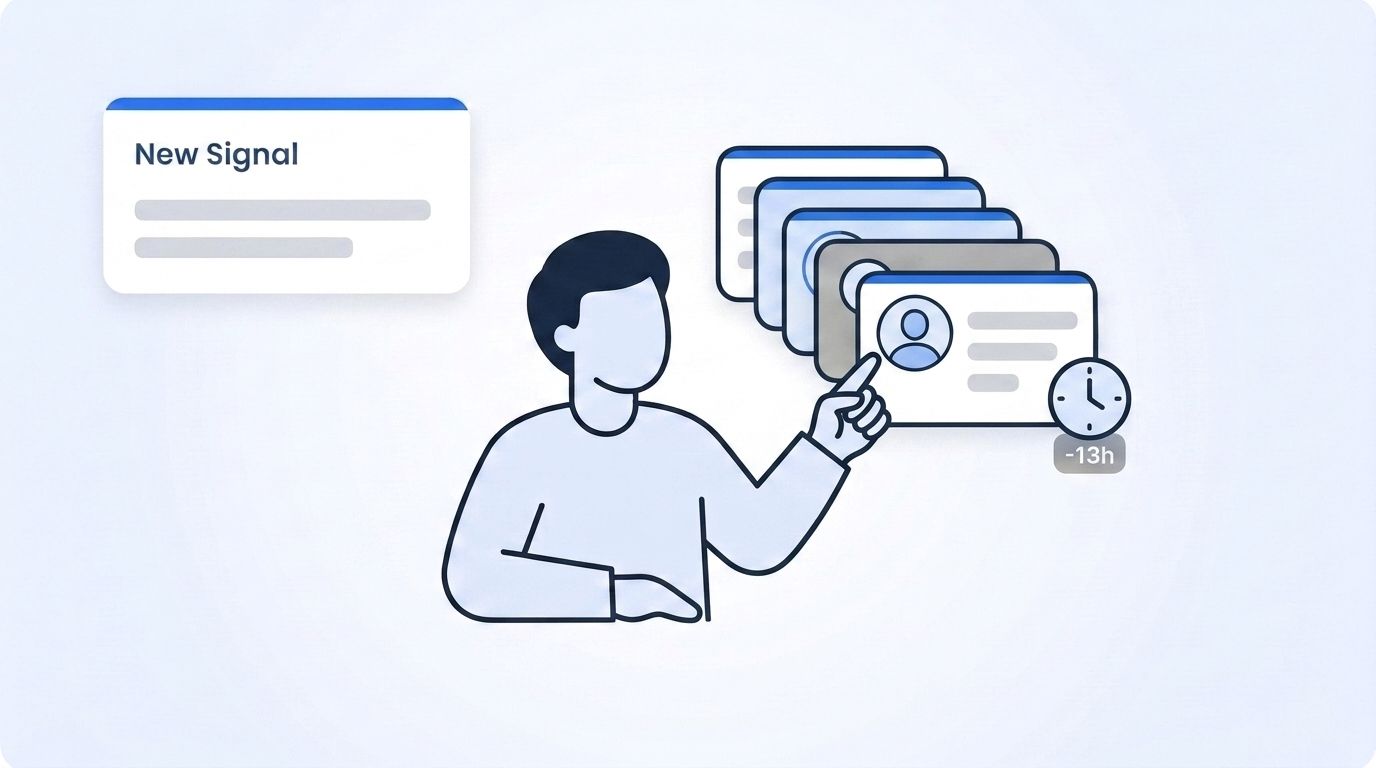
Watching a rep work a raw trigger alert is a familiar pattern: open the notification, open LinkedIn in a new tab, confirm the title is still current, open the company page to check headcount, then finally start drafting outreach. None of that is selling - it's verification the tool should have already done before the alert ever reached the rep's queue.
A trigger paired with enriched context - current title, company size, recent activity - removes most of that manual step. Datamagnet's ICP People Search returns decision-makers pre-filtered by title, seniority, and company, so a rep opens a signal that's already qualified instead of one that still needs a round of manual checking.
Is AI Automation Scaling Signal Volume Without Scaling Accuracy?
AI automation is scaling the volume of triggers a team can generate faster than it's scaling the accuracy of those triggers. Gartner predicts that by 2028, AI agents will outnumber human sellers 10-to-1, yet fewer than 40% of sellers will report that AI agents improved their productivity (Gartner, November 2025). More agents generating more alerts doesn't automatically mean more buyers found.
The gap has a data root cause. Gartner also predicts that through 2026, organizations will abandon 60% of AI projects that lack AI-ready data, and a Q3 2024 Gartner survey of 248 data management leaders found 63% either lack, or aren't sure they have, the right data management practices for AI (Gartner, Lack of AI-Ready Data Puts AI Projects at Risk, February 2025). Feeding an AI-driven trigger engine bad source data just means it generates bad alerts faster.
Start with the endpoint layer, not the agent layer. Datamagnet's API documentation is built for programmatic access - structured JSON in, structured JSON out - so an AI agent or automation pipeline is working from live, verifiable data rather than a static export that was already stale before the agent touched it.
Fix the Execution Layer, Not the Trigger Concept
Trigger-based prospecting isn't broken as an idea - a job change, a funding round, or an engagement spike is still one of the clearest buying signals available. What breaks it is everything underneath: 22.5% annual data decay, a 5-minute response window most tools can't hit, CRM data that's already wrong before the trigger fires, tool sprawl burying real signals in noise, manual verification eating rep hours, and AI scaling alert volume faster than accuracy. Fix the execution layer and the same trigger concept starts finding the buyers it was already supposed to catch.
See how real-time signals and live people data close these gaps - check your own trigger stack against them this week.
Frequently Asked Questions
What causes a trigger-based prospecting tool to miss a buyer?
Most misses trace back to execution, not concept: stale data behind the alert (2.1% monthly decay), slow delivery that misses the 5-minute speed-to-lead window, CRM records that were already inaccurate, tool sprawl burying real signals, and alerts that arrive without enough context to act on immediately.
How often should trigger data refresh to stay accurate?
Continuously, not on a batch schedule. Since B2B contact data decays roughly 2.1% a month (HubSpot, Database Decay Simulation, 2026), a daily or weekly refresh always leaves accumulated decay unaddressed. Delivering triggers through webhooks queries the live record at the moment a signal fires, closing that gap.
What's the difference between an intent signal and a job-change trigger?
A job-change trigger fires when a specific tracked person changes employers or roles. Intent signals are broader - they include engagement events like a person or company liking, commenting on, or sharing relevant LinkedIn content. Datamagnet's signal creation endpoint supports both under one system.
Can trigger-based prospecting be fully automated?
Most of the pipeline can be. Detection, enrichment, and delivery through webhooks all run without manual review. Gartner predicts AI agents will outnumber human sellers 10-to-1 by 2028, though fewer than 40% of sellers currently report a productivity gain from them (Gartner, 2025) - automation only helps once the underlying data is accurate.
How many sales tools do most reps use for prospecting?
Sellers use an average of 8 different tools to close a deal, and 42% report feeling overwhelmed by that sprawl (Salesforce, State of Sales). Consolidating trigger types - job changes, engagement, keyword mentions - into one signal feed reduces the number of queues a rep has to check.
Sources
- Validity, The State of CRM Data Management in 2025, retrieved 2026-07-20, https://www.validity.com/resource-center/the-state-of-crm-data-management-in-2025/
- HubSpot, Database Decay Simulation, retrieved 2026-07-20, https://www.hubspot.com/database-decay
- Gartner, How to Improve Your Data Quality, retrieved 2026-07-20, https://www.gartner.com/smarterwithgartner/how-to-improve-your-data-quality
- Salesforce, State of Sales, retrieved 2026-07-20, https://www.salesforce.com/sales/state-of-sales/sales-statistics/
- Harvard Business Review, The Short Life of Online Sales Leads (Lead Response Management Study), retrieved 2026-07-20, https://hbr.org/2011/03/the-short-life-of-online-sales-leads
- Challenger, Gray & Christmas, 2025 CEO Turnover Report, retrieved 2026-07-20, https://www.challengergray.com/blog/2025-ceo-turnover-report-ceo-exits-fall-from-2024-public-ceo-exits-break-record/
- LinkedIn Economic Graph, Work Change Report, retrieved 2026-07-20, https://economicgraph.linkedin.com/research/work-change-report
- Gartner, Gartner Predicts By 2028 AI Agents Will Outnumber Sellers By 10x Yet Fewer Than 40 Percent Of Sellers Will Report AI Agents Improved Productivity, retrieved 2026-07-20, https://www.gartner.com/en/newsroom/press-releases/2025-11-18-gartner-predicts-by-2028-ai-agents-will-outnumber-sellers-by-10x-yet-fewer-than-40-percent-of-sellers-will-report-ai-agents-improved-productivity
- Gartner, Lack of AI-Ready Data Puts AI Projects At Risk, retrieved 2026-07-20, https://www.gartner.com/en/newsroom/press-releases/2025-02-26-lack-of-ai-ready-data-puts-ai-projects-at-risk
- Datamagnet, Webhooks, retrieved 2026-07-20, https://docs.datamagnet.co/api-reference/webhooks
- Datamagnet, Create Signal, retrieved 2026-07-20, https://docs.datamagnet.co/api-reference/endpoints/signal-create
