
Disclosure: This article is published by Datamagnet. Vendor claims are self-reported unless otherwise noted.
Signal-Based Selling: The 5x Reply Rate Framework for B2B Teams
Cold outreach doesn't work the way it used to. In 2026, the average cold email reply rate sits at just 3.43% across billions of tracked sends (Instantly.ai, Cold Email Benchmark Report 2026). That's the wall most SDRs are throwing messages against every day.
Signal-based selling flips the model. Instead of guessing who might be ready to buy, you watch for the events that actually predict a purchase — a new VP in their first 90 days, a target account posting about a pain point, a champion who just changed jobs. Then you reach out while the moment is still warm, not three weeks after it cooled off.
Key Takeaways
- Average cold email reply rate is 3.43%, but top-quartile senders hit 5.5%+ and elite senders top 10% (Instantly.ai, 2026).
- Top-performing reps see up to 4.2x higher reply rates than average reps on the same lists (Gong, 2025).
- New executives spend 70% of their budget in their first 100 days and convert 2.5x more often in that window (UserGems).
- 87% of orgs call their intent signals unreliable, yet only 26% of flagged signals convert to a real opportunity (DemandScience, 2026) — picking the right signal matters more than collecting more of them.
What Is Signal-Based Selling?
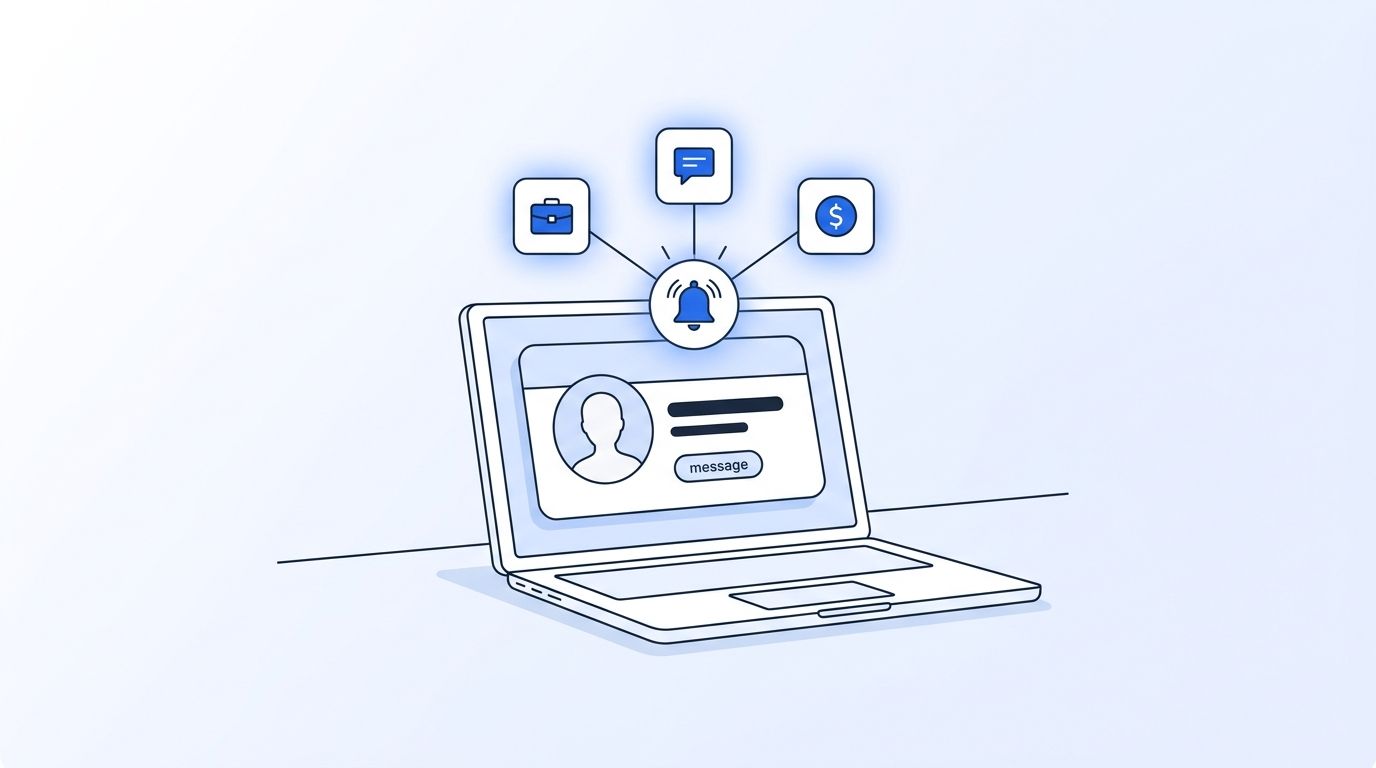
Signal-based selling means triggering outreach from a specific, timed buying event instead of a static list. In 2026, 87% of organizations track some form of intent data, but only 26% of those flagged signals convert to a qualified opportunity (DemandScience, 2026 State of Performance Marketing Report). The gap between tracking signals and acting on the right ones is exactly what a real signal-based motion closes.
A "signal" is any event that changes a prospect's readiness to buy right now: a job change, a company hiring surge, a LinkedIn post about a specific pain point, a funding round, or a competitor's customer engaging with the wrong kind of content. None of these guarantee a deal on their own. But stacked together and filtered against your ideal customer profile, they tell you who to call this week instead of this quarter.
That's a very different job than list-building. Spray-and-pray outreach treats every contact the same; signal-based selling treats timing as the whole game. Datamagnet's LinkedIn Signal API exists for exactly this — it turns job changes, company posts, and engagement events into structured alerts a rep or a CRM workflow can act on the same day.
Here's the thing worth remembering before you build anything on top of intent data: 87% of teams already say their signals are noisy. Adding more signal sources without a filter just adds more noise. The framework below is built around cutting signal volume down to what's actually worth a rep's time.
Why Is Cold Outreach Reply Rate Collapsing in 2026?
Cold email reply rates average 3.43% in 2026, and reps now send an average of 344 emails for every meeting they book (Gong, "Does cold email even work anymore?", 2025). Inboxes are more crowded, spam filters are sharper, and buyers can spot a templated message in one line.
Isn't that the exact problem more volume was supposed to fix? It isn't. Gong's analysis of 28 million cold emails found top-performing reps get 4.2x higher reply rates than average reps working the same kind of lists, and land 4.3x more meetings. The gap isn't effort. It's what triggers the email in the first place — a real event versus a cold guess.
That's the real story behind the reply rate ladder below. Moving from average to top quartile isn't about sending more; it's about sending to the right person at the right moment, with a message that references something true and current about them.
Which Buyer Signals Actually Predict a Deal?
Job changes are the strongest documented signal. New executives spend 70% of their budget in their first 100 days on the job, and convert 2.5x more often in their first three months than after a year in the role (UserGems, Buying Signals Benchmark Report). Engaging a new hire at a target account lifts opportunity conversion by 45%; a promotion inside an account lifts it 39%.
That's not a coincidence — new leaders arrive with budget authority and no vendor loyalty yet. [UNIQUE INSIGHT] What most teams miss is that job-change and promotion signals decay fast. A signal that's three weeks old behaves like a cold list again, which is why the framework later in this guide treats signal freshness as a filter, not just signal type.
Company-level and person-level engagement signals round out the stack. A target account posting about a specific pain point, a decision-maker liking a competitor's content, or an account hiring aggressively into a function you sell into — each narrows the list of who's likely in-market right now. Datamagnet's Person Engagement Signal and Company Engagement Signal endpoints track exactly these events, and the Champion Tracker cookbook shows how to re-engage a champion the moment they land at a new company.
Buyers are also engaging sales later on their own terms, which raises the stakes for getting the timing right. 67% of B2B buyers now prefer a "rep-free" purchase experience for at least part of their journey (Gartner, 2026). If a buyer is going to self-serve most of the funnel, the moments a rep does reach out need to land on real timing, not a quarterly cadence.
How Does AI Personalization Multiply Signal-Based Outreach?
AI adoption in sales has gone from experiment to default. Only 8% of sales professionals report not using AI at all in their process, meaning over 9 in 10 now use it somewhere in their workflow (HubSpot, 2025 State of Sales Report). 83% say AI personalizes prospect interactions, and 84% say it saves time.
Does more AI automatically mean better replies? Not on its own. 87% of sales orgs use some form of AI, and those AI-using teams are 1.3x more likely to report revenue growth — 83% saw growth versus 66% of teams without AI (Salesforce, State of Sales Report 2026). [UNIQUE INSIGHT] The teams pulling ahead aren't using AI to write generic messages faster — they're feeding it a real signal to write about. A model prompted with "this VP started 40 days ago and their company just posted three open sales roles" produces a message that reads like it came from a human who paid attention. A model prompted with nothing but a name and a title doesn't.
That combination — a verified signal plus AI drafting — is what Datamagnet's AI SDR Data Engine is built to support: real-time buyer signals feeding personalization instead of personalization guessing at context that isn't there.
The 5-Step Signal-Based Selling Framework
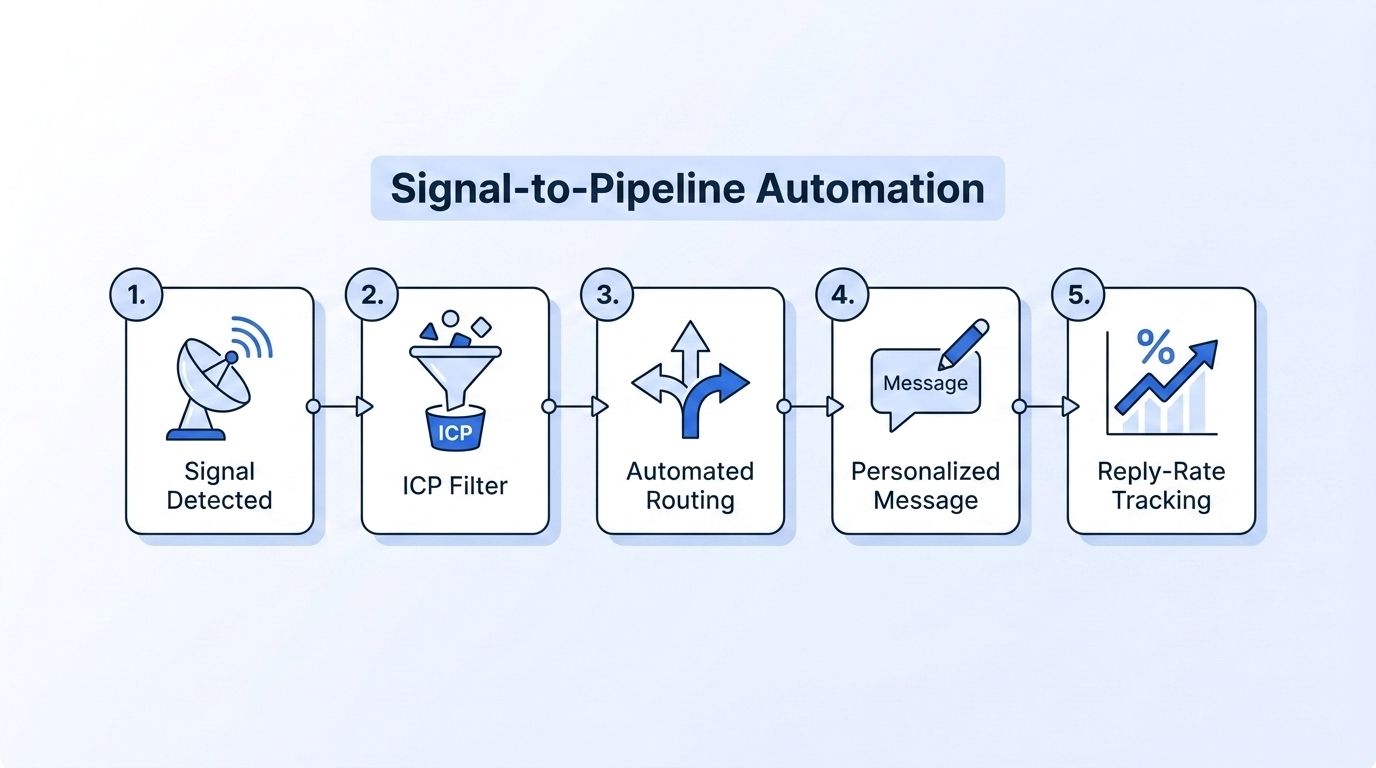
We call this the 5x framework because it's five signal-driven steps, and because Gong's analysis of 28 million cold emails found top reps combining sharp timing with sharp messaging see up to 4.2x higher reply rates than the average sender. Here's how to build it.
1. Pick 2-3 signal types that match your ICP. Don't track everything — track what correlates with your actual buyers. B2B sellers with an executive-heavy buyer usually start with job-change and promotion signals; teams selling into a narrow vertical often get more from company engagement or hiring-surge signals. Create a signal or list your active signals to see what's already firing.
2. Filter for ICP fit before a signal reaches a rep. Remember, 87% of teams call their signals unreliable. Most of that noise comes from skipping this step — a job-change alert for someone outside your ICP is still just noise with a timestamp.
3. Automate capture so outreach fires within hours, not weeks. A signal that sits in a dashboard for two weeks has already gone cold. Route company engagement and job-change events straight into your CRM or Slack via webhook, and use the Champion Tracker cookbook as a working template for the routing logic.
4. Personalize around the specific trigger, not a template variable. Reference what actually happened: the role, the timing, the pain point implied by the signal. This is the step tied most directly to that 4.2x reply-rate gap — it's the difference between "following up" and "responding to something real."
5. Track reply rate by signal type and cut what underperforms. Not every signal type will earn its keep. Measure against the reply-rate ladder above, and retire signal sources that never clear the industry average.
The pattern across every team we've seen do this well isn't a smarter model or a bigger data source — it's discipline about steps 2 and 5. Most signal-based programs fail from over-collection, not under-collection.
What Does Signal-Based Selling Look Like in Practice?
Picture a mid-market AE covering enterprise SaaS accounts. A VP of Revenue Operations at a target account starts a new role, tracked via a job-change signal. Forty days in — squarely inside that high-conversion 100-day window — the account also posts on LinkedIn about consolidating their sales tech stack.
Instead of a generic "checking in" email, the rep sends a two-line note referencing the post and the new role directly, with one relevant proof point. No template variables, no guesswork about whether the timing is right. That's the entire mechanical difference between a 3.43% reply rate and a double-digit one: the message exists because something real happened, not because a sequence step fired on schedule.
What's Next for Signal-Based Selling?
The B2B buying cycle is compressing, not stretching. Average deal cycles fell from 11.3 months in 2024 to 10.1 months in 2025 (6sense, 2025 B2B Buyer Experience Report), and 67% of buyers now prefer at least part of their purchase to happen without a rep at all (Gartner, 2026).
Shorter cycles and rep-free preferences both point the same direction: reps get fewer, narrower windows to matter. Signal-based selling is how you make sure the windows you do get aren't wasted on a cold, badly-timed message. For more on catching the job-change moment specifically, see our guide to real-time job change intent signal APIs.
Ready to stop guessing at timing? Start monitoring your first buying signal and see which job changes, posts, and engagement events are already happening inside your target accounts.
Frequently Asked Questions
What's the difference between intent data and buyer signals?
Intent data is usually aggregated and anonymized — topic surges across a market. A buyer signal is a specific, attributable event tied to one person or account, like a job change or a LinkedIn post. That specificity is why only 26% of generic intent signals convert to a qualified opportunity, while attributable signals like job changes lift conversion by 45% or more (DemandScience; UserGems).
How many buyer signals should a sales team track per account?
Start with 2-3 signal types tied directly to your ICP rather than every available feed. Datamagnet customers commonly pair a job-change signal with one engagement signal — company or person — since 87% of teams already report signal overload from tracking too broadly (DemandScience, 2026).
Does signal-based selling replace cold outreach completely?
No — it changes what triggers the outreach, not whether outreach happens. Reps still send messages; they just send them off a real event instead of a static list. Top reps using this approach see up to 4.2x higher reply rates than average senders on comparable lists (Gong, 2025).
How fast should a rep act on a buying signal?
As close to same-day as possible. New executives make 70% of their buying decisions inside their first 100 days, and conversion likelihood is 2.5x higher in the first three months of a new role (UserGems). A signal routed through automation within hours, per the Company Engagement Signal workflow, keeps that window open.
Conclusion
Cold outreach alone isn't getting worse by accident — reply rates are stuck at 3.43% because most messages still ignore timing entirely. Signal-based selling fixes that by triggering outreach from job changes, company engagement, and executive activity instead of a static list, then filtering hard so only ICP-fit signals reach a rep.
The teams pulling ahead aren't sending more email. They're combining verified signals with AI personalization to hit that 4.2x reply-rate gap Gong measured between top and average performers. Start with one signal type, automate the routing, and measure reply rate against the benchmarks above before adding a second. For the job-change angle specifically, our real-time intent signal API guide is the next logical read.
