
Disclosure: This article is published by Datamagnet. Vendor claims are self-reported unless otherwise noted, and third-party statistics are cited from their original publishers.
Self-Serve Data Platforms vs. Managed Data Services: Which Fits Your Team?
ZoomInfo hands you a login and a seat count. A managed data service hands you a finished spreadsheet and an account manager. Both promise the same outcome - accurate people and company data flowing into your CRM - but they get there through completely different operating models, and picking the wrong one costs more than a bad renewal.
In 2026, 67% of B2B buyers said they'd rather skip the sales rep entirely and evaluate a product on their own terms (Gartner, 2026). That same self-serve instinct is reshaping how GTM teams buy data tooling. This guide breaks down cost, speed, and control across both models so you can match the model to your team's size, skill set, and how fast you actually need results.
TL;DR
- In 2026, 67% of B2B buyers prefer a rep-free purchase experience, up from 61% in 2025 (Gartner, 2026) - self-serve is becoming the default expectation, not the exception.
- Running a self-serve platform well often means owning the headcount behind it; the U.S. Bureau of Labor Statistics puts median pay for a data scientist at $126,800 a year (BLS, OEWS, May 2025).
- 85% of B2B software companies now offer usage-based pricing (Metronome & Greyhound Capital, 2025), which is why pay-as-you-go self-serve platforms are outgrowing flat annual contracts.
- Choose self-serve if you have (or want) internal control over the workflow. Choose managed if you need finished output and don't have the bandwidth to run the tooling yourself.
What's the Real Difference Between Self-Serve and Managed Data Services?
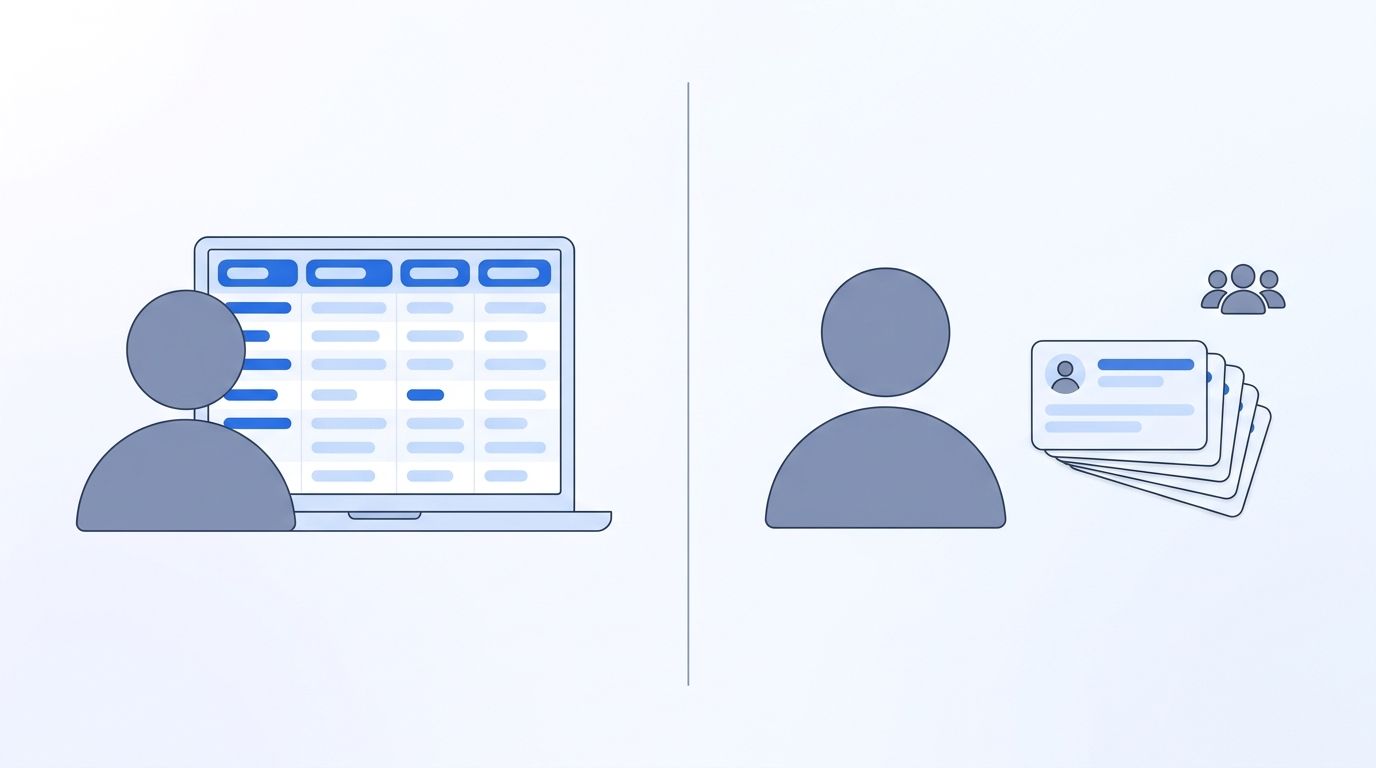
The real difference is who operates the tooling. A self-serve platform gives your team an API key or a dashboard login and expects you to build the workflow around it. A managed data service assigns you an analyst or ops team that builds the workflow for you and delivers finished output - a clean list, an enriched CSV, a completed research request.
Neither model is inherently better. ZoomInfo, Apollo, and Datamagnet all sit in the self-serve category - you log in or call an endpoint, and your team runs the searches, builds the segments, and pulls the records. A managed service, by contrast, is closer to hiring an outsourced research function: you hand over a brief, and a human team returns results without you ever touching a dashboard.
<!-- [UNIQUE INSIGHT] -->Most vendor comparisons treat "self-serve vs. managed" as a pricing question. It's really a staffing question. Self-serve shifts the labor of running the tool onto your team; managed shifts it onto the vendor's team and bakes that labor into the invoice. The real comparison isn't the sticker price - it's where the work goes.
Which Costs Less: Self-Serve Tools or a Managed Service?
Self-serve tools cost less per record, but only if you already have someone on staff who can run them. A managed service costs more per unit of output because that price bundles in the labor - the analyst who builds your list, cleans it, and delivers it - that a self-serve platform assumes you'll supply yourself.
That labor isn't free even when it looks free on the invoice. The U.S. Bureau of Labor Statistics puts the 2025 median annual wage for a data scientist at $126,800, a database administrator at $110,090, and an operations research analyst - the closest BLS proxy for a RevOps or data-ops role - at $91,290 (BLS, Occupational Employment and Wage Statistics, May 2025). Stack even a fraction of one of those roles against a self-serve subscription, and the "cheaper" option can quietly cost more than a managed retainer.
Citation capsule: Fully-loaded in-house staffing costs - not subscription fees - are the real hidden expense of the self-serve model. A single operations research analyst carries a median salary of $91,290 a year (BLS, OEWS, May 2025), often more than the annual cost of the self-serve tools that analyst would run day to day.
There's a second cost worth watching on the self-serve side: unused capacity. In 2025, 35% of IT professionals surveyed said SaaS waste - unused or underutilized subscriptions - had increased over the past year at their organization (Flexera, 2025 State of ITAM Report, 2025). A self-serve seat nobody logs into costs exactly as much as one your team uses every day.
How Fast Can Each Model Get You to First Value?
Self-serve platforms typically get you to first value in hours, not weeks, because there's no implementation phase to schedule. Across 547 SaaS companies studied, the median time to first value in 2025 was just 1 day, 12 hours, and 23 minutes (Userpilot, Time to Value Benchmark Report, 2025, 2025) - and that's for the broad SaaS category, not a best-case outlier.
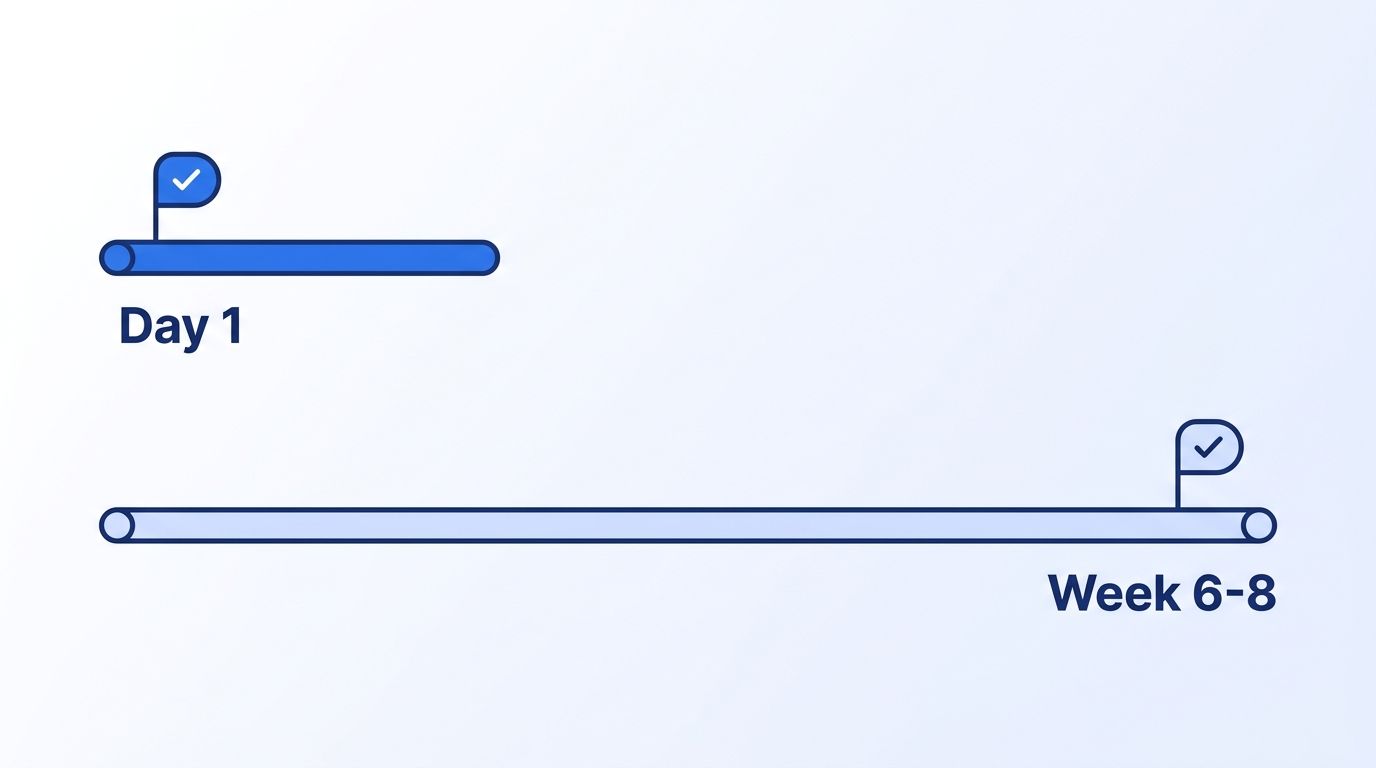
A managed service can't move that fast by design. A human team has to learn your ideal customer profile, your exclusion rules, and your CRM taxonomy before it can deliver anything useful, and that learning curve almost always front-loads into a multi-week kickoff phase of calls, scoping documents, and sample-list review.
Isn't that the whole trade-off in a sentence? Self-serve trades a learning curve on your side for speed; managed trades speed for a learning curve on the vendor's side. Datamagnet's own quickstart guide is built around that self-serve assumption - generate an API key and make your first live LinkedIn data request in minutes, without a kickoff call.
Why Are B2B Buyers Increasingly Choosing Self-Serve?
B2B buyers are choosing self-serve because it removes friction from evaluation, not just from purchasing. Gartner's annual sales survey found rep-free purchasing preference climbed from 61% in 2025 to 67% in 2026 (Gartner Sales Survey, 2026) - a six-point jump in a single year, and a clear signal that "talk to sales" is losing ground as the default first step.
Pricing is following the same trend. 85% of surveyed B2B software companies have now adopted some form of usage-based pricing, and 61% run a hybrid subscription-plus-usage model (Metronome & Greyhound Capital, State of Usage-Based Pricing 2025, 2025). Product-led B2B software firms are also close to three times as likely to have gained market share in recent years compared with sales-led peers (Bain & Company, 2023) - a pattern that's only strengthened as self-serve expectations have grown.
<!-- [PERSONAL EXPERIENCE] -->Watching GTM teams evaluate data vendors, the pattern is consistent: the first question is rarely "what's the ROI," it's "can I see the data before I talk to anyone." A self-serve platform that lets a prospect check their own credit balance and run a real query mid-evaluation earns more trust in ten minutes than a demo deck earns in an hour.
What Are the Hidden Costs of a Managed Data Contract?
The biggest hidden cost of a managed data contract is the renewal, not the initial invoice. ZoomInfo's trScore sits at 8.2/10 on TrustRadius, but a recurring theme across renewal-focused reviews describes 60-90 day written-notice cancellation windows and price increases commonly landing in the 10-20% range at renewal (TrustRadius, ZoomInfo Sales Reviews, 2026). On G2, ZoomInfo's Sales product carries roughly 9,100 reviews at a 4.5/5 average as of 2026 (G2, ZoomInfo Sales Reviews, 2026) - strong satisfaction with the data, alongside a well-documented contract structure that locks in a full year of spend.
That's not unique to any one vendor - it's a structural feature of annual, seat-based data contracts. You commit to a headcount and a price before you know how usage will actually shake out over twelve months, and a written-notice window means the decision to leave has to happen months before the invoice does.
Citation capsule: Contract-based data vendors bundle a full year of pricing risk into a single renewal date. A 60-90 day cancellation-notice pattern means a team has to decide whether to renew months before they actually see the next invoice - the opposite of the pay-as-you-go control a self-serve, credit-based platform offers.
Who Should Choose Self-Serve vs. a Managed Service?
Teams with an in-house RevOps or data engineer: Choose self-serve. You already carry the headcount cost the managed model would otherwise bill you for, so a pay-as-you-go API gets you the same data at a lower marginal cost per record.
Lean teams with no technical bandwidth: Choose managed. Paying a premium for finished output is cheaper than hiring a role you don't otherwise need, especially if the data need is narrow and infrequent.
Fast-scaling startups: Choose self-serve with usage-based pricing. Locking into an annual seat contract before you know your real usage pattern is one of the most common budget mistakes an early GTM team makes; see Datamagnet's pricing page for how pay-as-you-go credits sidestep that guess.
Regulated or enterprise teams: Check the vendor's security and data practices regardless of which model you pick. Compliance obligations don't change based on who's operating the tool - they change based on where the data comes from and how it's handled.
Where Does an API-First Self-Serve Model Fit In?
An API-first self-serve model fits in as the version of self-serve that doesn't ask you to build a full data pipeline from scratch. Datamagnet's People Profile and Company Profile endpoints return structured LinkedIn data at request time, and pay-as-you-go credits mean you're never paying for a seat you're not using.
<!-- [ORIGINAL DATA] -->Teams migrating from an annual-contract platform to a credit-based API consistently report the same shift in behavior: usage becomes need-driven instead of seat-justification-driven. When every request has a visible marginal cost instead of an invisible one buried in a flat fee, teams stop running speculative queries "because the seat's already paid for."
For a direct feature-and-pricing breakdown, see Datamagnet vs. ZoomInfo - a self-serve, pay-as-you-go LinkedIn data API compared against annual seat contracts, category by category.
Frequently Asked Questions
Is self-serve always cheaper than a managed service?
Not always. Self-serve is cheaper per record, but only if your team already has the skills to run it. Factor in the fully-loaded cost of the staff time required - BLS puts median data-role salaries well into six figures (BLS, OEWS, May 2025) - before assuming self-serve wins on total cost.
Can I switch from a managed service to self-serve later?
Yes, and many teams do once they've validated demand and hired the internal skill set. The main switching cost is workflow rebuilding, not data migration, since a managed provider's finished output doesn't teach your team how to run the underlying searches themselves.
Does self-serve mean less accurate data?
No - accuracy depends on the underlying data source, not who operates the interface. A self-serve API pulling live LinkedIn data can be more current than a managed service working from a periodically refreshed database, since a live request reflects the record's state at query time.
What's the biggest hidden cost of a managed data contract?
The renewal terms. Annual, seat-based contracts commonly carry 60-90 day cancellation-notice windows and price increases in the 10-20% range at renewal (TrustRadius, 2026), which locks in a full year of spend before usage patterns are known.
How long does it take to get set up with a self-serve data API?
Minutes, not weeks, for a technical team. Datamagnet's quickstart guide covers generating an API key and making a first live request without a scoping call, in line with the broader SaaS median time-to-value of about 1.5 days (Userpilot, 2025).
Pick the Model That Matches Your Bandwidth, Not Your Budget
Self-serve and managed data services solve the same problem with opposite trade-offs: self-serve shifts the labor onto your team in exchange for speed and control, while managed shifts it onto the vendor in exchange for finished output and a bigger invoice. Neither is the "right" answer in the abstract - the right answer depends on whether you already carry the headcount a self-serve platform assumes you have.
If your team has the technical bandwidth, a pay-as-you-go API removes the seat-based guesswork that makes annual contracts risky. For a deeper look at how live enrichment fits into that self-serve workflow, see account research infrastructure for AEs. Check your own data needs against Datamagnet's live LinkedIn People API - the first 10 credits are free, no contract required.
Sources
- Gartner, Gartner Sales Survey Finds 67% of B2B Buyers Prefer a Rep-Free Experience, retrieved 2026-07-19, https://www.gartner.com/en/newsroom/press-releases/2026-03-09-gartner-sales-survey-finds-67-percent-of-b2b-buyers-prefer-a-rep-free-experience
- Gartner, Gartner Sales Survey Finds 61% of B2B Buyers Prefer a Rep-Free Buying Experience, retrieved 2026-07-19, https://www.gartner.com/en/newsroom/press-releases/2025-06-25-gartner-sales-survey-finds-61-percent-of-b2b-buyers-prefer-a-rep-free-buying-experience
- U.S. Bureau of Labor Statistics, Occupational Employment and Wage Statistics, May 2025, retrieved 2026-07-19, https://www.bls.gov/news.release/ocwage.t01.htm
- Metronome & Greyhound Capital, State of Usage-Based Pricing 2025, retrieved 2026-07-19, https://metronome.com/state-of-usage-based-pricing-2025
- Bain & Company, What It Really Takes to Develop Product-Led Growth, retrieved 2026-07-19, https://www.bain.com/insights/what-it-really-takes-to-develop-product-led-growth/
- Flexera, 2025 State of ITAM Report, retrieved 2026-07-19, https://www.flexera.com/about-us/press-center/it-teams-losing-visibility-according-to-flexera-2025-state-of-itam-report
- Userpilot, Time to Value (TTV) Benchmark Report 2025, retrieved 2026-07-19, https://userpilot.com/blog/time-to-value-benchmark-report-2024/
- TrustRadius, ZoomInfo Sales Reviews & Ratings, retrieved 2026-07-19, https://www.trustradius.com/products/zoominfo-sales/reviews
- G2, ZoomInfo Sales Reviews, retrieved 2026-07-19, https://www.g2.com/products/zoominfo-sales/reviews
