
Disclosure: This article is published by Datamagnet. Vendor claims are self-reported unless otherwise noted.
Real-Time vs Batch Data Enrichment: When to Use Each
Should you enrich a lead the moment they hit your form, or run enrichment overnight across your whole database? Most teams treat this as an either/or decision, and that's the mistake. In 2025, Validity's State of CRM Data Management report found that 76% of CRM users say less than half their org's data is accurate and complete (Validity, 2025). The real answer isn't picking a side. It's knowing which jobs need a live API call and which ones are fine waiting for the next batch run.
Key Takeaways
- B2B contact data decays roughly 2.1% per month, about 22.5% a year, which is too fast for quarterly batch refreshes to keep up on their own (HubSpot, ongoing benchmark).
- Leads contacted within 5 minutes are 21x more likely to qualify than leads contacted after 30 minutes, a gap only real-time enrichment can close (MIT/InsideSales.com Lead Response Management Study).
- Median employee tenure fell to 3.9 years in 2024, and just 2.7 years for workers aged 25-34, so job-change signals go stale between batch cycles (U.S. Bureau of Labor Statistics, 2024).
- Batch enrichment still wins on cost and simplicity for bulk list-building, TAM sizing, and any workflow that doesn't touch a live conversation.
- The best-performing stacks route by trigger: form fills and job-change alerts go real-time, database hygiene and outbound list-building stay batch.
What Is Real-Time Data Enrichment?
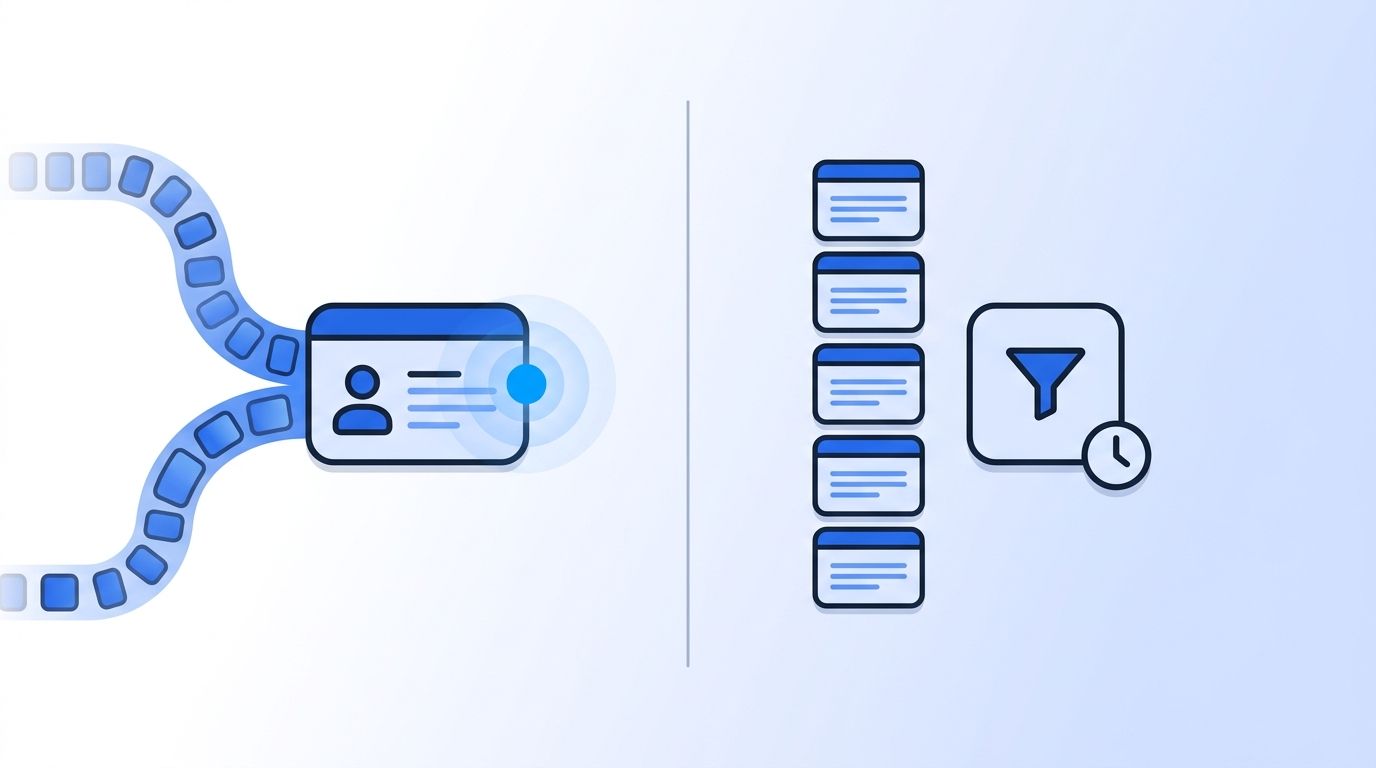
Real-time enrichment fetches or verifies a record the moment it's needed, usually via an API call triggered by an event like a form submission, a CRM record creation, or a webhook firing. In 2025, Postman's State of the API Report found webhook adoption among developer teams reached 50%, alongside WebSockets at 35% and GraphQL at 33%, as more teams layer event-driven patterns on top of REST (Postman, 2025). That shift matters because it means the plumbing for real-time enrichment is now standard, not custom infrastructure you build from scratch.
The trigger determines the value. A lead fills out a demo request form, and within seconds your system pulls their current job title, company size, and funding stage before the rep even sees the notification. Chili Piper's 2025 benchmark of roughly 4 million form submissions found that letting a lead book a meeting instantly, versus waiting for manual follow-up, nearly doubles booking rates, from a 30% baseline to 66.7% (Chili Piper, 2025). Enrichment that arrives after that window closes doesn't help the rep make a faster decision.
signal API for job-change alerts
What Is Batch Data Enrichment?
Batch enrichment processes records in bulk on a schedule, nightly, weekly, or monthly, rather than reacting to a single event. You export a list of 50,000 contacts, run it through an enrichment pipeline, and reload the enriched file into your CRM or warehouse the next morning. This is the right model for jobs where nobody is waiting on a specific record right now.
<!-- [UNIQUE INSIGHT] -->The tradeoff nobody talks about enough: batch is cheaper per record at scale, but that cost advantage evaporates the moment the use case involves a live human waiting for an answer. If you're sizing a total addressable market of 100,000 companies, batch is the obvious choice. If a rep is on a call and needs to know whether the prospect's company just raised a funding round, batch can't help them.
Batch also tends to be the default because it's operationally simpler. One job, one schedule, one file in, one file out. There's no webhook infrastructure to maintain and no rate-limit math to do against a live API.
How Fast Does B2B Data Actually Decay?
B2B contact and firmographic data decays at roughly 2.1% per month, which compounds to about 22.5% inaccuracy after a single year, according to HubSpot's ongoing Database Decay analysis built on MarketingSherpa panel research (HubSpot). That means a database enriched once in January is already noticeably stale by the time Q3 planning starts, well before most teams schedule their next full refresh.
The compounding effect is the part batch schedules struggle with. A monthly batch run still leaves a company carrying roughly 2% bad data at any given moment; a quarterly run leaves it carrying closer to 6-7%. Validity's 2025 survey backs this up from a different angle: 37% of CRM users say they've directly lost revenue because of poor data quality, and one in four companies reported a revenue drop of 20% or more tied to it (Validity, 2025). Decay isn't a hygiene footnote. It's a pipeline problem with a dollar figure attached.
benefits of programmatic CRM enrichment
When Does Real-Time Enrichment Win?
Real-time enrichment wins whenever a human or a system is actively making a decision and needs current information to make it well. Speed-to-lead is the clearest case: the foundational MIT and InsideSales.com Lead Response Management study, built on more than 15,000 leads and 100,000 call attempts, found that contacting a lead within 5 minutes makes them 21x more likely to qualify than waiting 30 minutes, and reps are roughly 100x more likely to reach them live (MIT/InsideSales.com).
Job changes are the second big case. In 2025, LinkedIn's Economic Graph reported that professionals entering the workforce today are on pace to hold roughly twice as many jobs over their careers as those who started 15 years ago (LinkedIn Economic Graph, 2025). Combine that with US Bureau of Labor Statistics data showing median tenure fell to 3.9 years in 2024, just 2.7 years for workers aged 25-34 (BLS, 2024), and a quarterly batch refresh will consistently miss champions who've already moved to a new company. That's exactly why job-change signal monitors exist as event-driven, not scheduled, tools.
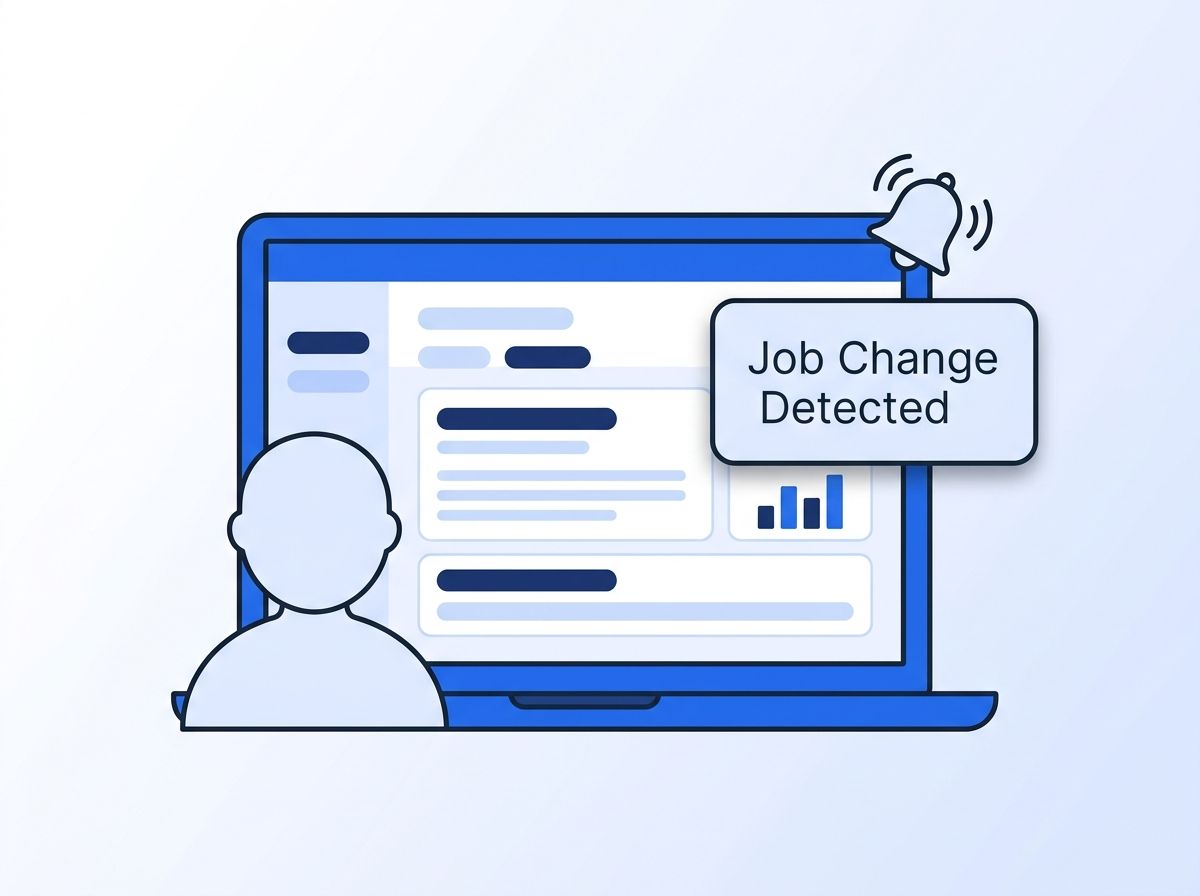
Teams running champion tracking programs describe the same pattern: a batch-refreshed list catches a champion's move weeks after their new employer's onboarding is already underway, past the point where a "congrats on the new role" outreach still feels timely.
When Does Batch Enrichment Still Make Sense?
Batch still wins for anything that doesn't hinge on a single live decision. Building a TAM list, refreshing an entire CRM's firmographic fields, or backfilling company data for an analytics warehouse are all jobs where nobody is waiting seconds for an answer, so the cost efficiency of bulk processing matters more than latency.
IDC's 2025 Global DataSphere research puts a number on the split: an estimated 63% of enterprise use cases require data processed within minutes to be useful, which by definition means the remaining share tolerates slower, scheduled processing just fine (IDC, 2025, as cited via IBM). That's a meaningful chunk of workloads where batch isn't a compromise, it's the correct architecture.
Cost is the other half of the equation. Real-time, on-demand API lookups typically run at a per-call price point built for accuracy and freshness, while batch jobs amortize that cost across thousands of records processed in a single pass. If you're enriching a static list you'll query once, paying for real-time freshness on every record is money spent on a guarantee you don't need.
check your API credit balance before a bulk run
How Do You Build a Hybrid Enrichment System?
Most mature GTM data stacks don't choose one model, they route by trigger. Build the decision as a simple rule: if a human or automated workflow is waiting on this specific record right now, call a real-time people or company API. If you're processing a list where no single record is time-sensitive, schedule a batch job instead.
In practice that split usually looks like this. Real-time: form-fill enrichment, job-change and engagement signal monitors, lead-routing lookups the moment a rep opens a record. Batch: quarterly CRM-wide firmographic refreshes, TAM list building, historical backfills for analytics. Confluent's 2025 survey of over 4,100 IT leaders found real-time streaming maturity jumped from 8% to 25% year over year, with 86% calling real-time data investment a top strategic priority (Confluent, 2025), which suggests more teams are building this hybrid split rather than picking a single lane.
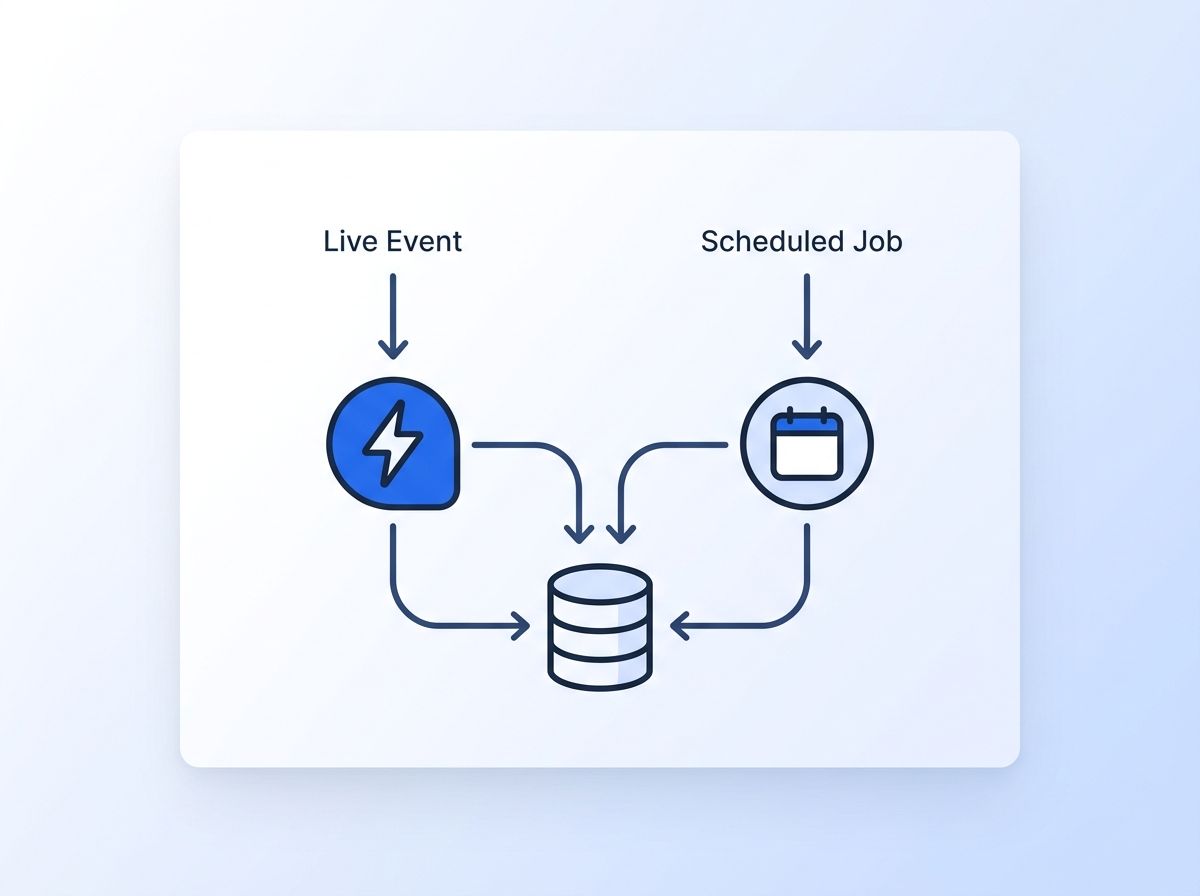
Webhooks are the connective tissue that makes this hybrid model work without custom infrastructure. A webhook-driven signal can push a job-change event into your CRM the moment it's detected, while a nightly batch job handles the rest of the database on its own schedule, no conflict between the two.
The Bottom Line: Build Both, Not Either/Or
Real-time and batch enrichment aren't competing philosophies, they're two tools solving different latency problems. Real-time wins when a person or workflow is waiting on an answer right now: form fills, job-change alerts, live rep lookups. Batch wins when you're processing volume with no single urgent record: TAM building, database-wide refreshes, historical backfill.
The teams getting this wrong usually aren't choosing the wrong tool, they're using one tool for every job. A batch-only stack misses the champion who changed jobs three weeks ago. A real-time-only stack pays a premium to enrich records nobody's looking at yet. Route by trigger, and you get the speed where it counts and the cost efficiency where it doesn't.
[CTA: Ready to add real-time signals to your enrichment stack? See how Datamagnet's Signal API tracks job changes and engagement the moment they happen.]
Frequently Asked Questions
Is real-time enrichment always more expensive than batch?
Per record, yes, real-time API calls typically cost more than bulk batch processing because you're paying for freshness on demand. But for high-value moments like lead routing or job-change alerts, the cost of a missed or stale record often outweighs the per-call premium, especially given the 21x qualification lift from fast response (MIT/InsideSales.com).
How often should I run batch enrichment on my CRM?
Given that B2B data decays about 2.1% per month, monthly batch refreshes keep inaccuracy in the low single digits, while quarterly refreshes let closer to 6-7% of your database drift stale between runs (HubSpot). Pair whatever cadence you choose with real-time signals for time-sensitive events like job changes.
Can I mix real-time and batch enrichment in the same CRM?
Yes, and most mature GTM stacks do. Route event-driven triggers, like form fills or job-change signals, through real-time APIs or webhooks, while scheduling batch jobs for bulk list-building and periodic firmographic refreshes that don't need instant results.
What's the biggest risk of relying only on batch enrichment?
Missing time-sensitive signals between refresh cycles. With median employee tenure down to 3.9 years overall and 2.7 years for workers under 35 (BLS, 2024), a champion can change jobs and go stale in your CRM well before your next scheduled batch run catches it.
Does real-time enrichment require rebuilding my whole data pipeline?
Not necessarily. Webhook adoption for real-time integrations has reached 50% among developer teams as of 2025 (Postman, 2025), meaning most modern CRMs and workflow tools already support triggering an API call or webhook without a ground-up pipeline rebuild.
how real-time people enrichment works in practice
