
Disclosure: This article is published by Datamagnet. Vendor claims are self-reported unless otherwise noted.
Outsource Data Cleaning vs. In-House: The Real Cost Comparison
Poor data quality costs the average organization $12.9 million a year, according to Gartner. So when your CRM turns into a graveyard of dead emails and stale titles, the question isn't whether to clean it up — it's who should do the cleaning, and what that choice actually costs once you add up the parts most budget spreadsheets skip.
TL;DR
- A fully loaded in-house data steward runs roughly $116,700/year once you apply BLS's 29.9% benefits-to-total-compensation ratio to the median $81,798 base salary (Payscale, 2026; BLS, Dec. 2025).
- B2B contact databases decay 22.5% a year, so cleaning is a recurring cost, not a one-time project (HubSpot Database Decay model).
- Offshore BPO seats look cheap per hour, but the real comparison has to include management overhead, QA rework, and the fact that a $7/hour rate produces different output than a $56/hour fully loaded analyst.
- Sales reps already lose about 14 of 51 work hours a week to admin tasks — including manual data cleanup — before you've hired anyone (Forrester Sales Activity Study).
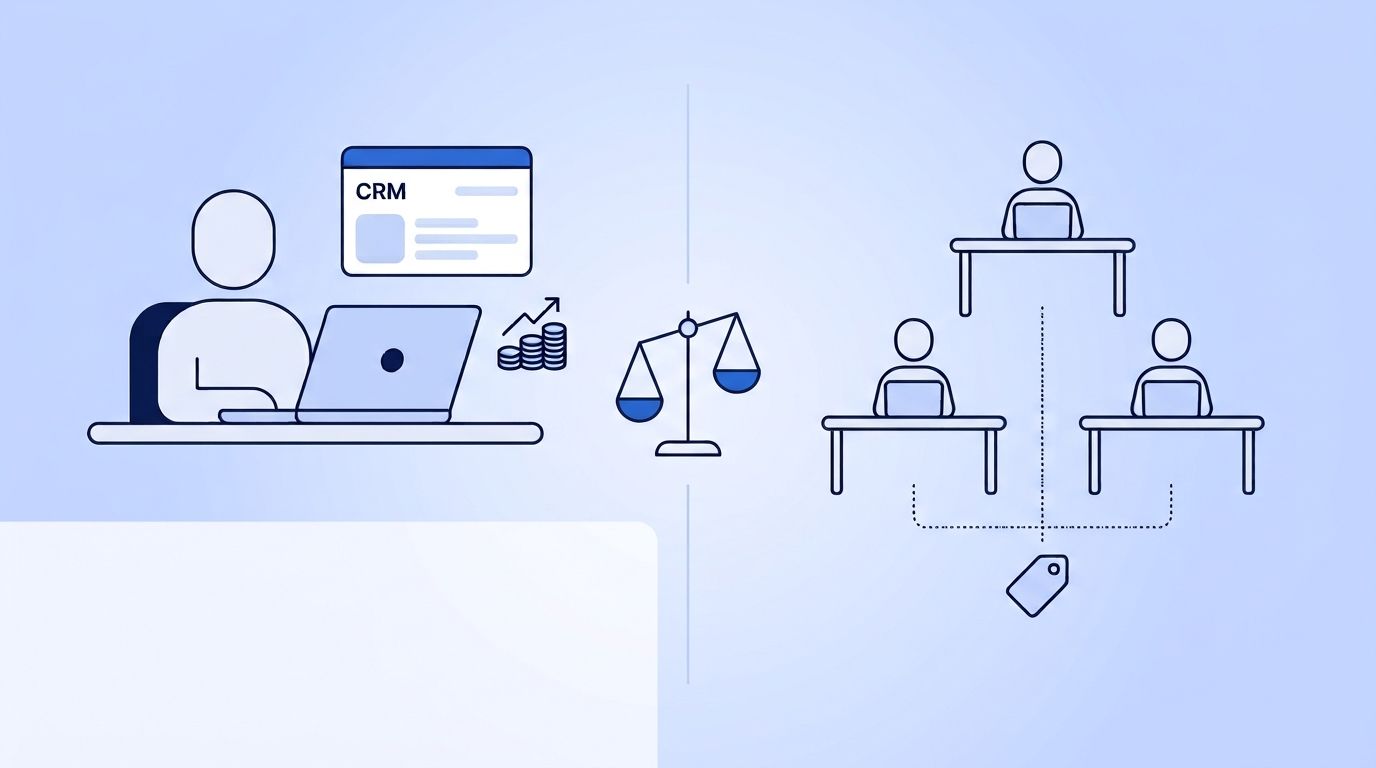
What Does In-House CRM Data Cleaning Really Cost?
A dedicated data steward earns a median base salary of $81,798 a year, ranging from $57,000 to $125,000 depending on seniority and market (Payscale, updated May 2026). That's before you account for what the base number doesn't include.
Benefits and overhead made up 29.9% of total private-industry compensation in the U.S. as of December 2025, against 70.1% for wages (Bureau of Labor Statistics, Employer Costs for Employee Compensation). Divide the $81,798 base by 0.701 and you land on roughly $116,700 as the fully loaded annual cost of one in-house data steward — not the headline salary number most budget conversations start from.
Most build-vs-buy comparisons stop at the base salary line, which understates the true in-house cost by about 42%. The gap matters because it's exactly the size of a mid-tier BPO contract — meaning the "cheaper" option often depends entirely on which cost you forgot to count.
Sales operations analysts, who frequently inherit CRM hygiene work alongside their core duties, show a similarly wide range: $80,453 total average pay on Salary.com, $71,998–$73,151 on Payscale, and figures reported north of $100,000 on Glassdoor. That spread alone tells you "in-house labor cost" isn't a single clean number — it's a range you need to model against your own market and seniority requirements.
For deeper context on what enrichment actually replaces in that headcount math, see our breakdown of programmatic CRM enrichment benefits.
What Does Outsourcing Data Cleaning Actually Cost?
Offshore data-entry labor in the Philippines typically runs $6–$8 an hour, according to BPO market guides from GigaBPO and Magellan Solutions (2026 estimates). Annualized full-time, that's roughly $12,500–$16,600 a year — a fraction of the in-house fully loaded figure above, and the reason so many finance teams default to "just outsource it."
That comparison is incomplete on its own. These are vendor-published market rates, not audited benchmarks, and they typically cover raw data entry rather than the judgment calls involved in merging duplicate records, validating title changes, or flagging bad matches. Most BPO engagements also add a supervisor or QA layer on top of the base seat rate, which rarely shows up in the headline hourly number a sales rep gets quoted.
Domestically, the U.S. median wage for a data entry keyer is $39,850 a year, or $19.16 an hour (Bureau of Labor Statistics, OEWS, May 2024) — useful as a floor if you're comparing a domestic outsourced or contract option instead of an offshore one.
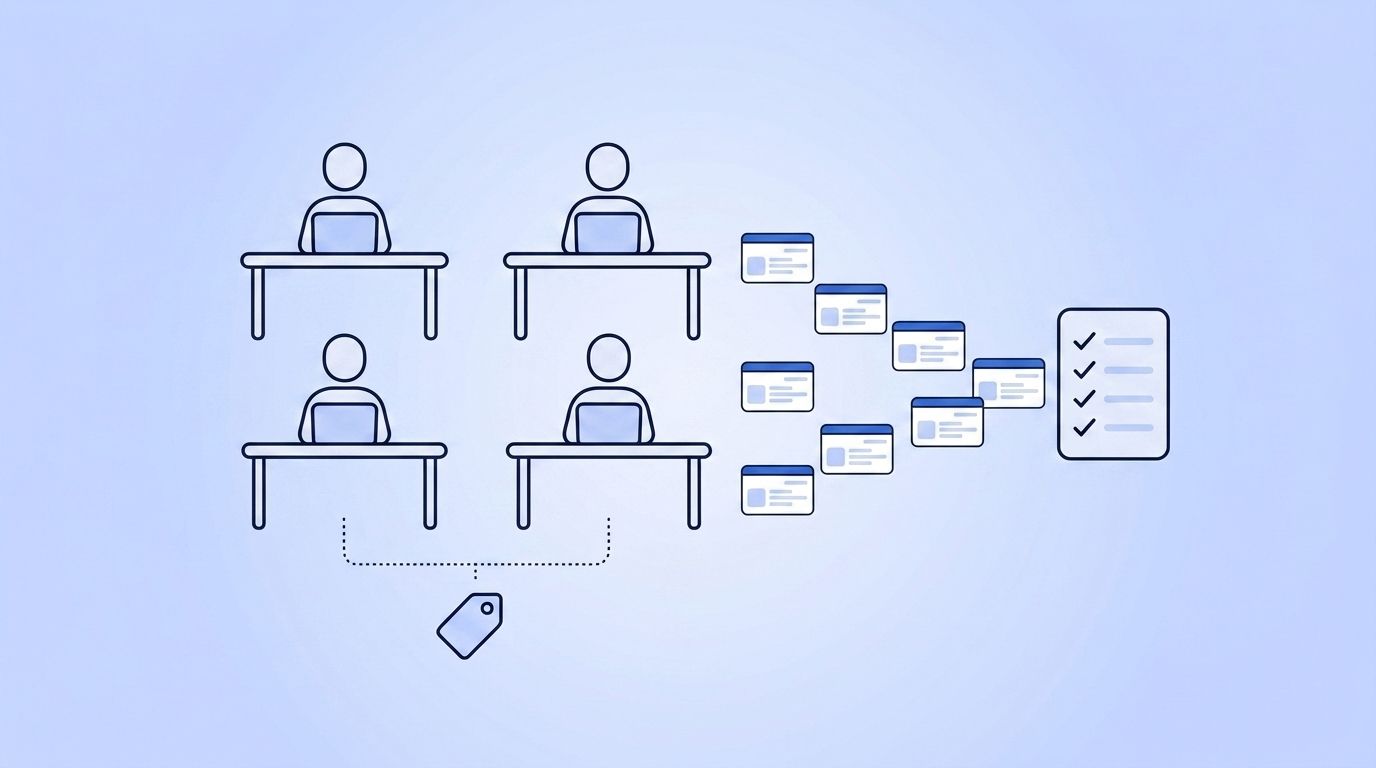
A third option sits between the two: paying for enrichment software or an API instead of paying for either kind of labor. Apollo.io's published plans range from a free tier up to roughly $119–$149 per user, per month for its top self-serve plan (Apollo.io pricing, 2026), while ZoomInfo's quote-only enterprise contracts are reported in the $15,000–$60,000+ per year range depending on seats and modules — figures worth confirming directly with each vendor before budgeting against them.
Why Do Companies Get the Labor Math Wrong?
Companies get the labor math wrong by comparing a one-time cleanup cost against a recurring decay problem. B2B contact databases decay at roughly 22.5% a year — about 2.1% a month — as people change jobs, companies get acquired, and emails go stale (HubSpot Database Decay model, based on MarketingSherpa's compounding-decay methodology).
That decay rate is the detail most in-house-vs-outsourced comparisons leave out. A one-time cleanup project, whether done by an analyst or a BPO team, buys you a clean database for a few months at most. [UNIQUE INSIGHT] Run the 22.5% annual decay rate forward and a database cleaned once a year is, on average, already 11% stale by the six-month mark — which means the real comparison isn't "in-house vs. outsourced," it's "which option can run continuously without your headcount cost scaling with it."
The other miscalculation is opportunity cost. Sales reps lose about 14 of their 51 work hours a week — roughly 27% — to administrative tasks, a category that includes manual data entry and record cleanup, according to Forrester's Sales Activity Study. When cleanup work quietly lands on quota-carrying reps instead of a dedicated function, the real cost shows up in the pipeline, not the payroll line.
In-House vs. Outsourced: Which Wins on Speed, Accuracy, and Control?
Neither option wins outright on accuracy — the deciding factor is process design, not headcount location. A 2023 systematic review and meta-analysis of data-entry methods in clinical research found single data entry produces a 0.29% error rate, double-key entry drops that to 0.14%, and optical scanning runs 0.74% (PMC/NCBI, December 2023). Manual record abstraction — the closest analog to a person eyeballing and correcting CRM fields by hand — showed a 6.57% error rate in the same review.
That gap is the real argument for structured process over headcount location. A rigorous double-entry or automated-validation workflow, whether staffed in-house or outsourced, will consistently beat a single person manually reviewing records — regardless of whether that person sits in your office or a BPO seat overseas.
For the mechanics behind that comparison, see our LinkedIn People API overview.
Where Does an Enrichment API Fit Into the Decision?
An enrichment API fits in as a third path that replaces the labor question entirely by pulling structured data at request time instead of paying someone to type it in. Instead of a person or team manually re-typing company names, titles, and headcounts, an API call fetches current People Profile or company data on demand, which sidesteps both the fully loaded analyst cost and the offshore-labor QA question.
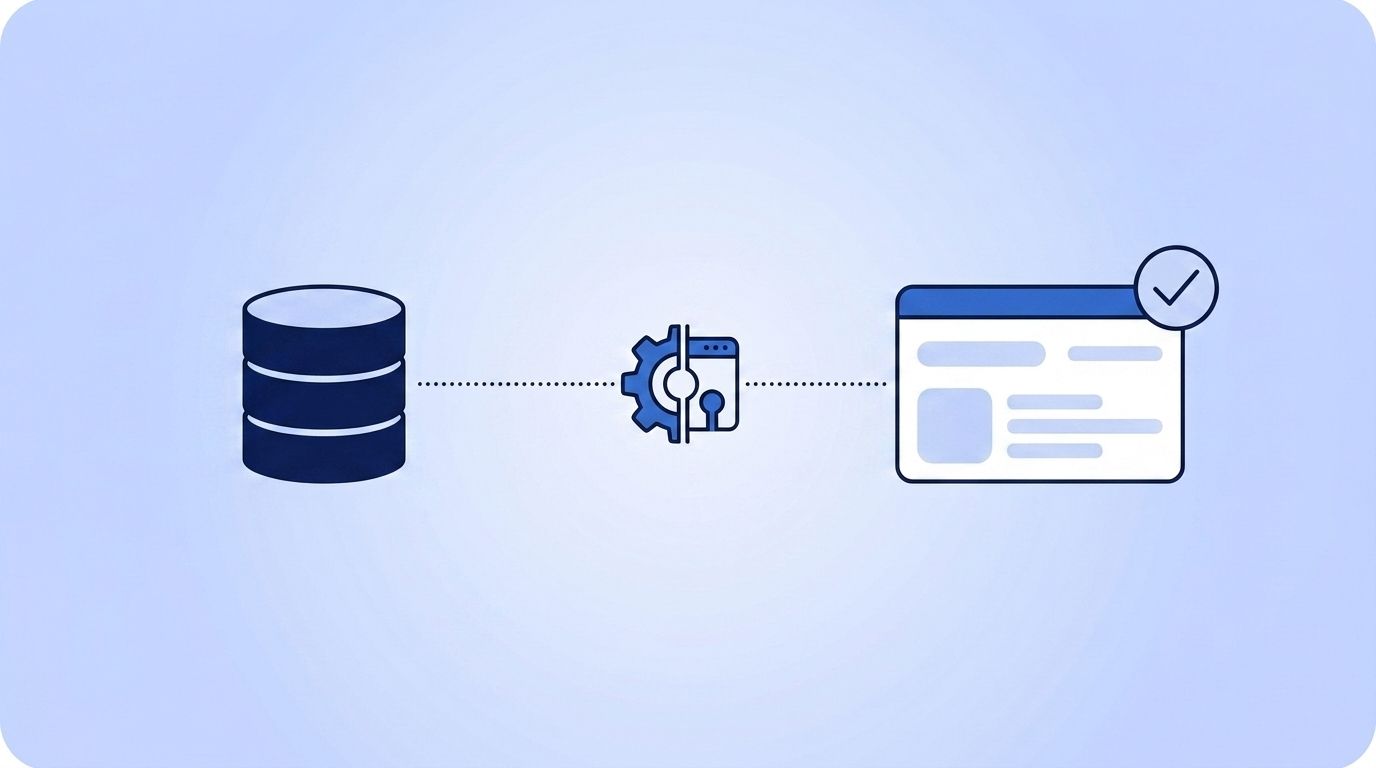
This doesn't eliminate the labor question so much as shrink it. Someone still has to own the integration, review edge cases, and decide which fields matter for your ICP — but that's a fraction of a role, not a full headcount or an outsourced seat. Teams already running enrichment through HubSpot workflows or Clay tables tend to treat cleanup as continuous maintenance instead of a project with a start and end date — which lines up with the 22.5% annual decay rate better than either a one-time in-house sprint or a one-time BPO contract does.
For a closer look at what real-time profile data replaces in a manual cleanup workflow, see our guide to real-time B2B people enrichment.
How Should You Decide Between In-House, Outsourced, and API-Based Cleaning?
Decide based on volume, frequency, and how much judgment the work actually requires — not on which hourly rate looks smallest on a spreadsheet. High-judgment work, like resolving conflicting company matches or setting your ICP data model, tends to justify an in-house owner even at $116,700 fully loaded, because mistakes there are expensive to unwind later.
High-volume, low-judgment work — repetitive field standardization, duplicate flagging, bulk re-formatting — is where offshore BPO rates of $6–$8 an hour start to make sense, provided you budget for supervision and QA on top of the seat cost. And continuous, structured data that decays predictably, like company headcount or job titles, is exactly what an ICP Company Search endpoint is built to keep current without adding headcount at all.
Outsourcing adoption is rising in parallel: 80% of executives plan to maintain or increase third-party outsourcing investment, half already outsource front-office work like sales and marketing support, and 83% are integrating AI into those outsourced services (Deloitte, 2024 Global Outsourcing Survey). Read that as a sign the three-way split — in-house, outsourced, and automated — is becoming the norm, not a temporary phase before everyone picks one lane. See how a live LinkedIn data API compares to a static database vendor if a data vendor contract is also on your shortlist.
Frequently Asked Questions
Is it cheaper to outsource data cleaning or hire in-house?
Outsourced offshore labor is cheaper per hour — roughly $6–$8 an hour versus a $116,700 fully loaded in-house data steward — but that comparison ignores supervision, QA rework, and output judgment. For high-volume, low-judgment cleanup, outsourcing usually wins on raw cost; for ICP-defining decisions, in-house ownership tends to pay for itself.
How often does CRM data actually go stale?
B2B contact databases decay by roughly 22.5% a year, or about 2.1% a month, according to HubSpot's Database Decay model built on MarketingSherpa's compounding methodology. That means data cleaning is a recurring maintenance cost, not a one-time project you finish and forget.
What's the real cost of an in-house data steward?
A data steward's median base salary is $81,798 (Payscale, 2026). Applying the BLS's 29.9% benefits-to-total-compensation ratio for December 2025, the fully loaded annual cost lands around $116,700 — about 42% higher than the base salary alone suggests.
Does outsourcing data cleaning hurt data accuracy?
Not inherently. A 2023 meta-analysis found double-key data entry error rates of just 0.14%, versus 6.57% for manual record abstraction — meaning process design, not whether staff sit in-house or offshore, is what actually drives accuracy.
Can an API replace both in-house and outsourced data cleaning?
An API can replace the repetitive re-entry work in both models by pulling current company and people data at request time, such as through the Datamagnet Quickstart. It doesn't eliminate the need for someone to own data strategy, but it shrinks that role from a headcount to a fraction of one.
The Bottom Line
The real cost comparison isn't in-house versus outsourced — it's continuous versus one-time. In-house data stewards run roughly $116,700 fully loaded, offshore BPO seats run $6–$8 an hour before supervision costs, and both approaches are fighting a database that decays 22.5% a year regardless of who's cleaning it.
Before picking a lane, map your cleanup work by volume and judgment required, price out all three paths — in-house, outsourced, and API-based — against your actual decay rate, and budget for the ongoing maintenance instead of a one-time project. Teams that treat data hygiene as infrastructure, not a task to assign, are the ones who stop re-fighting this decision every year.
See how a live enrichment API fits into your stack on the Datamagnet pricing page, or start with the API introduction to see what it replaces.
