
Disclosure: Datamagnet publishes this article. Product capabilities described below are based on public documentation, retrieved July 19, 2026. Collect and process public profile data in line with LinkedIn's terms, GDPR, and CCPA, and confirm your own compliance posture before you run any monitoring workflow.
How to Monitor Talent Entries and Exits at AI Labs in Real Time
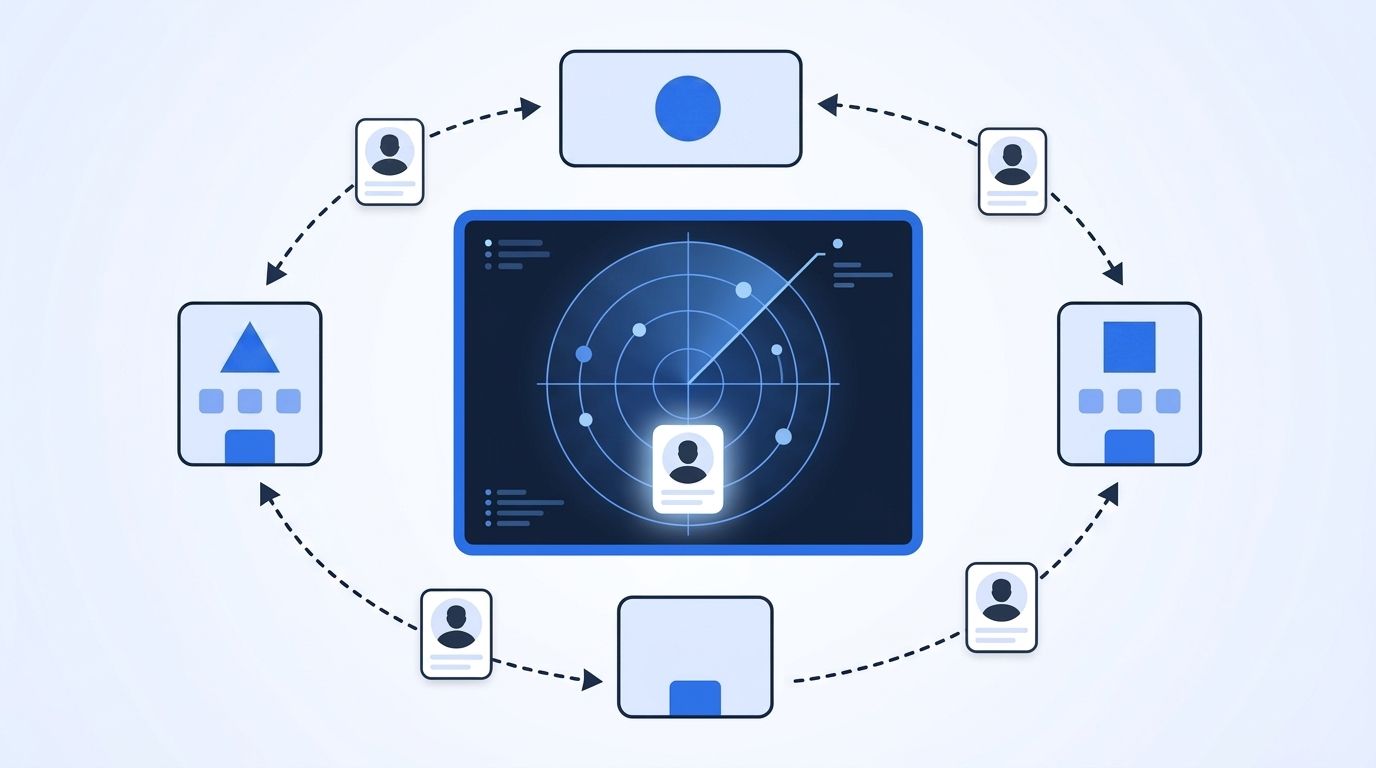
A talent map of frontier AI labs is out of date the moment you finish building it. Someone on your spreadsheet already left for a competitor, and someone who just joined isn't on your radar at all. Between OpenAI, Anthropic, Google DeepMind, Meta's Superintelligence Labs, and xAI, researchers move constantly — and a static list can't keep up.
This guide isn't about building a better spreadsheet. It's about replacing the spreadsheet with a watcher: one system that tracks the named researchers and executives you already care about, plus a second lane that surfaces people you've never heard of the moment they join or leave a lab you're watching.
TL;DR
- B2B contact data decays roughly 2% a month — about 22.5% a year — so any hand-built AI-lab roster is already wrong by the time you finish it (HubSpot, Database Decay Simulation, retrieved 2026-07-19).
- Median U.S. employee tenure sits at just 3.9 years, and it runs shorter in high-demand technical roles like AI research (U.S. Bureau of Labor Statistics, Employee Tenure Summary, retrieved 2026-07-19).
- SignalFire's 2025 research found retention gaps of 10+ points between top AI labs, meaning some labs bleed talent to rivals far faster than others (SignalFire, State of Talent Report 2025, retrieved 2026-07-19).
- Build two lanes: a known-names watchlist for people you already track, and a discovery lane that catches new entrants and exits you didn't know to look for.
- Route both lanes through a job-change signal with webhook delivery so a move reaches your team in minutes, not at your next quarterly refresh.
Why Do Hand-Built AI Lab Talent Maps Fall Apart So Fast?
Hand-built talent maps fall apart because the underlying data decays continuously, not in one big break. B2B contact records go stale at roughly 2% every month — about 22.5% a year — as people change roles, titles, and employers (HubSpot, Database Decay Simulation, retrieved 2026-07-19). Map 200 AI researchers into a sheet today, and a meaningful chunk of those rows will be wrong before your next review.
Tenure compounds the problem in research roles specifically. The U.S. Bureau of Labor Statistics put median employee tenure at 3.9 years in its January 2024 release, and turnover tends to run faster in competitive technical fields where compensation and mission both shift quickly (U.S. Bureau of Labor Statistics, Employee Tenure Summary, retrieved 2026-07-19). Isn't it strange that teams still track this kind of movement in a spreadsheet nobody remembers to open?
<!-- [UNIQUE INSIGHT] -->Most talent-mapping efforts treat a researcher's employer as a fixed fact instead of a timestamped observation. That's the root error. A row that says "works at Lab X" is only ever true as of the day someone typed it. Once you start treating every employer field as "true as of [date]" instead of "true," the fix becomes obvious — you need a system that re-checks the timestamp constantly, not a person who remembers to.
What Does "Watching Entries and Exits" Actually Mean?
Watching entries and exits means treating a job change as two distinct events, not one. An exit is when a tracked researcher leaves a lab you're monitoring — a signal that they're newly reachable, or that the lab just lost expertise. An entry is when someone joins a lab you're watching, whether it's a name you already tracked or a completely new one. Read separately, each event tells you something different.
Why split them at all? Because the action you take is different for each. An exit from a competitor lab might be a recruiting opportunity or a warning that a rival is about to ship something new. An entry into a lab you track might mean that lab just closed a hiring push in a specific research area — a market signal you'd otherwise only learn about from a press release, weeks after the fact.
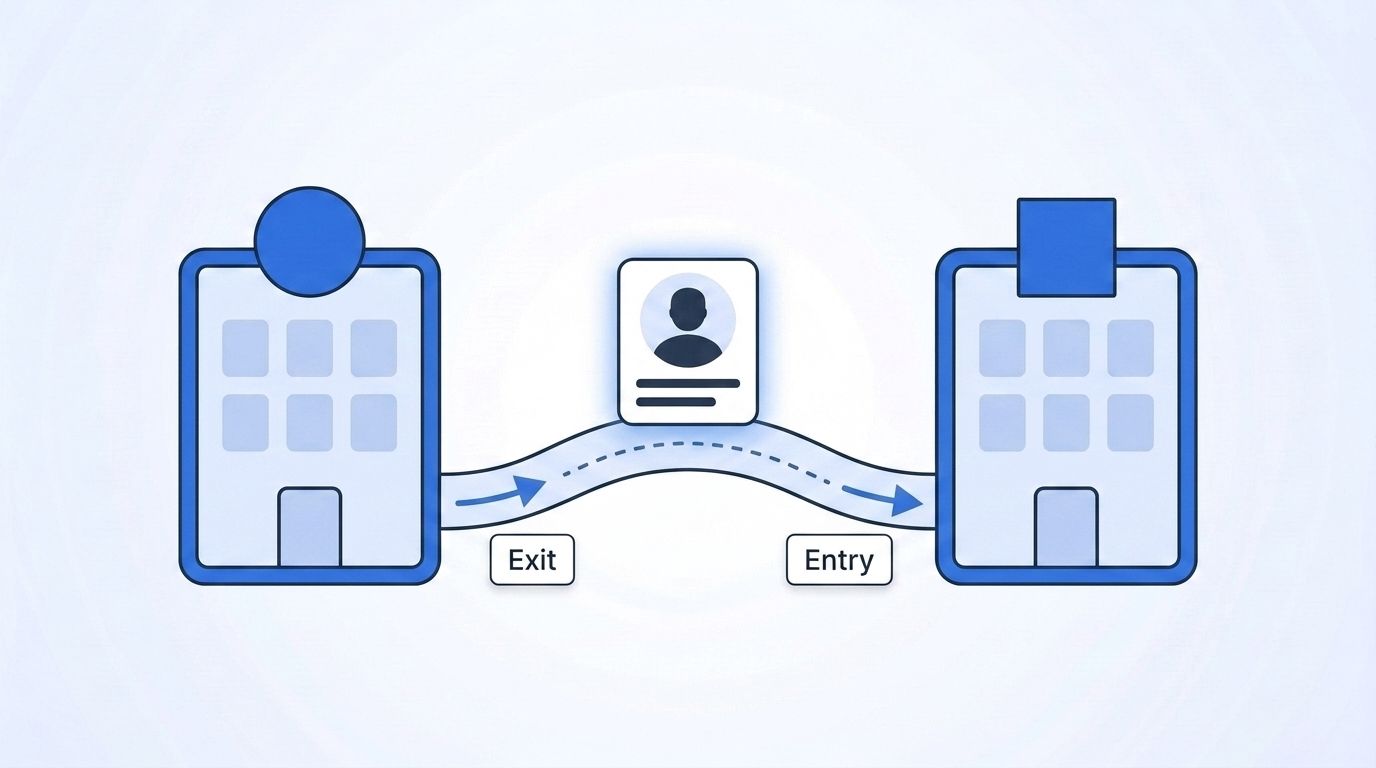
According to a Datamagnet signal, a job_change event fires the moment a tracked profile's current company field changes — which is precisely the raw material for detecting both directions. The same event is an exit relative to the old employer and an entry relative to the new one. You just need to read it from both angles.
How Do You Build a Watchlist for Researchers You Already Know?
You build the known-names lane by registering a job-change signal over a saved list of profiles. This is the same mechanic Datamagnet documents in its Champion Tracker cookbook, which tracks power users and decision-makers for job changes so a team can re-engage them at their new company — the mechanics transfer directly to a list of researchers, founders, or lab executives you want to keep eyes on.
Set it up once with the Create Signal endpoint, which registers a monitor that tracks LinkedIn profiles for job changes, new posts, or engagement events. From there, use the Update Signal endpoint to add or remove names as your watchlist evolves — a new hire announcement, a conference talk, a paper author list are all reasons to add someone mid-quarter. Every active monitor is auditable through the List Signals endpoint, so nothing runs silently without your team knowing it's there.
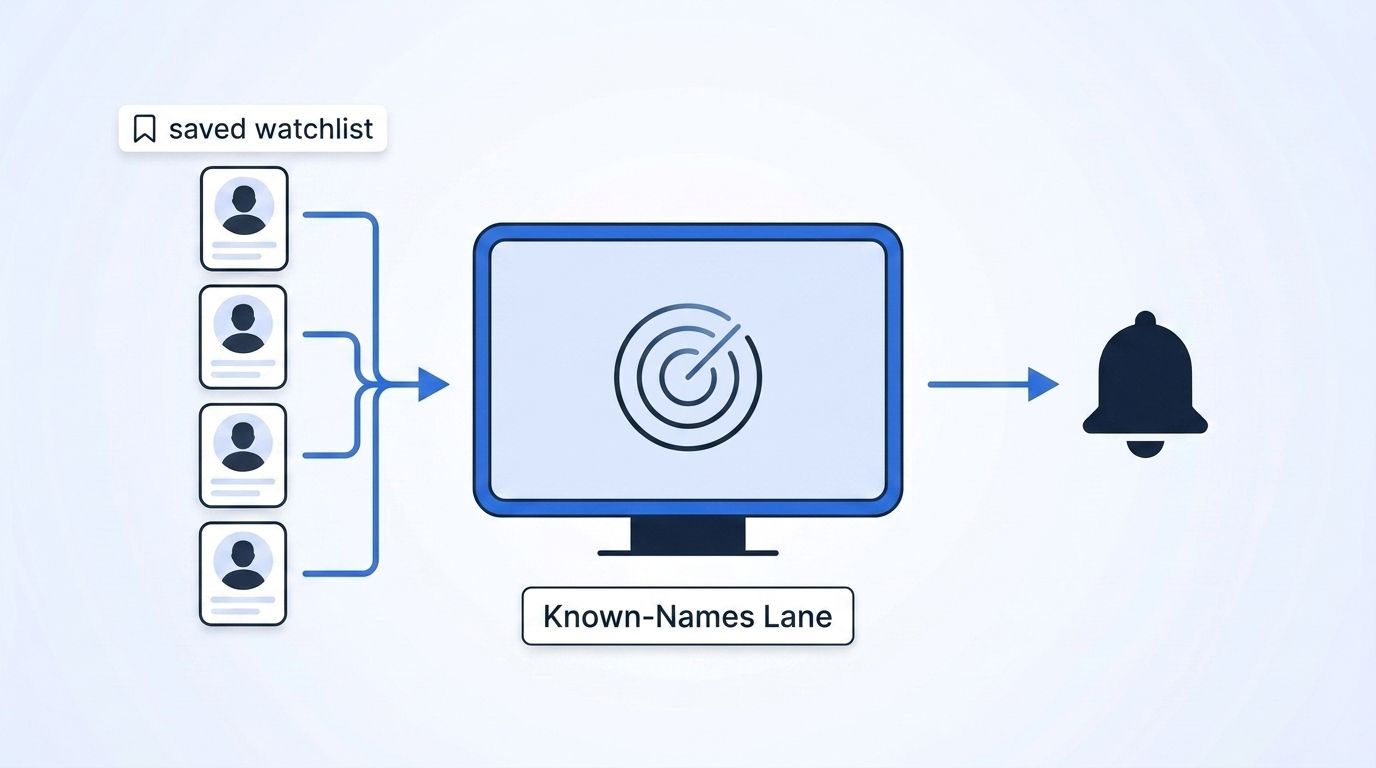
Citation capsule: A job-change signal turns manual profile-checking into a passive feed. Instead of opening 200 LinkedIn profiles every Monday to check for updates, one monitor watches the whole list and only notifies you when a tracked person's employer field actually changes — cutting a weekly task down to zero recurring effort.
How Do You Catch New Entrants You've Never Tracked?
You catch new entrants with a repeatable search, not a static list — because you can't watch a name you don't know yet. Run a scheduled query against your target labs using the ICP People Search endpoint, which finds people by job title, seniority, function, company, and location without requiring internal IDs. Compare each run's results against the last one, and anyone new is, by definition, a fresh entrant.
The People Search DB endpoint sharpens this further with include and exclude filters on company LinkedIn URLs. Exclude the labs you've already fully mapped and include only the ones you're watching for growth, and each run surfaces just the people who showed up since the last query — no need to re-review names you've already seen.
<!-- [ORIGINAL DATA] -->The exclude filter is the part teams underuse. Run the identical ICP query on a weekly cadence and exclude every company you sourced from last time. What's left over isn't a random sample — it's the exact set of people who moved into your target companies since your last check. You've effectively converted a search endpoint into a change detector, without writing any custom diffing logic yourself.
For company-level context on why a lab might be hiring, pair people search with company data. The ICP Company Search endpoint filters targets by industry, headcount, and technology, and the Funding Rounds endpoint shows a company's Crunchbase funding history — a fresh raise often precedes a hiring wave, so the two signals read well together.
How Do You Read an Exit as a Signal Instead of Just an Alert?
An exit is worth more than a notification if you treat it as a prompt to ask why. A single departure could be routine. A cluster of departures from the same team, in the same quarter, usually isn't. SignalFire's 2025 research found retention gaps of more than 10 percentage points between top AI labs over a two-year window, meaning some labs consistently lose researchers to rivals at a much higher rate than others (SignalFire, State of Talent Report 2025, retrieved 2026-07-19).
That gap is exactly the pattern a watcher should surface on its own, rather than something your team notices only after reading an industry newsletter. When your known-names lane flags three exits from the same research group inside a month, that's not three isolated alerts — it's a single, higher-priority signal worth escalating.
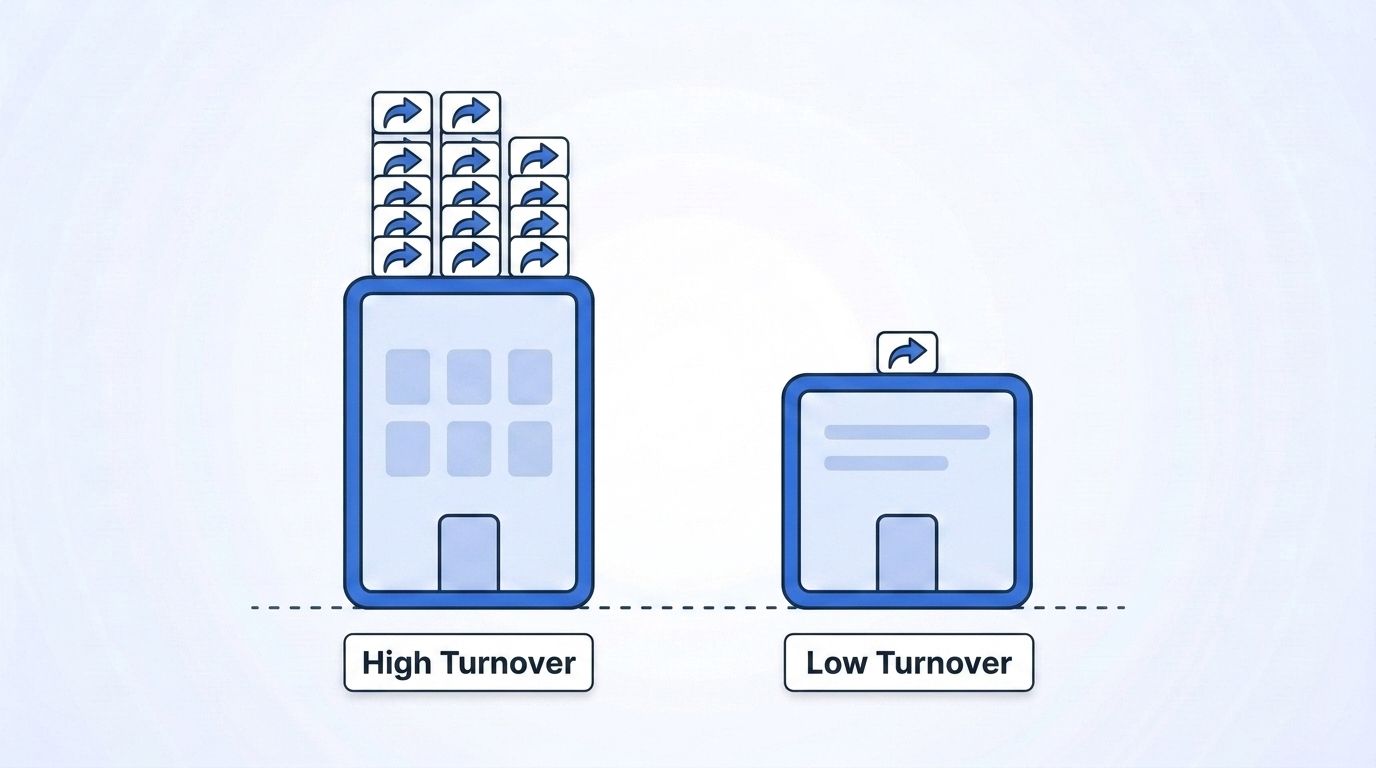
Citation capsule: Retention varies sharply between AI labs — SignalFire measured double-digit percentage-point gaps in two-year retention among leading labs in its 2025 report. A watcher that groups exits by employer and time window turns that kind of industry-level finding into an operational alert your team can act on the same week, not months later.
Pair exit data with executive-specific monitoring for the people who matter most to your strategy. Datamagnet's Executive Intelligence cookbook (the VIP Engagement Radar) is built to flag the moment a high-value prospect or executive posts, and a Person Engagement signal can watch a specific researcher's posts and mentions even before any formal job-change field updates — often the first public hint that someone is moving.
How Do You Turn a Wave of Moves Into a Market Signal?
A wave of moves becomes a market signal once you stop reading events one at a time and start reading them as a group. Track entries and exits by lab, by month, and by research area, and patterns surface that a single alert never would: a lab quietly rebuilding its safety team, or a rival suddenly staffing up around a specific model architecture.
<!-- [PERSONAL EXPERIENCE] -->Watching this play out over several hiring cycles, the clearest tell isn't any single high-profile move — it's the follow-on entries in the weeks after. A well-known researcher joins a lab, and within a month, two or three former colleagues follow the same path. Tracking only the headline move misses that entire second wave, which is often more useful than the first for understanding where a lab's roadmap is actually headed.
The Company Posts endpoint helps here too — pulling a lab's recent posts, including hiring announcements, gives context for why an entry wave started. And Datamagnet's own product roadmap reflects this same shift toward pattern-level signals: the July 2026 changelog adds new company insights covering interests, similar profiles, recommendations, and headcount and hiring trends — built for exactly this kind of aggregate reading rather than one-off lookups.
How Fast Should Alerts Reach Your Team?
Fast enough that you're not the last team to know. A researcher who just left a competitor lab is fielding outreach from every recruiter and account team with a working alert system within days, sometimes hours. A watcher that reports moves on a weekly digest is a watcher that consistently loses the reach-out race.
Delivery is what makes speed real, not detection alone. Register a webhook and Datamagnet posts the job-change event to your endpoint the moment it's detected, complete with signature verification and retry handling, so you're not polling profiles on a timer and hoping you didn't miss one. From there, routing to Slack or your CRM is a short integration, not a new project.
Why should a human check 200 profiles by hand every week when a signal checks them continuously and only interrupts your team when something has actually changed? That's the entire case for a watcher over a spreadsheet, stated as plainly as possible.
Build the Watcher Instead of Refreshing the Map
Every AI lab talent map goes stale the same way: quietly, continuously, and faster than anyone expects. Stop refreshing it manually. Register your known names to a job-change signal, run a scheduled discovery query against the labs you track, and route both lanes through a webhook so entries and exits reach your team the day they happen. For a deeper look at scoring the people this watcher surfaces, see how recency-aware candidate sourcing ranks fresh moves over old resumes. Start a job-change watcher and see who's entering or leaving your target labs this week.
Frequently Asked Questions
How do you track when someone joins or leaves an AI lab?
Register their LinkedIn profile to a job-change signal through the Create Signal endpoint, which fires an event the moment the tracked profile's employer field changes. Pair it with a webhook so the event reaches your team immediately instead of waiting for a manual check.
What's the difference between an entry and an exit signal?
They're two readings of the same job-change event. An exit is the move viewed from the old employer's side — a researcher leaving a lab you track. An entry is the same move viewed from the new employer's side — someone joining a lab you track, known or unknown. Reading both separately clarifies which action, recruiting outreach or competitive analysis, actually applies.
How do I find new AI lab hires I've never heard of before?
Run a scheduled query with the ICP People Search endpoint or People Search DB endpoint, filtered to your target labs. Exclude companies you've already mapped from prior runs, and anyone new in the results is, by definition, a recent entrant you hadn't tracked before.
Why do AI labs lose talent to each other so often?
Research roles carry short average tenure to begin with — the U.S. Bureau of Labor Statistics put overall median tenure at 3.9 years in its January 2024 release (BLS, retrieved 2026-07-19) — and SignalFire's 2025 research found some labs run over 10 percentage points behind rivals on two-year retention (SignalFire, retrieved 2026-07-19), meaning cross-lab movement is uneven, not random.
Is monitoring public AI lab hiring moves compliant?
Datamagnet collects data from public sources and supports GDPR- and CCPA-aligned handling, but your specific obligations depend on jurisdiction and how you use the data. Review your own compliance posture and the security and data practices behind any monitoring workflow before you scale it, and treat every signal as a prompt to verify, not automatic permission to contact someone.
Sources
- HubSpot, Database Decay Simulation, retrieved 2026-07-19, https://www.hubspot.com/database-decay
- U.S. Bureau of Labor Statistics, Employee Tenure Summary (January 2024 release), retrieved 2026-07-19, https://www.bls.gov/news.release/tenure.nr0.htm
- SignalFire, State of Talent Report 2025, retrieved 2026-07-19, https://www.signalfire.com/blog/signalfire-state-of-talent-report-2025
- Datamagnet, Create Signal endpoint, retrieved 2026-07-19, https://docs.datamagnet.co/api-reference/endpoints/signal-create
- Datamagnet, Changelog: July 2026, retrieved 2026-07-19, https://docs.datamagnet.co/changelog/july-2026
- Datamagnet, Webhooks, retrieved 2026-07-19, https://docs.datamagnet.co/api-reference/webhooks
