
Disclosure: This article is published by Datamagnet. Vendor claims are self-reported unless otherwise noted.
How to Evaluate Data Enrichment Vendors: 8 Questions to Ask Before You Buy
In 2025, 37% of CRM users said they lost revenue directly because of poor data quality, and 76% said less than half their CRM records were accurate and complete (Validity, The State of CRM Data Management in 2025, 2025). That's not a data-hygiene problem. It's a vendor-selection problem, because most of that bad data came in through an enrichment tool that demoed well and then quietly decayed.
Every data enrichment vendor's homepage says the same three things: accurate, real-time, easy to integrate. You can't tell which ones are true from a sales deck. This guide gives you eight specific questions to ask in the eval process — plus what a good answer sounds like and what a dodge sounds like — so you're comparing evidence instead of adjectives.
Key Takeaways
- 37% of CRM users report lost revenue tied to bad data, and 76% say less than half their CRM data is accurate (Validity, 2025).
- Ask vendors to run a match-rate test on your own account list, not their marketing page — self-reported benchmarks vary wildly between competitors.
- Get uptime SLAs, pricing, and data-sourcing methodology in writing before you sign, not after your first support ticket.
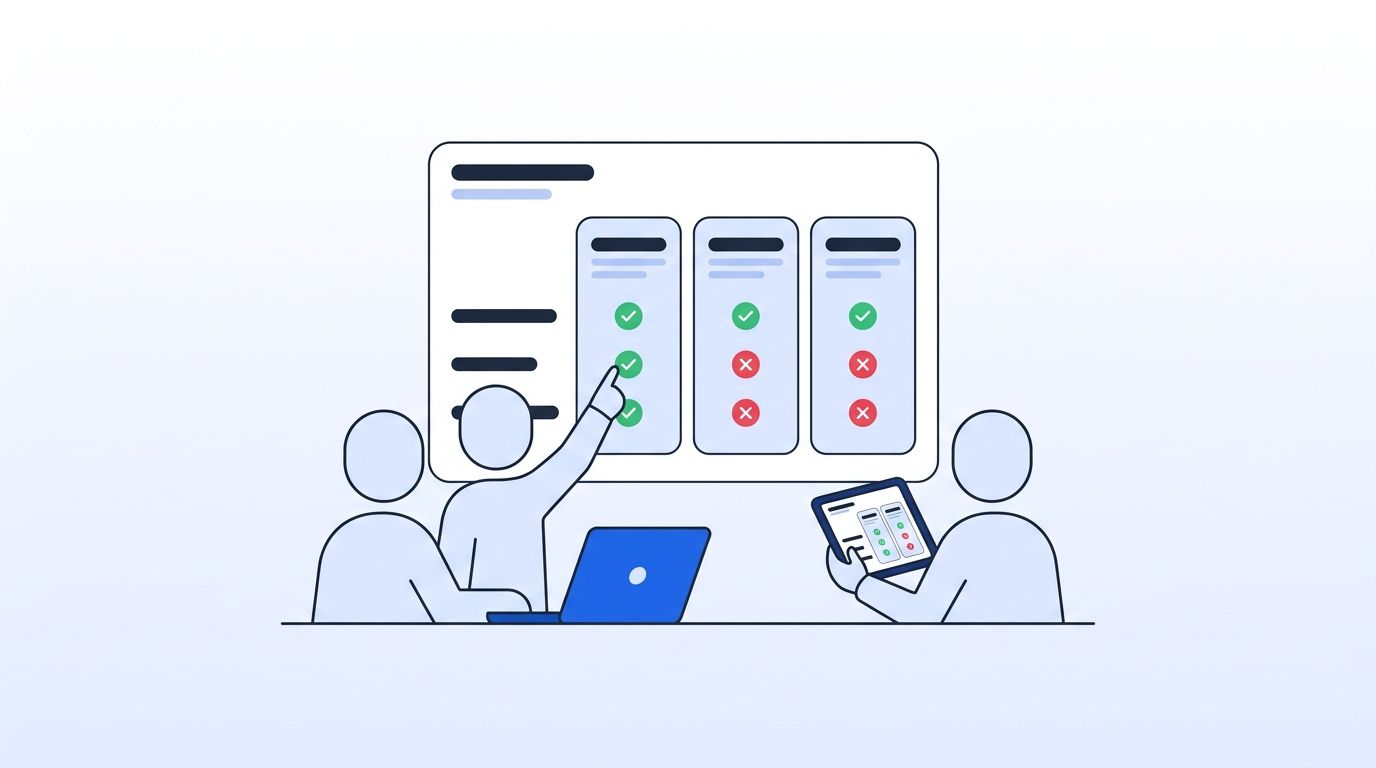
How Fast Does Their Data Actually Decay?
At least 23% of an email list decays within a single year, based on more than 11 billion emails processed in 2025 (ZeroBounce, The Email List Decay Report, 2025). Ask a vendor how they refresh records and how often — "continuously" is not an answer, a refresh cadence in days or weeks is.
People change jobs more than ever. Workers entering the job market today are on pace to hold roughly twice as many jobs over their careers compared to 15 years ago (LinkedIn Economic Graph, Work Change Report, January 2025). A static database snapshot from last quarter is already missing a meaningful chunk of job changes.
The real tell isn't whether a vendor claims "real-time" data — almost all of them do. It's whether their pricing and infrastructure actually support fetching a record at request time versus serving it from a cache built weeks ago. Ask them directly: is this record pulled live right now, or served from a stored snapshot? For a deeper comparison of live-fetch versus static-database models, see Datamagnet vs. ZoomInfo: live LinkedIn data versus a static contact database.
Will They Test Match Rate Against Your Actual Account List?
Vendors publish wildly different self-reported match rates — one competitive benchmark showed company match rates ranging from roughly 33% to 98% depending on which vendor ran the test (Explorium, 9 Best Providers for Company Data API, June 2026). When every vendor's own comparison ranks itself first, none of those numbers should be your decision criteria.
Ask instead for a live test: send 200-500 of your real target accounts or contacts and see what comes back matched, enriched, and correct. This is the single most useful diagnostic in the entire evaluation, because it removes marketing copy from the equation entirely.
A short trial with free credits is a reasonable proxy if a full test list isn't practical yet. Datamagnet's People API includes 10 free credits specifically so you can run this test before committing to a contract, and the full API reference shows exactly what a real request and response look like before you write any code.
Is the Uptime Commitment in Writing, or Just a Number on a Landing Page?
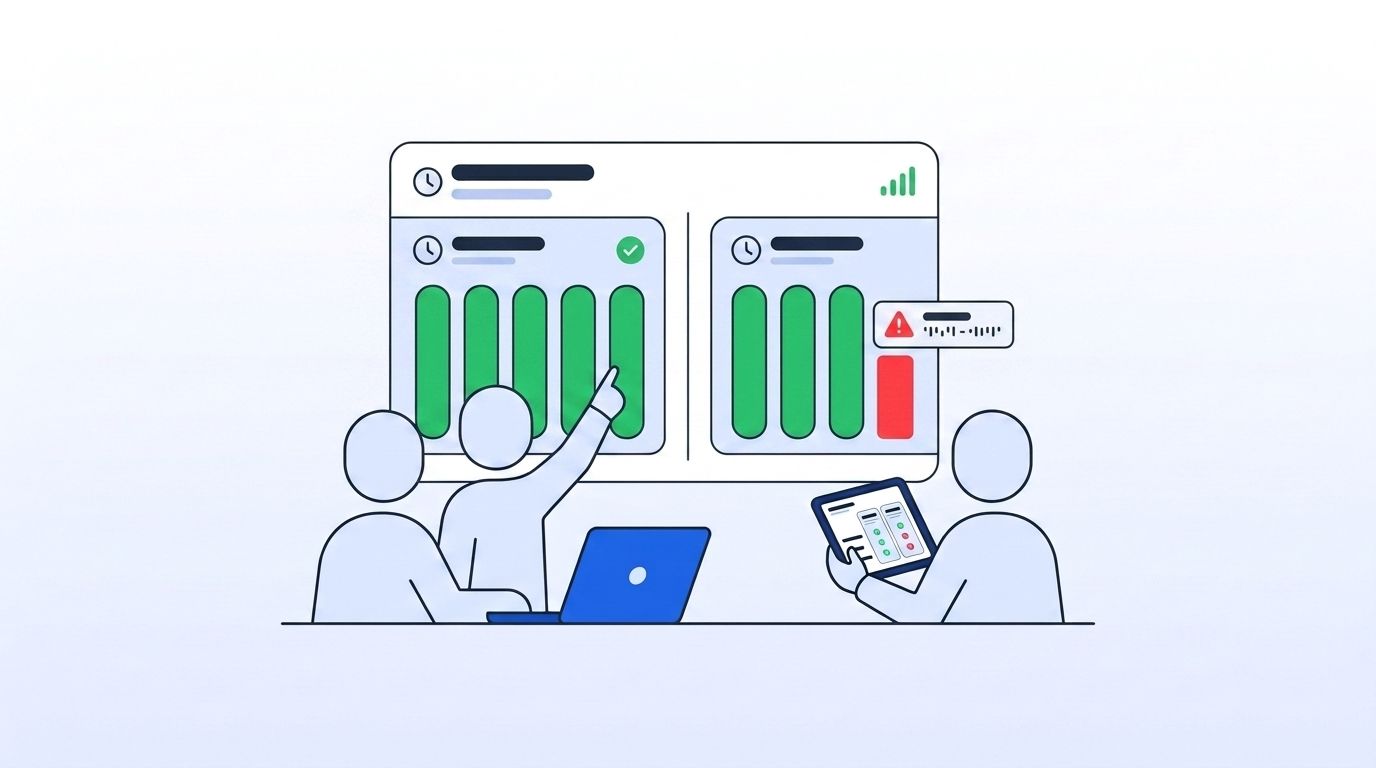
Average API uptime across industries dropped from 99.66% to 99.46% between Q1 2024 and Q1 2025 — a 60% increase in downtime, from roughly 34 minutes a week to 55 minutes (Uptrends, The State of API Reliability 2025, 2025). That gap matters more than it sounds: a 99.9% SLA allows about 8 hours 46 minutes of downtime a year, while 99.5% allows over 43 hours.
Isn't a percentage on a pricing page basically the same as a contractual SLA? It isn't. Ask what happens when they miss it — credits back, a service credit, a termination right — and get that written into the contract, not just stated in a sales call.
Teams that skip this step tend to find out the hard way, usually during a launch week when an enrichment call times out mid-campaign and there's no documented remedy to point to. Check whether the vendor publishes a real-time status page and a specific uptime target, like Datamagnet's security and reliability practices, before you assume "enterprise-grade" means anything specific.
Can You See Full Pricing Before You Talk to a Salesperson?
Only 4% of B2B software vendors listed on G2 published explicit pricing as of March 2025 (G2, Is B2B Software Pricing Transparency Broken?, March 2025). If a vendor's pricing page says "contact sales" for a straightforward per-record or per-credit rate, that's often a sign the number moves depending on how much negotiating leverage you show up with.
Credit-based pricing is also shifting fast. The number of companies using credit models in the PricingSaaS 500 Index jumped from 35 at the end of 2024 to 79 by 2025 — a 126% year-over-year increase (PricingSaaS 500 Index, cited in Growth Unhinged, 2025). Credits can be fairer than seat licenses if you enrich in bursts, but ask exactly what consumes a credit — does a failed or empty lookup still cost you? Datamagnet, for example, publishes changes to credit consumption for missing LinkedIn profiles so buyers know upfront.
Get the full rate card — including overage rates and what happens if you exceed your plan mid-month — in writing before your first call ends. Compare it against transparent, published pricing rather than a quote that only exists in a PDF.
Where Does the Data Actually Come From — and Is That Legal?
In March 2025, LinkedIn removed the company pages of two lead-gen vendors, Apollo.io and Seamless.AI, both of which offered browser extensions that scraped LinkedIn profile data outside its terms of service (MarTech, Are more lead gen providers disappearing from LinkedIn?, March 2025). That's not a hypothetical compliance risk. It happened to two vendors that plenty of GTM teams were actively paying at the time.
Sourcing method matters even more when personal data is involved. The Dutch Data Protection Authority fined Clearview AI €30.5 million in September 2024 for illegally scraping billions of images without consent (Autoriteit Persoonsgegevens, September 2024), on top of an earlier €20 million fine from Italy's data authority for the same underlying practice. "Public data" and "legally defensible data" aren't automatically the same thing.
Ask a vendor two direct questions: do you scrape behind a login wall or through browser extensions, and are you GDPR/CCPA compliant with documented consent and retention practices? Datamagnet's answer is public-sources-only collection with documented security and compliance practices — ask any vendor you're evaluating for the equivalent page.
Does It Actually Plug Into Your CRM, or Just Claim To?
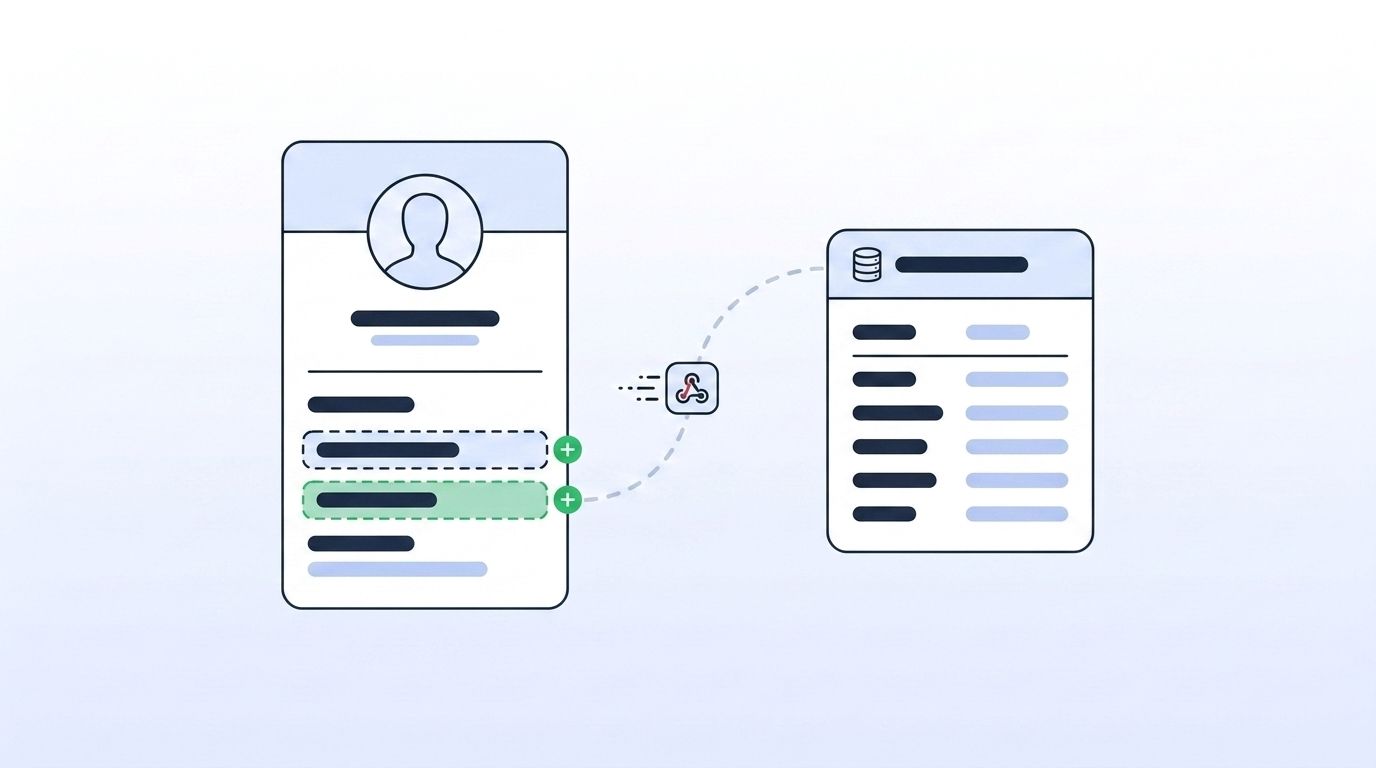
A vendor that lists "HubSpot integration" and one that maintains an actively updated native app in the HubSpot marketplace are not the same thing. One means a webhook you'll build yourself; the other means enrichment fires automatically the moment a contact is created, with no engineering ticket required.
Given that 76% of CRM users already say less than half their data is accurate (Validity, The State of CRM Data Management in 2025, 2025), a clunky integration doesn't just waste time — it reintroduces exactly the decay problem you're trying to solve, because reps skip manual enrichment steps under deadline pressure.
Ask for the specific integration path: native app, native workflow action, or "you'll need to build it with our API." Check whether the vendor supports the tools your team already lives in — HubSpot, Clay, or automation platforms like n8n — before assuming "we have an API" solves the integration question for you.
What's Their Actual Response Time When Something Breaks?
There's no widely published, independently verified benchmark for data-vendor support response times — which is itself useful information, because it means you can't assume any vendor matches an industry standard. You have to ask directly and get a number in writing.
A reasonable evaluation question sounds like this: what's your median first-response time for a support ticket, and is it documented anywhere outside a sales call? Vendors that hesitate to commit to a specific number in writing are telling you something about what happens after the contract is signed, not before.
Test this before you buy, not after. Send a real technical question to support during the trial period and time the reply. A 48-hour response during a free trial rarely gets faster once you're a locked-in customer.
What Happens When They Get It Wrong?
Every enrichment vendor returns some incorrect or missing records — the question is what happens next, not whether it happens at all. Do they refund the credit, offer a correction mechanism, or just shrug?
This is worth writing into your contract explicitly: what's the defined process when a lookup returns a stale job title, a missing company, or an empty result? Ask for the policy in writing, not a verbal assurance. Datamagnet's public credit consumption policy for missing LinkedIn profiles is one example of a vendor documenting exactly this, so you can compare it against whatever policy the vendor you're evaluating offers.
An accuracy claim without a stated methodology is just marketing. Ask what "95% accurate" is measured against — a labeled test set, a customer's own account list, or an internal, unpublished benchmark. If they can't describe the methodology in one sentence, the number probably won't hold up on your data either.
Frequently Asked Questions
How many data enrichment vendors should I evaluate before choosing one?
Three is usually enough to compare pricing, match rate, and support quality without dragging the process out for months. Run the same real account-list test against all three and score them on the same eight questions in this guide, so the comparison is apples-to-apples rather than based on demo polish.
What's the biggest red flag in a vendor evaluation?
A refusal to run a live match-rate test on your own account list. If a vendor only wants to show you their marketing page or a curated demo dataset, that's usually because the real number on your specific list looks worse. Insist on testing against your data, not theirs.
Should I pick the vendor with the highest claimed match rate?
Not automatically. Self-reported match rates in public comparisons have ranged from roughly 33% to 98% for the same market, depending on which vendor ran the test (Explorium, June 2026). Treat every vendor-published number as a starting hypothesis to verify, not a final answer.
Is real-time data always better than a static database?
Usually, for volatile fields like job title, company, and employment status, because at least 23% of contact data decays within a year (ZeroBounce, 2025). For slower-changing fields like company founding year, a static database can be just as accurate and often cheaper.
How do I verify a vendor's compliance claims without a legal team?
Ask for their data-sourcing methodology in one paragraph, and check whether they've had public enforcement actions or platform removals, like the Apollo.io and Seamless.AI removals from LinkedIn in March 2025. A vendor with nothing to hide can usually explain their sourcing in plain English.
The Bottom Line
Pick vendors that answer these eight questions with specifics, not adjectives: a refresh cadence you can name, a match-rate test on your real list, an uptime SLA in a contract, full pricing before a sales call, a sourcing methodology you can repeat back, a native integration path, a documented support commitment, and a stated policy for when they get a record wrong.
Run the same test list through two or three vendors before committing to one. If you want to see how Datamagnet performs against your own accounts, start with 10 free credits on the People API — or browse more comparisons on the Datamagnet blog.
Sources
- ZeroBounce, The Email List Decay Report, retrieved 2026-07-19, https://www.zerobounce.net/email-list-decay
- LinkedIn Economic Graph, Work Change Report, January 2025, retrieved 2026-07-19, https://economicgraph.linkedin.com/research/work-change-report
- Validity, The State of CRM Data Management in 2025, retrieved 2026-07-19, https://www.validity.com/resource-center/the-state-of-crm-data-management-in-2025/
- Uptrends, The State of API Reliability 2025, retrieved 2026-07-19, https://www.uptrends.com/state-of-api-reliability-2025
- G2, Is B2B Software Pricing Transparency Broken?, March 2025, retrieved 2026-07-19, https://learn.g2.com/software-pricing-transparency
- PricingSaaS 500 Index, cited in Growth Unhinged, The State of B2B Monetization in 2025, retrieved 2026-07-19, https://www.growthunhinged.com/p/2025-state-of-b2b-monetization
- MarTech, Are More Lead Gen Providers Disappearing From LinkedIn?, March 2025, retrieved 2026-07-19, https://martech.org/a-pair-of-lead-gen-providers-have-disappeared-from-linkedin/
- Autoriteit Persoonsgegevens (Dutch DPA), Dutch DPA Imposes a Fine on Clearview, September 2024, retrieved 2026-07-19, https://www.autoriteitpersoonsgegevens.nl/en/current/dutch-dpa-imposes-a-fine-on-clearview-because-of-illegal-data-collection-for-facial-recognition
- Explorium, 9 Best Providers for Company Data API, June 2026, retrieved 2026-07-19, https://www.explorium.ai/blog/data-enrichment/best-providers-for-company-data-api/
