
Disclosure: Datamagnet publishes this article. Product capabilities described below are based on public documentation, retrieved 2026-07-19.
Building a Data Quality Roadmap: 6, 12 & 18 Month Plans
Everyone agrees their data quality needs work. Almost nobody has a plan that survives contact with next quarter's budget review. Gartner predicts 80% of data and analytics governance initiatives will fail by 2027, largely because they never had a real crisis - or a real plan - forcing the work to matter (Gartner, 2024).
A roadmap fixes that by turning "we need to clean up our data" into a phased plan with deliverables, owners, and a date stakeholders can hold you to. This guide gives you three templates - 6, 12, and 18 months - so you can pick the scope that matches your team's actual bandwidth and start shipping this quarter.
TL;DR
- Gartner predicts 80% of data governance initiatives will fail by 2027, mostly from a lack of urgency, not a lack of tooling (Gartner, 2024).
- 76% of organizations say less than half their CRM data is accurate and complete (Validity, 2025).
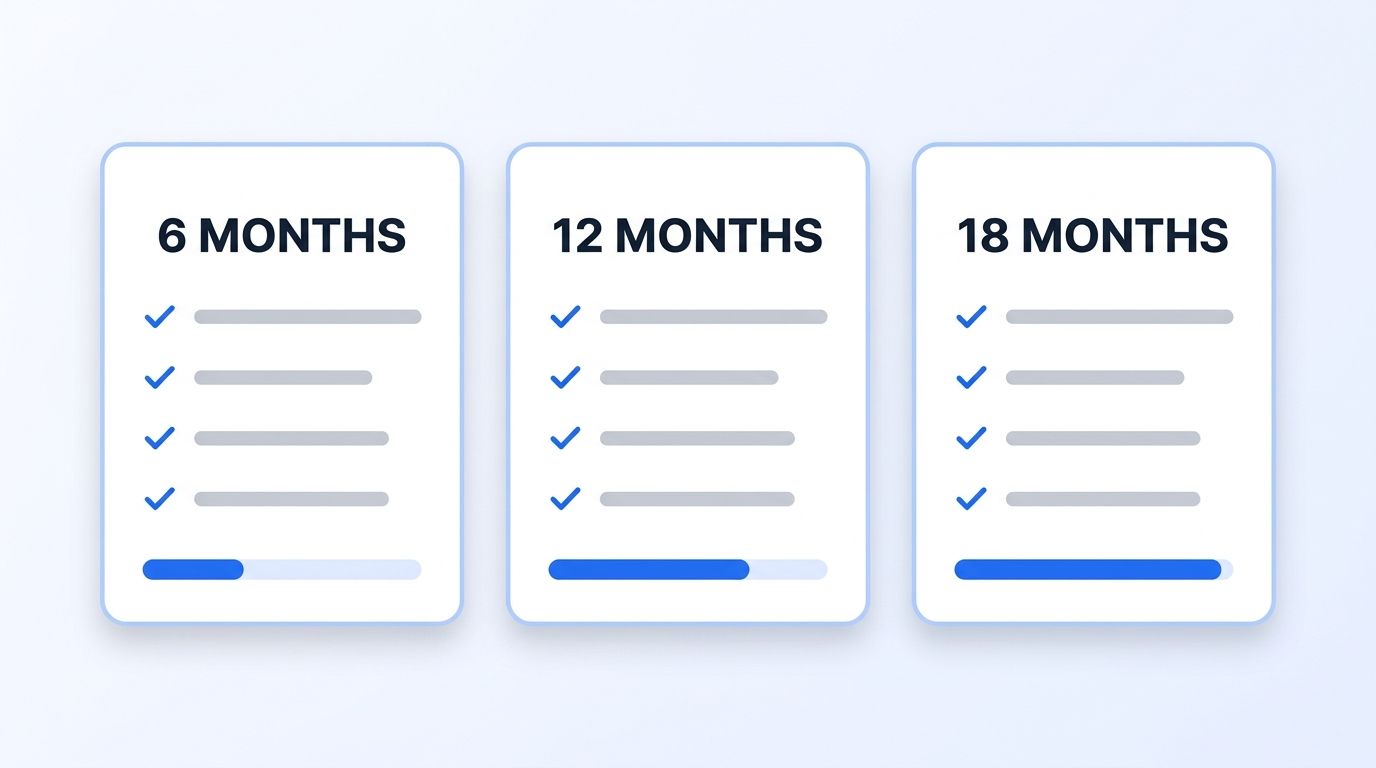
- The 6-month plan delivers quick wins and a governance draft; the 12-month plan formalizes ownership and automates monitoring; the 18-month plan extends validation into AI-readiness.
- Phase the work instead of running one big cleanup - contact data doesn't wait for your project timeline to decay.
- Pick the shortest roadmap that still includes an owner, a metric, and a real deliverable at every checkpoint.
Why Do Most Data Quality Initiatives Fail?
Most data quality initiatives fail because they're treated as a one-time project instead of an ongoing program with an owner. In 2025, 42% of companies abandoned most of their AI initiatives, up sharply from 17% a year earlier, and the average organization scrapped 46% of its proof-of-concepts before they ever reached production (S&P Global Market Intelligence, 2025). Bad underlying data is a recurring reason those projects never make it out of the pilot stage.
Citation capsule: A data quality initiative without a named owner, a recurring budget line, and a metric tied to a business outcome behaves like any other unsponsored project - it gets deprioritized the moment a launch deadline or hiring push competes for the same headcount, and within a quarter the "cleanup" reverts to its starting state.
Isn't it strange that companies will fund a six-figure enrichment tool and then skip the fifteen-minute conversation about who owns the data once it's clean? Tools don't fail data quality programs. Missing ownership does. A roadmap forces that conversation up front, before the first dollar gets spent, by assigning a name and a checkpoint to every phase instead of leaving "someone will handle it" implied.
For more on the tooling side of this problem, see how programmatic CRM enrichment closes the gap between a one-time import and a record that stays current.
What Is a Data Quality Roadmap, and Why Phase It?
A data quality roadmap is a sequenced plan that breaks a data quality program into checkpoints, each with a specific deliverable, owner, and success metric, instead of one open-ended "clean up the data" mandate. Phasing works because decay never pauses for your project timeline: median employee tenure fell to 3.9 years in January 2024, the lowest since 2002, and workers aged 25-34 now stay just 2.7 years on average (U.S. Bureau of Labor Statistics, 2024).
That turnover shows up directly in your CRM. In a single six-month window in early 2026, more than 1.47 million verified B2B contacts changed companies, with sales roles seeing the highest mobility of any function tracked (Lusha, 2026). A database you scrub in January is measurably wrong again by June - not because the cleanup failed, but because the people in it kept changing jobs the whole time.
<!-- [UNIQUE INSIGHT] -->That's the real argument for phasing over a single big-bang project: a one-time cleanup treats data quality as a state you reach, while a phased roadmap treats it as a rate you manage. The first approach loses to entropy every time. The second one builds the monitoring into the plan from month one, so decay gets caught continuously instead of rediscovered at the next annual audit.
The 6-Month Data Quality Roadmap: Quick Wins and Foundations
The 6-month roadmap is built for teams that need visible progress fast and a governance draft to show leadership before asking for more budget. This is the right scope when you're proving the case for data quality investment, not yet running an enterprise program.
- Month 1 - Baseline audit: Score your CRM on completeness, duplicate rate, and bounce rate. Pick three KPIs you'll report against for the rest of the roadmap.
- Month 2 - Quick-win cleanup: Deduplicate your highest-value segments (open pipeline, active accounts), strip bounced emails, and fix obvious format errors.
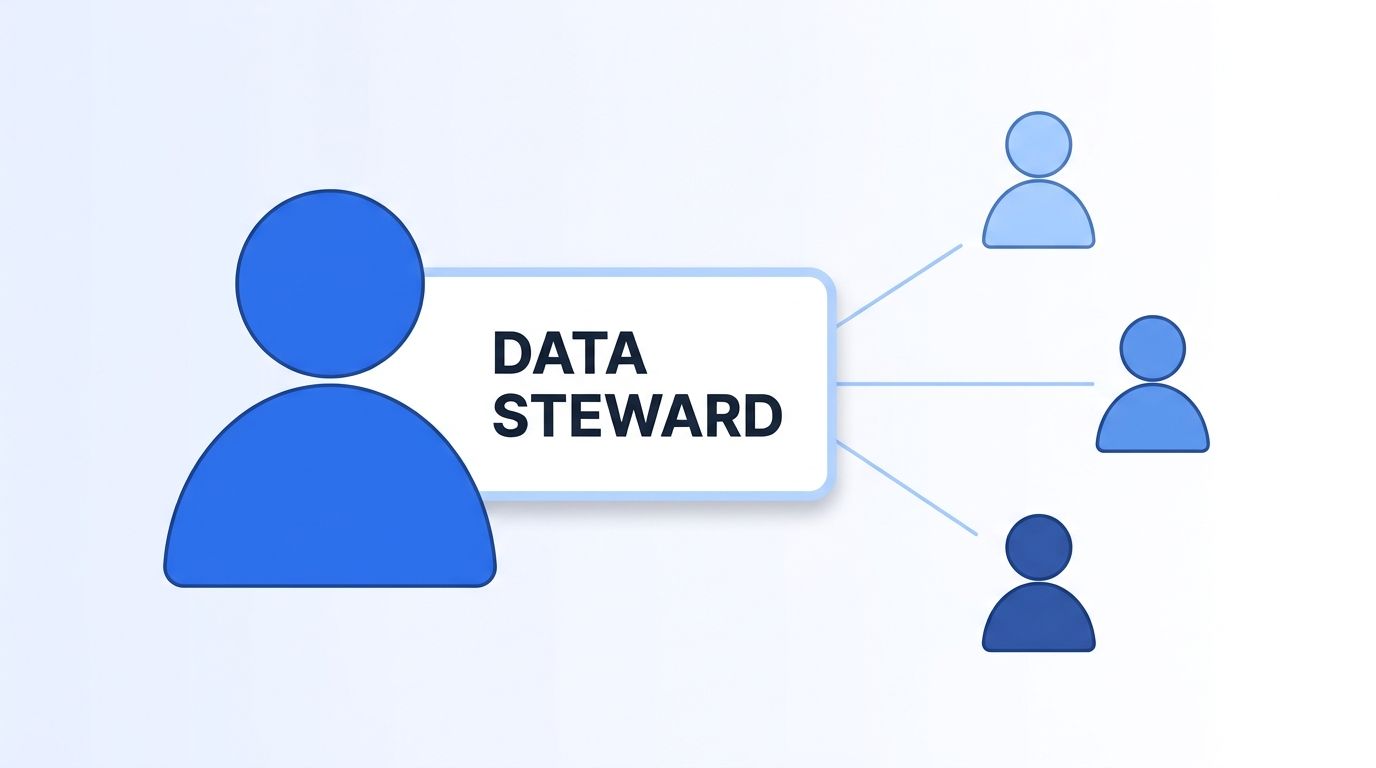
- Months 3-4 - Standardization and a named owner: Draft field-naming rules (job title, industry, company size) and assign a data steward, even part-time, to own the metric going forward.
- Month 5 - Pilot real-time validation: Run live lookups against one target account list instead of relying on the last import. Datamagnet's People Profile endpoint returns a contact's current role, headline, and company at request time, so the pilot segment reflects today's reality, not last quarter's.
- Month 6 - Report and decide: Publish a before/after scorecard and decide whether to extend into the 12-month plan.
The 12-Month Data Quality Roadmap: Building Sustainable Governance
The 12-month roadmap builds on the same first six months, then spends the second half turning the pilot into a system with real ownership and automated monitoring instead of a one-time push.
- Q1 - Foundation: Run the full 6-month quick-win sequence above - audit, cleanup, standardization, and a named steward.
- Q2 - Formalize governance: Turn the draft rules into a documented policy, fund the steward role properly, and automate deduplication and standardization instead of running them manually.
- Q3 - Scale real-time validation: Extend the pilot from one segment to the full CRM using signal-based monitoring. Register a job-change signal across your contact base so records get flagged automatically when a tracked person's employer changes, and validate firmographics with the Company Profile endpoint instead of a stale headcount field from last year's import.
- Q4 - Measure and fund year two: Report pipeline velocity and rep time saved, stand up an ongoing monitoring dashboard, and secure budget for continued operation - not just another cleanup.
Pair account-level monitoring with ICP Company Search to re-validate an entire target account list against current headcount, industry, and location filters in a single pass, using human-readable values instead of internal IDs your steward has to look up.
The 18-Month Data Quality Roadmap: Toward AI-Ready Data Maturity
The 18-month roadmap adds a third act to the 12-month plan: extending validated, governed data into the AI and ML initiatives your company is already funding. This scope makes sense once governance is running and leadership is asking data to power more than dashboards.
- Months 1-12 - Foundation and governance: Run the full 12-month plan above - audit, cleanup, formal governance, and CRM-wide real-time validation.
- Months 13-15 - Build AI-readiness gates: 63% of organizations either lack, or aren't sure they have, the data management practices AI projects need (Gartner, 2025). Add a data quality gate before any record feeds a model - completeness, freshness, and source checks - so bad inputs get caught before they train an AI system, not after.
- Months 16-17 - Cross-functional governance council: Move ownership from a single steward to a small council spanning sales ops, marketing ops, and data/engineering, meeting monthly to review the scorecard and adjudicate conflicting field definitions.
- Month 18 - Executive scorecard and SLAs: Present a quarterly executive-level report and formalize data quality SLAs with any vendor or process that writes into your systems of record.
Gartner projects organizations will abandon 60% of AI projects unsupported by AI-ready data through 2026 (Gartner, 2025). If your company has an AI roadmap sitting next to your data roadmap, the 18-month plan is the version that keeps the two from working against each other.
See how real-time B2B people enrichment applies the same live-lookup principle to full profile data, not just validation gates.
How Do You Know Your Roadmap Is Working?
You know a roadmap is working when your KPIs move in a predictable direction at every checkpoint, not just at the final report. Track completeness rate (% of required fields populated), duplicate rate, bounce rate, and time-to-flag (how fast a stale record gets caught after the real-world change happens) - and review all four monthly, not annually.
Isn't the annual audit exactly the cadence that let 76% of organizations end up with less than half their CRM data accurate in the first place (Validity, 2025)? A monthly cadence catches decay while it's still cheap to fix. A yearly one finds it after it's already cost you three quarters of misrouted leads and wasted rep time.
<!-- [PERSONAL EXPERIENCE] -->Teams that route validation through signals and webhooks instead of a scheduled batch job tend to report catching stale records within days of the underlying change, not at the next quarterly review - the gap between "the contact changed jobs" and "the CRM knows it" shrinks from months to days once monitoring runs continuously in the background.
How Do You Get Executive Buy-In for a Multi-Year Data Roadmap?
You get executive buy-in by tying every phase to a cost leadership already cares about, not by asking for a data quality budget in the abstract. Gartner puts the average financial impact of poor data quality at $12.9 million a year for a typical organization - a figure covering wasted rep hours, mis-routed leads, and marketing spend reaching contacts who never see the message (Gartner, Gartner data quality benchmark, still the standing industry estimate as of 2026).
Citation capsule: A data quality roadmap earns executive sponsorship when it's framed as risk reduction on an existing investment - the AI initiative, the outbound motion, the territory model - rather than as a standalone cleanup project competing for its own line item. Attach the roadmap to a budget leadership has already approved, and the ownership question answers itself.
Review Datamagnet's security and data practices before scaling any automated validation workflow across your organization, since compliance obligations for storing and refreshing personal data vary by jurisdiction and use case.
When Should You Start With 6, 12, or 18 Months?
Start with the 6-month plan if you need proof of concept before you can ask for more budget or headcount. Start at 12 months if leadership already agrees data quality matters and you just need to formalize ownership. Start at 18 months if AI or ML initiatives depend on the same records your GTM team relies on - the extra six months buys the AI-readiness gate that keeps a model from training on the same bad data that's already hurting your pipeline.
See how real-time people and company data keeps a roadmap's foundation from decaying between checkpoints - check your current CRM accuracy against it this week.
Frequently Asked Questions
How long should a data quality roadmap take?
It depends on scope, not a fixed rule. A 6-month roadmap proves the case with quick wins; a 12-month roadmap formalizes governance and automates monitoring; an 18-month roadmap extends validated data into AI initiatives. Pick the shortest one that still includes a named owner and a measurable KPI at every checkpoint.
Who should own a data quality initiative?
A single named data steward at minimum, even part-time, moving to a cross-functional governance council spanning sales ops, marketing ops, and data/engineering as the program matures. 71% of organizations now report a formal data governance program, up from 60% in 2023 (Precisely/Drexel, 2025).
Why do data quality initiatives usually fail?
Most fail from a lack of urgency and ownership, not a lack of tooling. Gartner predicts 80% of data governance initiatives will fail by 2027, largely because they lack a real or manufactured crisis driving the work forward (Gartner, 2024). A phased roadmap with named owners fixes that gap directly.
Should I run a one-time cleanup or a phased roadmap?
A phased roadmap, because your data keeps changing while a one-time cleanup only ever fixes a snapshot. Over 1.47 million verified B2B contacts changed companies in a single six-month window in early 2026 (Lusha, 2026), so a database that's clean in January needs active monitoring, not a one-time fix, to stay clean by June.
How does AI factor into a data quality roadmap?
AI raises the stakes on data quality because models amplify whatever they're trained on. Gartner projects organizations will abandon 60% of AI projects unsupported by AI-ready data through 2026 (Gartner, 2025), which is exactly why the 18-month roadmap adds an AI-readiness gate before governance work extends into model training.
Sources
- Gartner, Gartner Predicts 80% of D&A Governance Initiatives Will Fail by 2027, retrieved 2026-07-19, https://www.gartner.com/en/newsroom/press-releases/2024-02-28-gartner-predicts-80-percent-of-data-and-analytics-governance-initiatives-will-fail-by-2027-due-to-a-lack-of-a-real-or-manufactured-crisis-
- Gartner, Lack of AI-Ready Data Puts AI Projects at Risk, retrieved 2026-07-19, https://www.gartner.com/en/newsroom/press-releases/2025-02-26-lack-of-ai-ready-data-puts-ai-projects-at-risk
- Gartner, Data Quality: Why It Matters and How to Achieve It, retrieved 2026-07-19, https://www.gartner.com/en/data-analytics/topics/data-quality
- S&P Global Market Intelligence, Voice of the Enterprise: AI & Machine Learning, Use Cases 2025, retrieved 2026-07-19, https://www.spglobal.com/market-intelligence/en/news-insights/research/2025/10/generative-ai-shows-rapid-growth-but-yields-mixed-results
- Validity, The State of CRM Data Management in 2025, retrieved 2026-07-19, https://www.validity.com/resource-center/the-state-of-crm-data-management-in-2025/
- U.S. Bureau of Labor Statistics, Median Tenure With Current Employer Was 3.9 Years in January 2024, retrieved 2026-07-19, https://www.bls.gov/opub/ted/2024/median-tenure-with-current-employer-was-3-9-years-in-january-2024.htm
- Lusha, B2B Contact Change Report Q2 2026, retrieved 2026-07-19, https://www.lusha.com/blog/b2b-contact-change-report/
- Precisely / Drexel University LeBow College of Business, 2025 Outlook: Data Integrity Trends and Insights, retrieved 2026-07-19, https://www.precisely.com/data-integrity/2025-planning-insights-data-governance-adoption-has-risen-dramatically/
- Datamagnet, People Profile endpoint, retrieved 2026-07-19, https://docs.datamagnet.co/api-reference/endpoints/people
- Datamagnet, Company Profile endpoint, retrieved 2026-07-19, https://docs.datamagnet.co/api-reference/endpoints/company
- Datamagnet, Create Signal endpoint, retrieved 2026-07-19, https://docs.datamagnet.co/api-reference/endpoints/signal-create
