
Disclosure: This article is published by Datamagnet. Vendor claims are self-reported unless otherwise noted.
10 Data Quality Metrics Every RevOps Leader Should Track Monthly
In 2025, 76% of CRM users said less than half of their organization's CRM data was accurate and complete (Validity, 2025). If you're a RevOps leader, that gap doesn't stay theoretical for long — it shows up as misrouted leads, blown forecasts, and reps who don't trust the system they're paid to use. Tracking the right metrics monthly is how you catch it before it costs pipeline.
Key Takeaways
- 37% of CRM users report losing revenue directly because of poor CRM data quality (Validity, 2025).
- CRM staff spend an average of 13 hours a week hunting for basic information inside the CRM (Validity, 2025).
- B2B email lists decayed 23% in 2025, with only 62% of "verified" addresses actually valid (ZeroBounce, 2026).
- Track 10 metrics monthly: duplicate rate, completeness, email/phone validity, decay rate, formatting errors, lead-to-account match accuracy, source reliability, field-level accuracy, enrichment freshness, and audit ownership.
- Fewer than half of sales leaders trust their forecast accuracy — and bad CRM data is a root cause (Gartner, 2020).
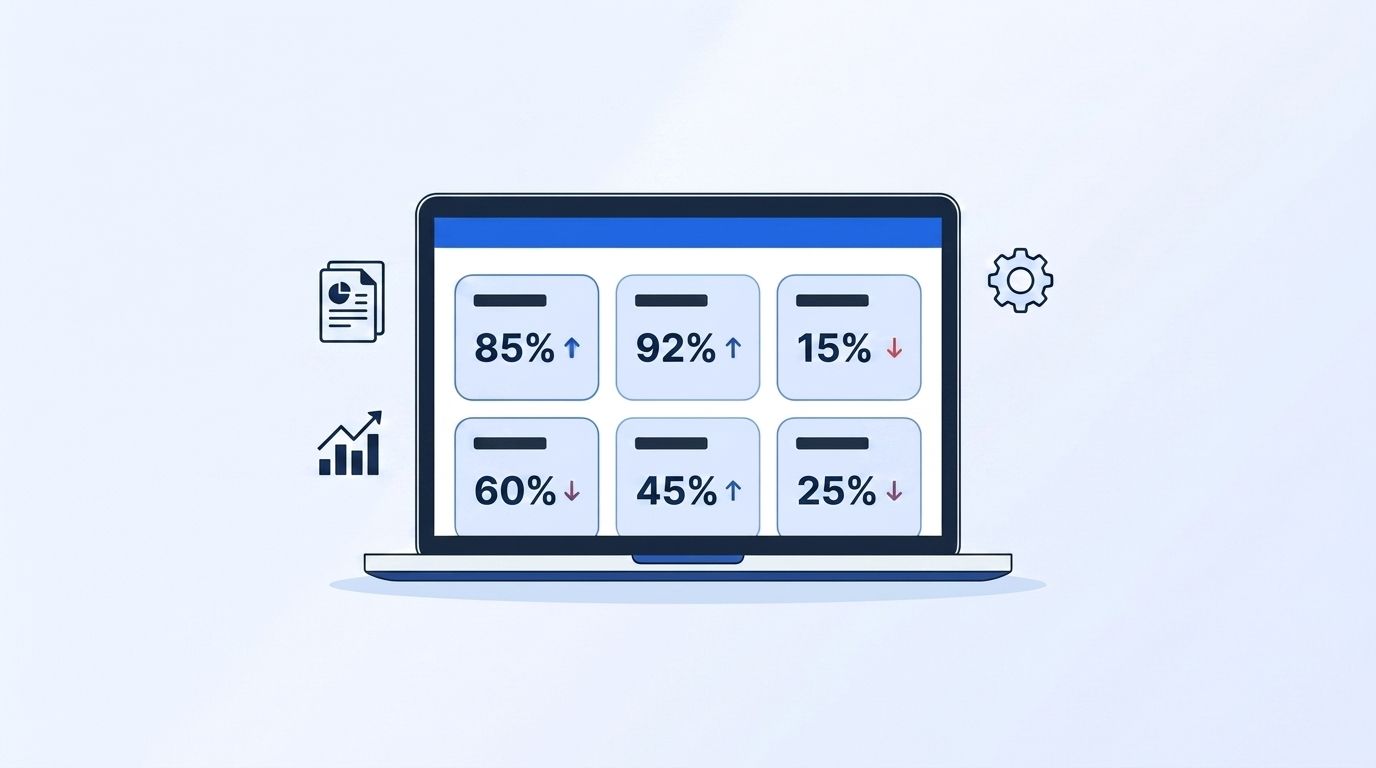
What Is CRM Data Quality Monitoring, and Why Track It Monthly?
CRM data quality monitoring is the recurring practice of measuring how accurate, complete, and current your contact and account records are. Poor data quality costs organizations an average of $12.9 million a year (Gartner, 2020-2025 benchmark), a number that keeps showing up in Gartner's ongoing data quality research.
Monthly is the right cadence because B2B data doesn't decay in one dramatic event — it erodes gradually. People change jobs, companies rebrand, phone numbers get reassigned. A quarterly audit misses three months of drift, and by the time you catch it, reps have already worked stale leads.
<!-- [ORIGINAL DATA] -->Datamagnet's own signal monitoring across job-change events shows the same pattern analysts describe: contact records that looked accurate 60 days ago routinely have outdated titles, employers, or seniority by the time a rep opens them, which is exactly why staleness needs its own metric further down this list.
Here's the uncomfortable part: 37% of CRM users report losing revenue directly because of poor CRM data quality, and companies lose an average of 16 sales opportunities per quarter to unreliable records (Validity, 2025). One in four companies sees revenue drop 20% or more in a year tied to bad data. That's not a data-hygiene problem anymore — it's a revenue problem.
For a deeper look at how enrichment fits into this, see our programmatic CRM enrichment guide.
How Do You Measure Duplicate Record Rate?
Duplicate record rate is the percentage of contact or account records that are exact or near-exact copies of another record already in your CRM. Calculate it by dividing duplicate records found (using fuzzy matching on name, email domain, and company) by total records, then multiply by 100.
Duplicates aren't just clutter. They split activity history across two records, so a rep sees half a prospect's engagement and misjudges intent. They also break lead routing — round-robin and territory rules can't assign a lead correctly when it exists twice under different owners.
Run a duplicate scan monthly, not just after a big import. Most duplication creeps in gradually: inbound form fills that don't match on lowercase email, manually created accounts that skip the search-first step, or enrichment tools writing new records instead of updating existing ones.
<!-- [UNIQUE INSIGHT] -->The riskiest duplicates aren't the obvious ones with identical emails — they're the ones created by outdated company data, where a contact's employer field still says their old company. A record-matching process that only checks current company name will miss these, which is why job-change tracking matters as much as name matching. See our real-time intent signal APIs for job changes for how signal monitoring catches this before it creates a duplicate.
What Does a Healthy Data Completeness Rate Look Like?
Data completeness rate measures what percentage of required fields — job title, company, seniority, direct email, phone — are actually filled in across your database. It's the metric that determines whether your ICP filters and lead scoring even function, since a scoring model can't weight a field that's blank.
The gap between "have the field" and "have it filled correctly" is where most RevOps teams get surprised. In 2025, 45% of companies said their CRM data isn't AI-ready for this exact reason — sparse or inconsistent fields, not missing technology (Validity, 2025).
Track completeness separately for your must-have fields (the ones lead scoring and routing depend on) versus nice-to-have fields. A blended completeness score hides the problem: you can look "85% complete" overall while your seniority field, the one your ICP filter actually uses, sits at 40%.
Enrichment APIs that pull structured fields directly from a source — like Datamagnet's People Profile endpoint — close completeness gaps without manual data entry, since the fields come pre-structured instead of needing a human to standardize free text.
How Do You Track Email and Phone Validity Rate, and Why Does Decay Matter More Than You Think?
Validity rate is the share of email addresses and phone numbers in your CRM that are currently deliverable, confirmed through bounce-back testing or a validation API — not just "present in a field." In 2025, B2B email lists decayed by 23%, and only 62% of addresses marked "verified" were actually valid on retest (ZeroBounce, 2026).
That gap between "verified" and "valid" is the trap. A contact validated at import time doesn't stay valid — people change roles, companies migrate email domains, and catch-all addresses (over 9% of the ZeroBounce sample) accept mail without confirming it reaches anyone real.
Pull a validity check monthly, and treat any list untouched for 90+ days as high-risk by default. If email or phone validity drops below roughly 85-90% (a common working threshold among data quality vendors), it's worth pausing outbound sends from that segment until you've re-verified it.
How Do You Catch Standardization and Formatting Errors?
Standardization error rate tracks how often the same value gets entered in inconsistent formats — "CA" versus "California," "VP" versus "Vice President," phone numbers with and without country codes. It sounds cosmetic until you try to filter or segment on that field and half your records don't match the filter.
This is the metric that quietly breaks reporting. A dashboard built on "Industry = SaaS" will silently exclude every record tagged "Software as a Service" or "software" — not because the data is wrong, but because it isn't normalized. Isn't that exactly the kind of error that never shows up until a QBR number looks off?
Sample 200-300 records a month across your highest-use fields (industry, seniority, state/region) and check format consistency by hand or with a validation rule. It's a small check, but formatting drift compounds fast when multiple tools and multiple reps are all writing into the same fields.
What Is Lead-to-Account Matching Accuracy, and Why Does Routing Break Without It?
Lead-to-account matching accuracy measures how often a new lead gets correctly associated with its existing account record, rather than creating an orphan or a duplicate account. Get this wrong and your account-based routing, territory assignment, and account-level reporting all inherit the error.
The usual failure mode: a lead comes in with a personal email or a slightly different company name ("Acme Corp" vs. "Acme Corporation"), and matching logic that relies on exact string matching fails silently. The lead sits unassigned, or worse, gets routed to the wrong rep entirely.
<!-- [PERSONAL EXPERIENCE] -->Teams that pair firmographic enrichment with domain-based matching catch far more of these than name-matching alone, since a company domain doesn't drift the way a typed company name does. Datamagnet's Company Profile endpoint resolves a domain to structured firmographics, which gives matching logic a stable key to match against instead of free text.
Track match accuracy monthly by sampling newly created leads and manually verifying whether they landed on the right account. Aim to keep unmatched or misrouted leads under 5% — above that, routing delays start showing up in your speed-to-lead numbers.
How Do You Score Data Source Reliability and Enrichment Freshness?
Source reliability score rates each data source (form fills, purchased lists, enrichment vendors, manual entry) on how often its data holds up on verification. Not every input into your CRM is equally trustworthy, and treating them as equal is how bad data gets baked into your "source of truth."
Score sources on a simple 1-5 scale using accuracy rate on spot-checks, and review the scores monthly as new sources get added. A source that scored well six months ago can degrade — vendor databases go stale the same way your own CRM does if they're not refreshed at request time.
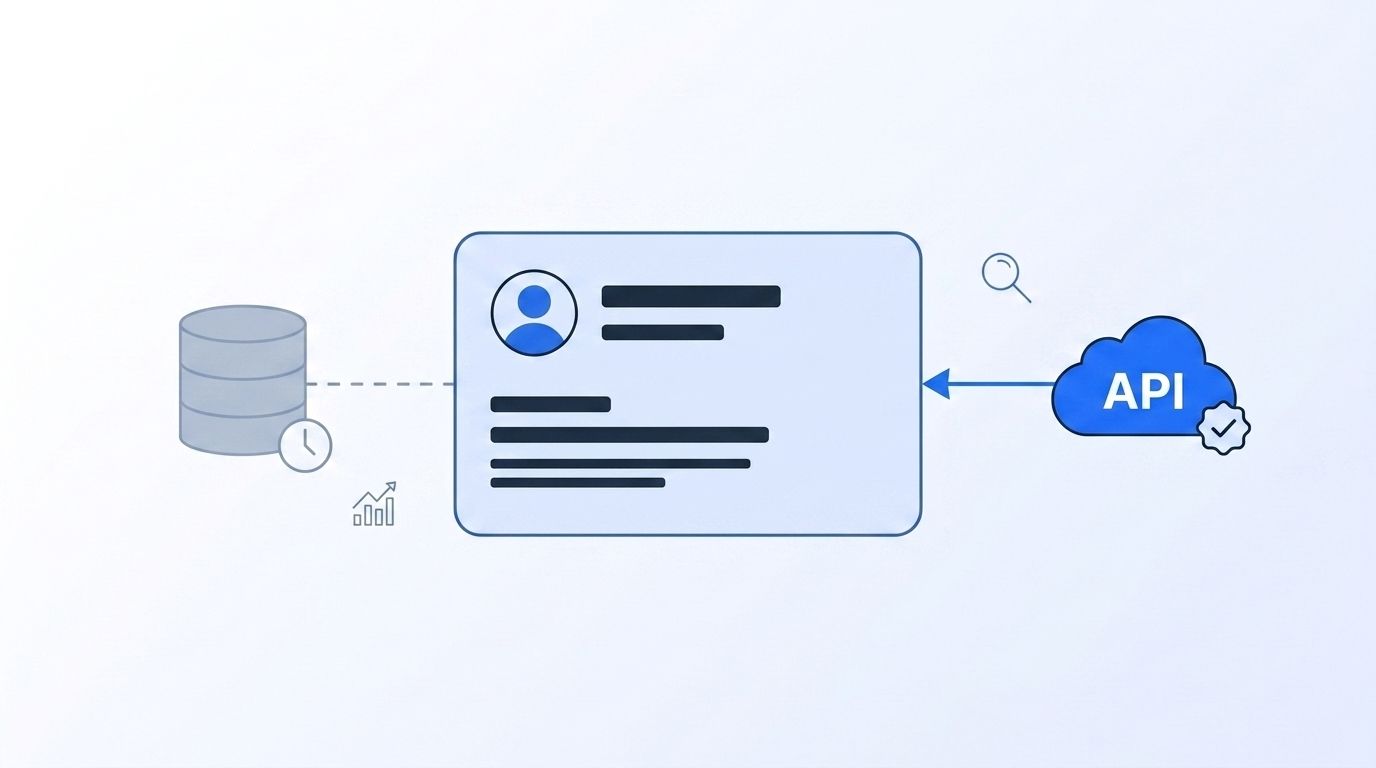
Enrichment freshness — how recently a field was last verified against a live source — is the companion metric. Static, periodically-refreshed databases can carry job titles and employers that are months out of date; request-time enrichment through an API like Datamagnet's ICP People Search pulls current data at the moment you need it, which keeps freshness scores higher without a separate refresh cycle.
What's Field-Level Accuracy, and Why Does It Break Sales Confidence?
Field-level accuracy checks whether the specific data in a field — not just whether it's filled — is actually correct. A job title field can be 100% complete and still be wrong for a third of records if nobody's re-verified it since the contact was added.
This matters because reps stop trusting a system the moment it's visibly wrong on something they can check themselves. If a rep opens a contact record and sees a title that's a year out of date, they'll start double-checking LinkedIn before every call — which defeats the purpose of having enriched data in the first place.
Fewer than half of sales leaders and sellers report high confidence in their organization's forecast accuracy (Gartner, 2020), and field-level inaccuracy in the underlying account and contact data is a direct contributor. You can't forecast well on records nobody trusts.
Spot-check field accuracy monthly on a random sample of 50-100 recently touched records, comparing against a live source like LinkedIn or the company website. It's manual, but it's the fastest way to catch drift before it spreads across a whole segment.
Who Should Own the Monthly Data Quality Review?
Ownership is the metric most RevOps teams skip, and it's the one that determines whether any of the other nine actually get tracked. Only 18% of organizations without a dedicated CRM data quality owner planned to hire one in the next 12 months — a 56% drop from the year before (Validity, 2025). Ownership is shrinking exactly when the underlying data problem isn't.
Without a named owner, data quality reviews get deprioritized the first time a launch or a quota deadline competes for attention. Assign the monthly review to a specific RevOps or sales ops role, put it on a recurring calendar block, and report the nine metrics above as a single scorecard to leadership — not as a one-off cleanup project.
Datamagnet's job-change signal monitoring can automate part of this review by flagging contacts whose employer or title changed, so the monthly audit starts with a pre-filtered list instead of a blind full-database scan. If you want the routing side handled too, our HubSpot integration updates records automatically as signals fire.
Frequently Asked Questions
How often should RevOps audit CRM data quality?
Monthly, at minimum, for the metrics that feed routing and scoring (duplicates, completeness, validity). B2B data decays continuously — 23% of email addresses went stale in 2025 alone (ZeroBounce, 2026) — so a quarterly cadence leaves two extra months of undetected drift.
What's a good duplicate record rate for a B2B CRM?
Most RevOps teams treat anything under 5% as healthy and anything above 10% as a routing risk, though this varies by CRM size and import history. There's no single industry-standard benchmark; track your own rate monthly and watch the trend rather than chasing an absolute number.
Which data quality metric has the biggest revenue impact?
Completeness and validity tend to have the most direct revenue impact, since they feed lead scoring and outbound deliverability. Companies lose an average of 16 sales opportunities per quarter to unreliable CRM data (Validity, 2025), a number that tracks closely with incomplete or invalid records.
Can real-time enrichment APIs replace manual data quality reviews?
They reduce the manual workload significantly but don't replace review entirely. Request-time APIs like Datamagnet's People Search keep individual records current, but someone still needs to own the monthly scorecard, catch duplicate creation, and audit source reliability across the whole database.
Why did fewer companies plan to hire a data quality owner in 2025?
Validity's 2025 research found only 18% of organizations without a dedicated owner planned to hire one within 12 months, a 56% drop from 2024 (Validity, 2025). The likely driver is budget tightening colliding with rising AI-readiness expectations, leaving data quality unowned at the exact moment it matters more.
Bringing It Together
Data quality isn't a one-time cleanup project — it's a monthly discipline, and the ten metrics above give you a scorecard instead of a gut feeling. Start with duplicate rate, completeness, and validity if you're tracking nothing today; they're the fastest to measure and the most directly tied to revenue.
The teams that stay ahead of this treat enrichment as infrastructure, not a quarterly fire drill. Pulling structured, request-time data from a source like Datamagnet's LinkedIn People API keeps completeness and freshness metrics healthy by default, instead of relying on a monthly scramble to catch up.
