
Disclosure: This article is published by Datamagnet. Vendor claims are self-reported unless otherwise noted.
What Is a Company Buyer Intent API? Account Scoring and Timeline Intelligence
A company buyer intent API tells you which accounts are actively researching a purchase, how far along they are, and whether that interest is rising or fading — built from raw signals you can score yourself instead of trusting one vendor's number. That distinction matters more than it sounds. B2B buying groups now average 11 stakeholders per purchase decision, up from 7 in 2017 (Gartner, B2B Buying Journey research). One contact's activity barely registers against a group that size. You need scoring that works at the account level, tracks it over time, and shows its work.
Key Takeaways
- B2B buying groups now average 11 stakeholders, up from 7 in 2017 (Gartner) — intent scoring has to work at the account level, not the contact level.
- Buyers spend just 17% of their journey in direct contact with suppliers (Gartner); timeline intelligence tracks the other 83% through signal trends.
- 76% of teams say under half their CRM data is accurate or complete (Validity, 2025) — a black-box score built on bad data is still bad.
What Is a Company Buyer Intent API?
A company buyer intent API is a data feed that scores how likely a specific account — not just one contact — is actively evaluating your category, based on engagement, firmographic, and behavioral signals tied to that company. It's the account-level counterpart to lead scoring, and it exists because deals aren't made by one person anymore.
Most intent vendors compress that signal into a single proprietary number: a score from 0 to 100 with no visibility into what produced it. That's fine for a quick sort. It breaks down the moment your RevOps team wants to know why an account scored 82 last week and 41 this week, and nobody can explain the drop.
A company buyer intent API built on raw, timestamped signals lets you build that score yourself and defend it in a pipeline review. Datamagnet's approach leans on raw signals instead of a packaged score: pull structured account data through the Company Profile endpoint, layer in engagement activity from the Company Engagement Signal, and target the right accounts first with ICP Company Search.
The difference between a buyer intent score and a buyer intent API comes down to auditability. A score says an account is "hot." An API hands you the underlying signals — engagement events, firmographic changes, funding activity — so your team can check the claim instead of taking a vendor's word for it (Forrester, "The State of Business Buying, 2026"). That auditability becomes the whole argument once you see how large buying groups have gotten.
Why Do B2B Buying Committees Make Account-Level Scoring Necessary?
Isn't one enthusiastic champion enough to move a deal forward? Not anymore. Forrester's 2026 buying research found the average B2B purchase now involves 13 internal stakeholders plus 9 external participants, and that group roughly doubles in size when AI features are part of the evaluation (Forrester, "The State of Business Buying, 2026"). Gartner's longer-running tracking shows a similar trend: the average buying group has grown from 7 stakeholders in 2017 to 11 today, with complex purchases reaching 20.
That growth is the whole case for account-level scoring. If you're scoring individual contacts, you get 11 separate, noisy signals per account and no way to tell whether they add up to real momentum or five people idly clicking around. Account-level scoring rolls those signals up to the company, so a spike in engagement from three different stakeholders reads as one coherent buying signal instead of three unrelated blips.
The stakeholder-count trend and the shift toward rep-free buying aren't separate stories — they're the same story. A bigger committee means more of the research happens asynchronously, off a sales rep's radar, which is exactly why the score needs to live at the account level and update on a timeline rather than resetting every time a new contact shows up in your CRM.
How Does Composite Intent Scoring Actually Work?
What goes into an account's score if it isn't one signal? Composite scoring blends firmographic data (headcount, industry, funding stage), technographic signals (what tools the account already runs), and engagement signals (posts, comments, hiring activity) into one weighted view of an account, rather than relying on any single input. Forrester recognized Bombora as a Leader in its Q1 2025 Wave for B2B intent data providers, citing the uniqueness of its signal set and its buying-cycle analysis as differentiators — a sign that analysts increasingly expect intent vendors to combine signal types, not lean on one (Forrester Wave: Intent Data Providers for B2B, Q1 2025).
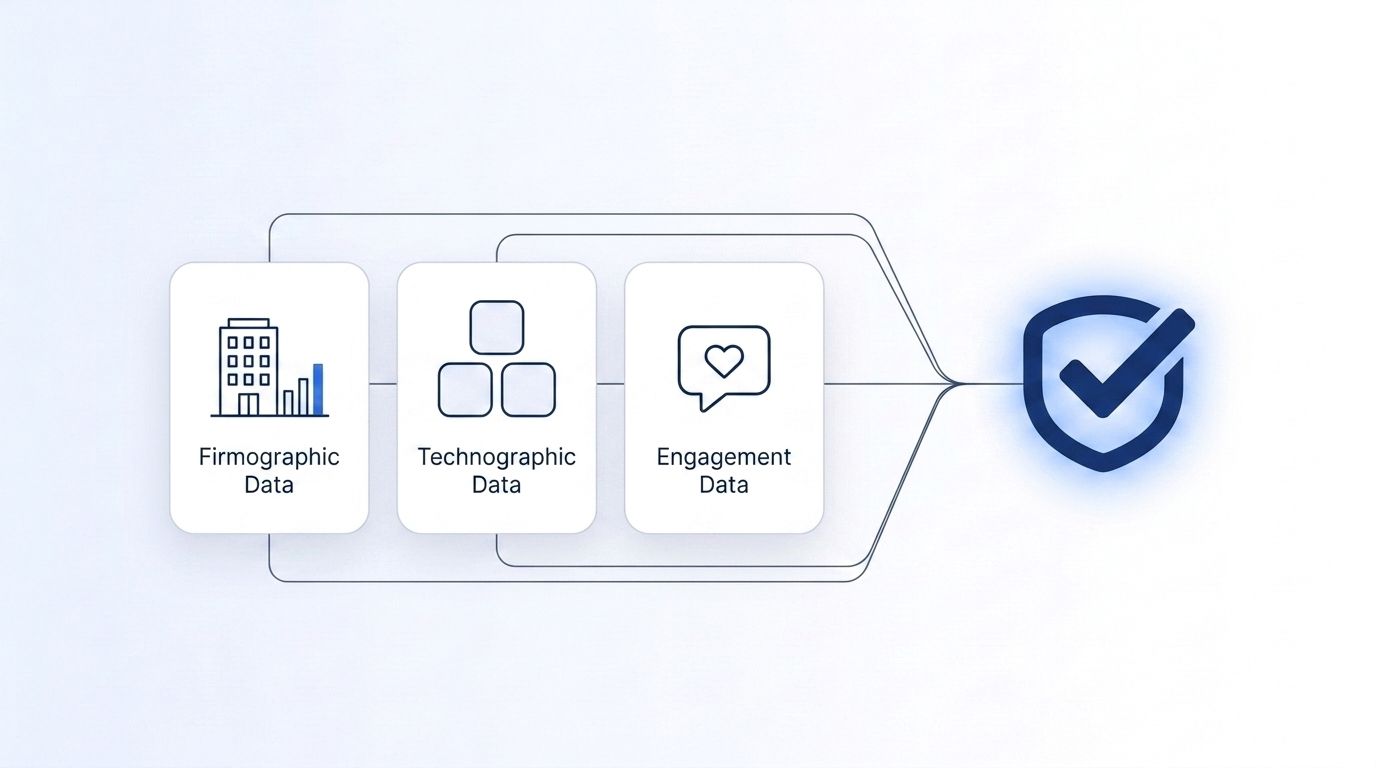
In practice, that means combining a few endpoint calls instead of buying a single black-box score. Pull firmographic and headcount context from the Company Profile endpoint, check whether an account just closed a round through Funding Rounds, and watch for engagement spikes through a Company Engagement Signal monitor. A newly funded account that's suddenly posting about your problem space and getting internal engagement on those posts is a materially different signal than any one of those facts alone.
Composite scoring built on raw inputs means you decide the weights. Maybe funding events matter more in your category than post engagement does, or the reverse. A vendor's packaged score bakes in someone else's assumptions about what matters — assumptions you usually can't see, let alone adjust for your own market.
What Are Buying Stages and How Do They Map to Timeline Intelligence?
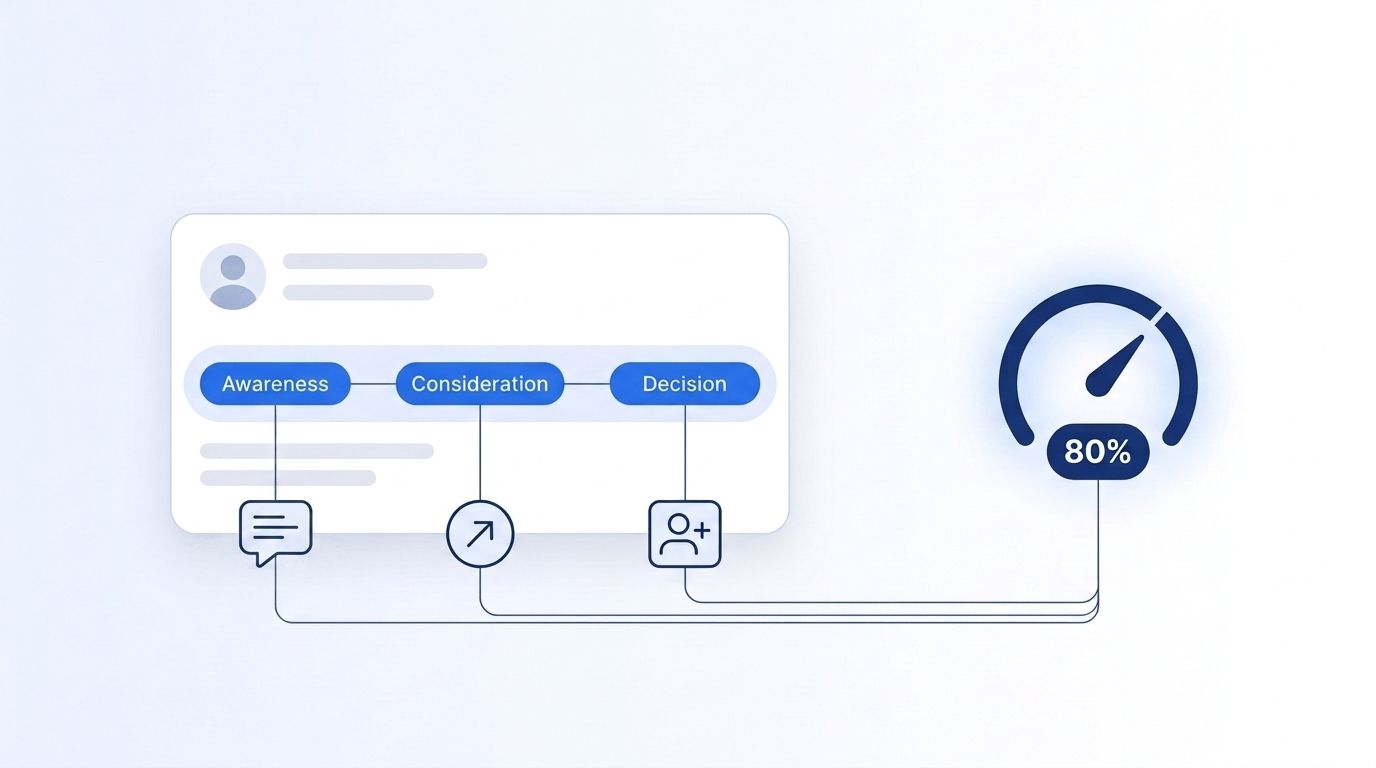
How do you know if an account is just browsing or about to buy? Buying-stage classification answers that by mapping signal patterns to a funnel position — Awareness, Consideration, or Decision — and timeline intelligence is what makes that classification trustworthy, because it tracks whether an account is moving through those stages or stalling in place. A single snapshot can't tell the difference between an account cooling off and one that's about to accelerate.
The scale of this problem is bigger than most teams assume. B2B buyers spend only about 17% of their total purchase journey in direct contact with potential suppliers, meaning the other 83% happens through self-directed research your sales team never sees firsthand (Gartner, B2B Buying Journey research). Gartner's 2026 sales survey put a number on the resulting preference: 67% of B2B buyers now want a rep-free purchase experience, up from 61% in the prior comparable survey (Gartner, Sales Survey press release, March 2026). TrustRadius found a similar pattern from the buyer side — in its 2024 survey of 2,164 buyers, 78% had already heard of the product they ultimately researched before starting that research, and self-serve motions like product demos (54%) and free trials (40%) were standard parts of the journey (TrustRadius, "B2B Buying Disconnect," 2024).
That's precisely the gap timeline intelligence is built to close. Instead of a single "hot/warm/cold" label, you get a trend line: engagement rising over three weeks, a funding round landing mid-cycle, hiring activity picking up in a relevant department. Watching Company Posts activity alongside engagement events over time turns a static score into a stage classification you can actually trust, because it's based on direction, not a single point-in-time read.
Why Do Black-Box Intent Scores Fall Short for B2B Teams?
If a vendor's model is more sophisticated than anything you'd build yourself, why does it matter that you can't see inside it? Because trust in unexplainable AI output is measurably low right now, and B2B buyers are already telling analysts so. In McKinsey's State of AI research, 40% of respondents named explainability as a key risk in adopting AI systems, but only 17% said they were actively working to address it — a wide, largely unaddressed gap between concern and action (McKinsey, "Building Trust in AI: The Role of Explainability").
Forrester's own 2026 buying research shows the same split among the buyers themselves: 36% felt more confident in their decisions after using generative AI during research, while 20% felt less confident because the AI output was unreliable or inaccurate — and that gap widened to 28% among procurement specialists specifically (Forrester, "The State of Business Buying, 2026"). Applied to intent scoring, the lesson is direct: a composite score you can't explain to a VP of Sales is a score that VP won't act on, no matter how accurate the underlying model actually is.
That's the practical case for raw-signal APIs over packaged scores. When your own team builds the weighting, every number in a pipeline review traces back to a signal someone can independently check — a LinkedIn Company API pull, a funding event, a documented engagement spike — instead of a proprietary formula nobody in the room can defend.
What's Wrong With Relying on CRM Data Alone for Intent?
Can you skip all this and just score whatever's already sitting in your CRM? Usually not, and the data backs that up plainly. Validity's 2025 State of CRM Data Management report, surveying 602 CRM users and stakeholders, found that 76% say less than half their organization's CRM data is accurate and complete, and 37% report losing revenue directly because of poor data quality (Validity, "The State of CRM Data Management in 2025").
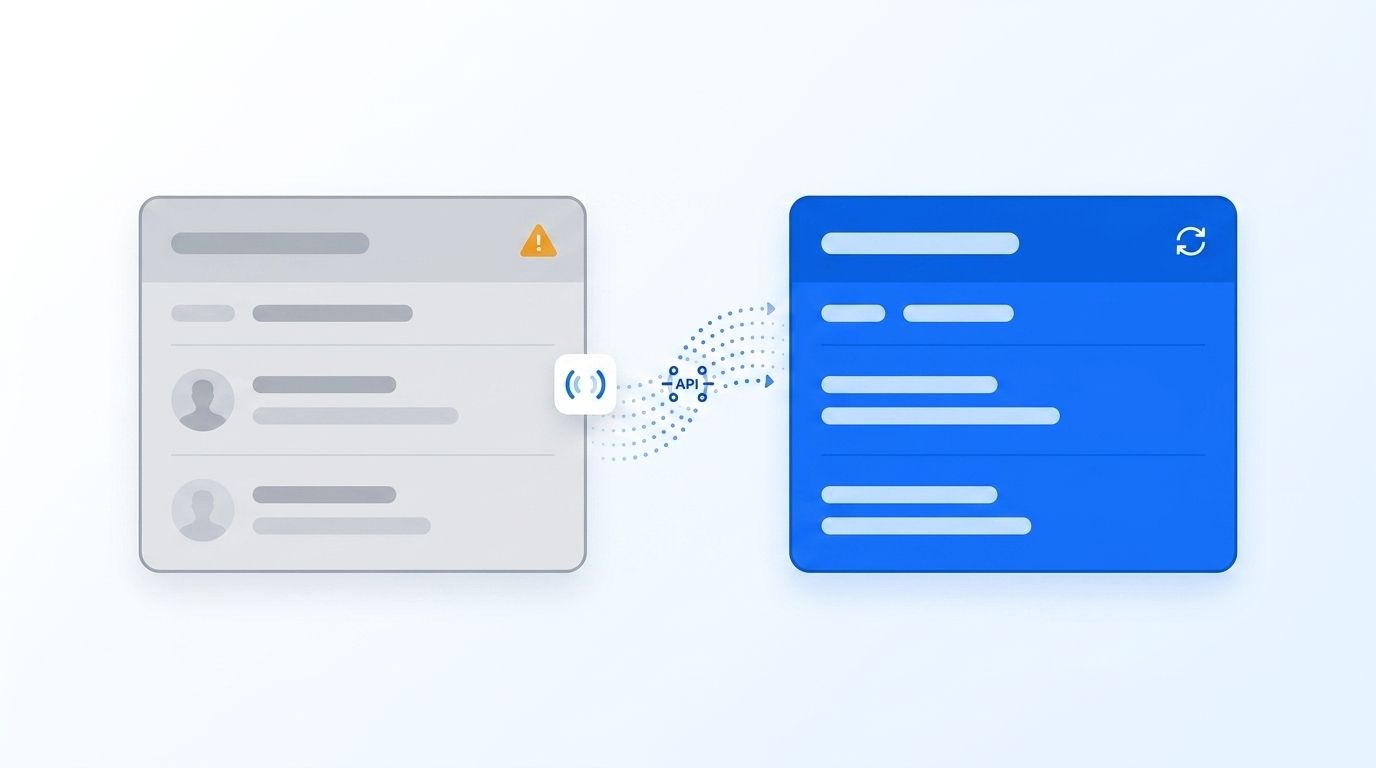
This is the quiet flaw in most intent scoring conversations: teams argue about scoring methodology while the underlying account records are already wrong. A composite score — however well designed — inherits every gap in the CRM record it's built on. Refreshing firmographic data directly from a live source before scoring, rather than trusting whatever's sitting in the CRM, closes that gap instead of scoring around it.
That's the argument for pulling account data at request time rather than batch-syncing it once a quarter. A Company Profile lookup done fresh, right before a score is calculated, reflects the account as it actually is today — headcount, specialties, recent updates — not as it was when someone last touched the CRM record.
How Do You Operationalize Timeline Trends With Raw Account Data?
So where do you actually start building this? Begin by narrowing the account universe with ICP Company Search, so you're only tracking accounts that already match your target profile on industry, headcount, and technology. From there, layer in ongoing monitoring: a Company Engagement Signal or Industry Engagement Signal watches for the LinkedIn activity that indicates a buying committee is actively engaged, and delivers events through signed webhooks as they happen rather than on a delay.
Store each signal event with a timestamp, and the "score" becomes a trend rather than a static field — you can see an account's engagement accelerating over four weeks, plateauing, or going quiet, which is a far more useful input to a pipeline review than a single number ever was. That's the practical difference between buying a black-box intent score and building account-level, timeline-aware scoring from raw data: you end up with a system your own team understands well enough to explain, adjust, and trust.
Frequently Asked Questions
What is a company buyer intent API?
A company buyer intent API is a data feed that scores or signals how actively a specific account is evaluating a purchase, based on firmographic, technographic, and engagement data tied to the company rather than one contact. It exists because B2B buying groups now average 11 stakeholders per decision (Gartner), making individual-level intent too noisy to act on alone.
How is account-level intent scoring different from lead scoring?
Lead scoring evaluates one contact's behavior; account-level intent scoring aggregates activity across every stakeholder tied to a company into a single composite view. Since buying groups now include 13 internal and 9 external participants on average (Forrester, 2026), scoring at the account level captures group momentum that contact-level scoring misses entirely.
What are B2B buying stages, and how does timeline intelligence track them?
Buying stages — typically Awareness, Consideration, and Decision — describe how far an account has progressed toward a purchase. Timeline intelligence tracks stage transitions by monitoring signal trends over time rather than a single snapshot, which matters because 83% of the buying journey happens outside direct supplier contact (Gartner) and would otherwise go unobserved.
Why do black-box intent scores create a trust problem?
Black-box scores can't be explained to the people who have to act on them. In McKinsey's State of AI research, 40% of respondents cited explainability as a key AI adoption risk, yet only 17% were addressing it — a gap that shows up directly in whether sales teams trust and act on an unexplainable score.
How do you build a composite intent score from raw account data?
Combine firmographic data (from a Company Profile endpoint), funding events, and engagement signals into a single weighted view that your team controls. This mirrors the approach validated by Forrester's Q1 2025 Wave, which recognized multi-signal intent data providers as market leaders over single-signal approaches.
Building Intent Scoring You Can Actually Defend
Account-level scoring exists because buying committees have grown too large for contact-level intent to mean much on its own. Timeline intelligence exists because 83% of the buying journey happens where sales can't see it directly. And raw data beats a black box because 40% of leaders already distrust AI systems they can't explain — while only 17% are doing anything about it.
Put those three pieces together, and the case for building your own composite score from raw signals — rather than importing someone else's black-box number — gets hard to argue with. Start by pulling a clean account universe from ICP Company Search, layer in engagement and firmographic signals, and check the Quickstart guide to get your first account pulled within minutes. For the individual-level counterpart to this account-level approach, see our guide to real-time job change intent signal APIs.
