
Disclosure: This article is published by Datamagnet. Vendor claims are self-reported unless otherwise noted.
Best Data Enrichment Tools for RevOps Teams in 2026: 7 Ranked
Your CRM data is decaying right now. HubSpot's own research, pulling from MarketingSherpa data, puts B2B contact decay at 22.5% a year — meaning almost a quarter of your database goes stale before your next annual renewal even comes up (HubSpot, 2026). That's the problem every data enrichment tool claims to solve. Few solve it the same way.
This isn't a features checklist. It's a ranking built around six things RevOps teams actually get burned by: CRM sync quality, API depth, dedup safety, record coverage, verified (not marketed) accuracy, and whether you're paying per seat or drawing from a shared credit pool. We looked at all seven vendors through that lens — including our own product, Datamagnet, which we've disclosed above.
TL;DR
- B2B contact data decays 22.5% a year (HubSpot, 2026), so static databases lose ground between refresh cycles.
- ZoomInfo's "95% accuracy guarantee" covers company-affiliation match only, not verified email or phone (ZoomInfo Help Center).
- Apollo markets 97% email accuracy, but its own help docs cite 91% and independent testing found 65-80% real-world deliverability (Apollo Help Center).
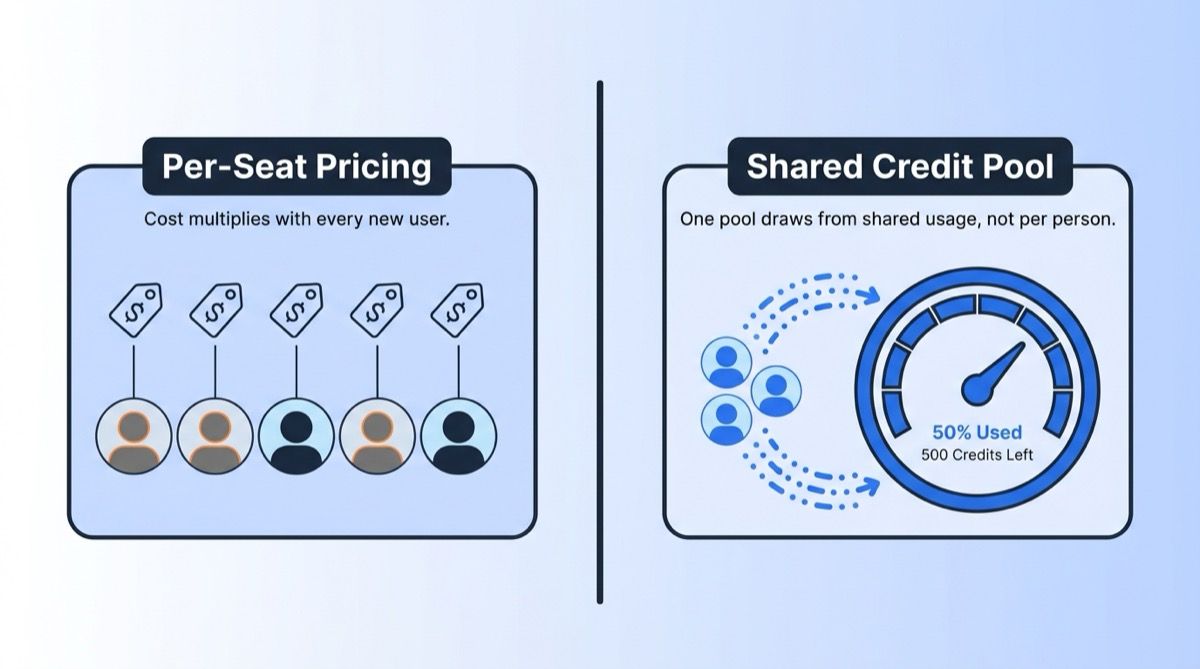
- Shared credit pools (Datamagnet, Clay, People Data Labs) scale with usage; per-seat contracts (ZoomInfo, Apollo) scale with headcount whether or not those seats enrich a single record.
- Real-time, request-time APIs sidestep the decay problem entirely by never storing a stale copy.
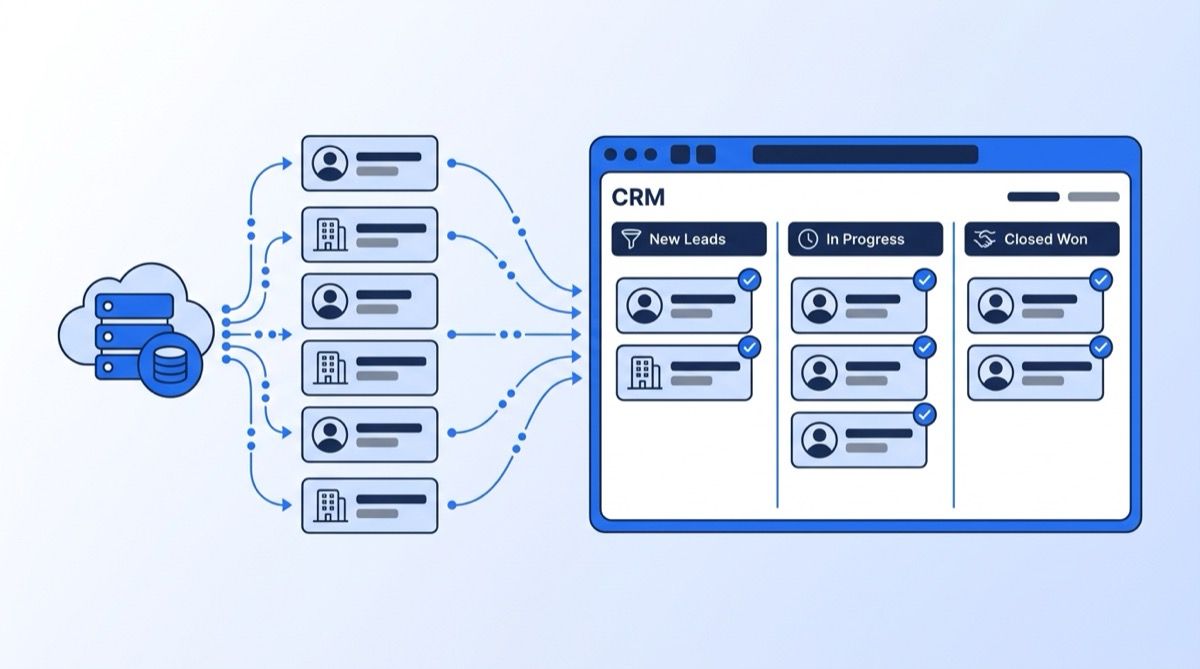
What Should RevOps Teams Actually Look For in a Data Enrichment Tool?
The right enrichment tool matches your CRM's refresh cadence to your data's decay rate — not the other way around. A 2025 Wakefield Research survey commissioned by Salesloft found 89% of RevOps leaders say their function still lacks clearly defined strategic goals, and 87% plan to increase tooling investment this year (Salesloft/Wakefield Research, 2025). Picking the wrong enrichment vendor is one of the most expensive versions of that unclear-goals problem.
Six criteria separate a tool that quietly protects your pipeline from one that quietly pollutes it:
- CRM sync quality — native Salesforce/HubSpot apps with field-level mapping beat a raw webhook you have to build yourself.
- API depth — how many endpoints exist beyond a basic lookup (search, signals, funding, activity data).
- Dedup safety — does the tool merge intelligently on sync, or does it create a second record every time a title changes?
- Coverage — how many verified people and companies the tool can actually return, not just claims to hold.
- Verified accuracy — a number backed by a named methodology, not a marketing page.
- Pricing model — shared credit pools that scale with usage versus per-seat contracts that scale with headcount.
The 7 Best Data Enrichment Tools for RevOps, Ranked
Here's the short version before we go deep on each one: seven vendors, ranked by how well they solve the two problems above, real-time freshness and CRM-safe dedup, ahead of raw database size. A huge static database is only as good as its last refresh cycle, so size alone doesn't win a top spot here.
| Rank | Tool | Best For | Pricing Model |
|---|---|---|---|
| 1 | Datamagnet | Real-time API-first enrichment | Pay-as-you-go credits |
| 2 | Clay | Multi-provider waterfall enrichment | Shared credit + action pool |
| 3 | Apollo.io | CRM-native sync on a budget | Per-seat |
| 4 | ZoomInfo | Enterprise-scale coverage | Per-seat, annual contract |
| 5 | HubSpot Breeze Intelligence | Teams fully committed to HubSpot | Add-on tied to HubSpot tier |
| 6 | People Data Labs | Bulk API enrichment, no CRM layer | Shared credit pool |
| 7 | Coresignal | Large-scale offline datasets | API subscription + bulk licensing |
1. Datamagnet — Real-Time API-First Enrichment for RevOps Teams
Datamagnet fetches LinkedIn people and company data live at request time instead of serving a cached copy, which is how it reports a 95% match rate on enrichment calls (Datamagnet). Because nothing is pulled from a stored database, there's no refresh cycle for records to go stale between — the 22.5% annual decay problem simply doesn't apply the same way.
<!-- [UNIQUE INSIGHT] -->Here's the part most comparison posts skip: real-time lookup isn't just an accuracy feature, it's a dedup-safety feature. A static database has to guess whether "John Smith, VP Sales at Acme" today is the same record as "John Smith, Director at Acme" from three months ago. A live query just returns what's true right now, so your CRM sync has one fewer merge decision to get wrong.
The API surface includes LinkedIn People Profile endpoint, LinkedIn Company Profile endpoint, funding rounds, and six real-time signal types for job changes and engagement. There's no packaged Salesforce or HubSpot marketplace app yet — integration runs through the API and webhook delivery, which suits teams comfortable building their own sync layer but adds setup work for teams that aren't.
Pricing runs on pay-as-you-go API credits with no expiration date, plus a free starting balance to test coverage before committing spend. Read the full API quickstart guide to see the request shape.
2. Clay — Best for Multi-Provider Waterfall Enrichment
Clay doesn't hold its own data. It queries roughly 75 third-party providers in sequence, so if the first provider misses a phone number, the next one in the waterfall tries (Tomba, 2026). A March 2026 pricing overhaul stopped charging for failed lookups and cut effective data costs 50-90% for many workflows (Amplemarket, 2026).
Clay's native HubSpot and Salesforce integrations include point-and-click field mapping and dedup-on-sync, and webhook triggers let a new CRM record kick off enrichment automatically (Clay integrations). The tradeoff is cost predictability: a five-provider waterfall can burn 15 credits per contact, so heavy users need to watch consumption closely. Plans run Launch at $185/month (2,500 data credits, 15,000 actions) and Growth at $495/month (6,000 data credits, 40,000 actions, CRM integration included).
3. Apollo.io — CRM-Native Sync on a Budget
Apollo's HubSpot integration is frequently cited by reviewers as the cleanest native sync in the category, respecting HubSpot's owner field and mapping fields bidirectionally out of the box. That's a real strength for smaller RevOps teams that don't have engineering time to build custom pipelines.
The accuracy story is messier than the marketing page suggests. Apollo advertises 97% email accuracy, but its own help center documents a 91% accuracy rate for verified emails, and independent testing found real-world deliverability closer to 65-80% (73% for US contacts, dropping for international ones) (Apollo Help Center; Prospeo). Pricing is strictly per-seat: Basic at $49/user/month, Professional at $79/user/month, and Organization at $119/user/month, each with an annual credit cap. Reviewers also flag duplicate-record creation on Salesforce sync as a recurring cleanup task, more so than on HubSpot.
4. ZoomInfo — Enterprise-Scale Coverage
ZoomInfo's database size and native CRM apps for both Salesforce and HubSpot make it the default enterprise pick, and its marketplace integration auto-enriches records the moment a HubSpot form is submitted (ZoomInfo HubSpot listing). Its "95% accuracy guarantee" is worth reading closely: ZoomInfo's own Contact Accuracy Score documentation defines that figure as correct name-to-company affiliation, not a verified email or phone number (ZoomInfo Help Center).
Pricing is annual and contract-based rather than published outright. Third-party pricing guides estimate the Professional tier around $22,495/year and Advanced around $37,495/year, with blended real-world spend commonly landing between $30,000 and $60,000 annually depending on seat count and add-ons (Cleanlist; Cognism, 2026). That's a per-seat structure regardless of how many records any single rep actually enriches in a month — the core tension RevOps teams run into when headcount and enrichment volume don't scale together.
5. HubSpot Breeze Intelligence (Formerly Clearbit) — Best If You're All-In on HubSpot
Clearbit is now folded directly into HubSpot as "Breeze Intelligence," which means it has the tightest possible native integration of any tool on this list — it's not a connector, it's a HubSpot feature. That's also its biggest limitation: there's no equivalent standalone Salesforce version, so teams outside the HubSpot ecosystem get nothing.
Breeze reports 94% email deliverability from its proprietary database, below the roughly 98% benchmark set by dedicated verification tools, and coverage thins out for smaller companies and non-US contacts (MarketBetter, 2026). Pricing starts at $45/month as an add-on but scales with credit packs and your existing HubSpot tier — one documented case put a Marketing Hub Pro customer at $5,390/month for moderate enrichment volume after migrating from standalone Clearbit, a 30-60% cost jump some teams report for equivalent functionality (MarketBetter, 2026).
6. People Data Labs — Bulk API Enrichment Without CRM Overhead
People Data Labs is a developer-first API and bulk-download product with no packaged CRM app of any kind — reviewers consistently flag this as its main gap for ops teams that want a plug-and-play sync (Nubela, 2026). What it does offer is a genuinely low entry price: a free tier covering 100 person and company lookups a month, a Pro tier at $98/month for 350 person and 1,000 company lookups, and enterprise pricing starting near $2,500/month for custom volume (People Data Labs).
PDL doesn't publish one headline accuracy number. Its own documentation emphasizes rejecting roughly three candidate sources for every one it accepts, aiming to avoid false-positive merges rather than chase a marketing percentage (PDL Docs). The database refreshes on a monthly cache cycle rather than in real time, though PDL offers targeted 30-day refresh guarantees for high-priority profiles — useful if you can flag your VIP accounts in advance.
7. Coresignal — Large-Scale Offline Datasets
Coresignal is built for teams that want to license raw data at scale and pipe it into their own warehouse, not for teams that want a CRM-ready sync. It reports over 4.5 billion public web records, including 859-882 million employee records and 75 million company records across its tiers (Coresignal), which makes it one of the largest raw coverage numbers in this list — but there's no native CRM connector, and Coresignal's own blog acknowledges that base-tier data "requires major cleanup before it becomes actionable" (Coresignal blog).
No accuracy percentage is published; Coresignal instead offers a custom freshness statistics file on request. API subscriptions start at $49/month, with full bulk datasets starting at $1,000 and a notable price gap to the next tier up. This is the right shape of tool for a data engineering team feeding a warehouse, and the wrong shape for a RevOps team that needs enrichment inside the CRM by Monday morning.
Real-Time vs. Static Databases: Why Dedup Safety Depends on Freshness
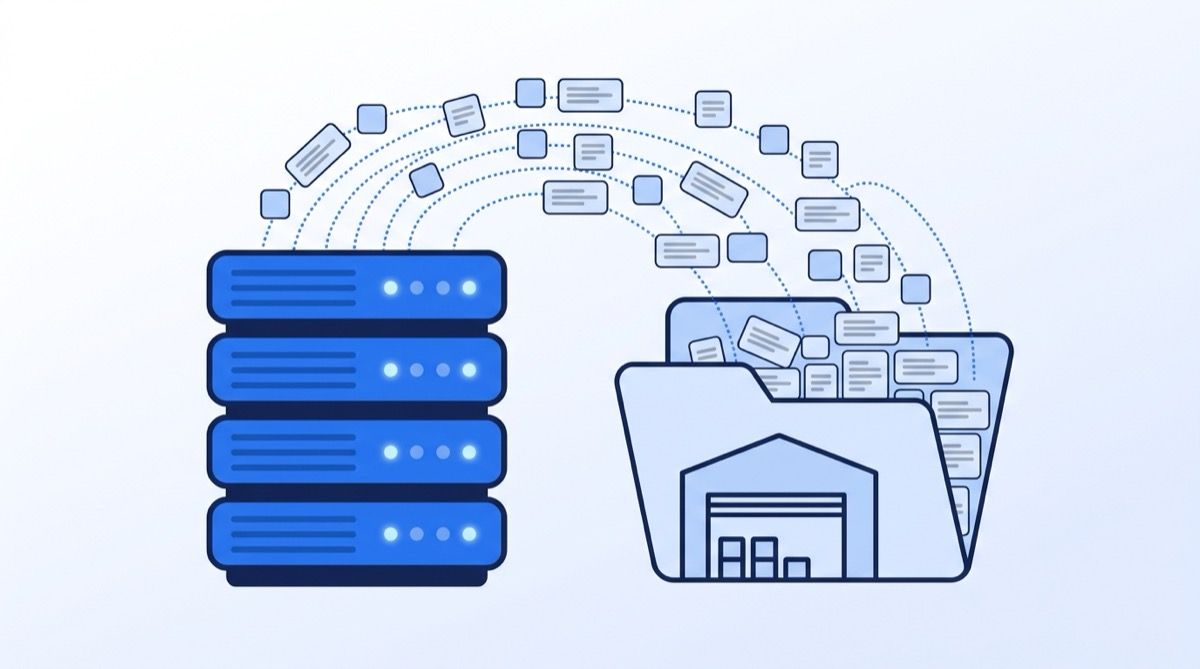
A static database is a snapshot, and every snapshot ages. HubSpot's decay research puts overall B2B contact decay at 22.5% annually, and third-party aggregation suggests phone numbers decay even faster than email, plausibly tied to the shift to remote work (HubSpot; Cleanlist, 2026). Every tool on this list that stores its own database — ZoomInfo, Apollo, Breeze, People Data Labs, Coresignal — is refreshing on some cycle, whether that's monthly, quarterly, or on request for flagged accounts.
<!-- [PERSONAL EXPERIENCE] -->We've seen this play out directly with our own users: the most common support ticket isn't "your data was wrong," it's "your data was right last month and wrong now." That's not a data-quality bug, it's the decay curve doing exactly what decay curves do. It's also why real-time, request-time lookups (Datamagnet, and Clay's waterfall model at query time) sidestep the entire problem — there's no cached copy to be behind on.
Dedup safety compounds this. Isn't it worse to sync a stale record into your CRM than to have no record at all? A stale title or employer creates a false positive your SDR acts on, while a live query at least reflects what's true the moment it's pulled.
Shared Credit Pools vs. Per-Seat Pricing: Which Model Fits Your RevOps Team?
Per-seat pricing charges for headcount whether or not those seats enrich anything that month. ZoomInfo and Apollo both bill this way — Apollo from $49 to $119 per user monthly, ZoomInfo from roughly $4,499 to $7,499 per user annually depending on tier. That model rewards teams with steady, predictable per-rep usage and punishes teams with seasonal spikes or a lean ops function serving a larger sales org.
Shared credit pools — Datamagnet, Clay, People Data Labs, Coresignal — bill for consumption instead of seats. A five-person team that enriches 50,000 records in a launch month and 5,000 the next only pays for what it actually pulls. Programmatic CRM enrichment benefits covers this tradeoff in more depth if you're building the business case internally. The Salesloft/Wakefield survey found 87% of RevOps leaders plan increased tooling investment this year, prioritizing clarity and better tools over raw budget increases (Salesloft/Wakefield Research, 2025) — a credit model makes that spend easier to defend to finance because it scales with proven usage, not headcount you're hoping stays flat.
See Datamagnet vs. ZoomInfo and Datamagnet vs. Apollo for direct pricing-model breakdowns against the two largest per-seat vendors here.
Want to see how your CRM's current data quality holds up? Compare pricing across models and pull 10 free credits to test enrichment against a sample of your own stale records before you commit to a contract.
Frequently Asked Questions
These are the questions RevOps teams ask most before picking a data enrichment vendor: real-time versus static architecture, credit-pool versus per-seat pricing, and the real cost of bad CRM data, which Gartner's research puts at $12.9 million a year for the average enterprise (Gartner).
What's the difference between a real-time enrichment API and a static enrichment database?
A real-time API queries the source (like LinkedIn) at the moment you request a record, so the data reflects what's true right now. A static database stores a cached snapshot refreshed on a cycle — monthly for some vendors, quarterly for others — so accuracy degrades between refreshes, especially against the 22.5% annual contact decay rate HubSpot reports.
Are shared credit pools actually cheaper than per-seat licenses for RevOps teams?
It depends on usage consistency. Credit pools (Datamagnet, Clay, People Data Labs) scale with actual enrichment volume, which favors teams with variable or seasonal usage. Per-seat contracts (ZoomInfo, Apollo) favor teams with stable, predictable per-rep usage where headcount tracks enrichment demand closely.
How much does bad CRM data actually cost a RevOps team?
Gartner's Magic Quadrant research, surveying 154 reference customers, found poor data quality costs organizations an average of $12.9 million per year, a figure still widely cited as the standard benchmark (Gartner). Combined with 22.5% annual B2B contact decay, the cost compounds every renewal cycle a stale database goes unaddressed.
Which data enrichment tool has the best native CRM integration?
HubSpot Breeze Intelligence has the tightest HubSpot integration since it's built directly into HubSpot, but it has no Salesforce equivalent. ZoomInfo and Apollo both offer native apps for HubSpot and Salesforce; Apollo's HubSpot sync is frequently rated cleanest by reviewers, while People Data Labs and Coresignal have no packaged CRM connector at all.
Conclusion
The right data enrichment tool for your RevOps team depends on which failure mode you're trying to avoid: stale records from a static database, duplicate records from a poor CRM sync, or per-seat costs that don't track actual usage. Real-time API-first tools sidestep the decay problem entirely; native CRM apps reduce integration work at the cost of per-seat pricing; and bulk-dataset providers suit data engineering teams more than ops teams syncing straight into a CRM.
Start by mapping your own decay rate against your CRM's dedup rules, then match that to a pricing model that scales with your actual enrichment volume, not your headcount. See the Datamagnet API quickstart to test real-time enrichment against your own contact list before you renew anything.
