
Disclosure: Datamagnet publishes this article and is one of the vendors profiled below. Vendor claims are self-reported and dated where noted; pricing and integration details are based on public documentation, retrieved July 21, 2026.
9 Best CRM Enrichment Integrations for HubSpot in 2026
HubSpot's app marketplace has passed 2,000 apps and 2.5 million active installs (HubSpot Community, 2025), and a growing share of those installs solve one recurring problem: native HubSpot fields go stale the moment a lead fills out a form. Picking the right enrichment integration means sorting real, native HubSpot apps from third-party connectors that add a step nobody asked for.
We looked at nine enrichment tools with a genuine HubSpot presence - native Marketplace apps or first-party sync, not a Zapier workaround - and ranked each by what it actually enriches, how the sync fires, and what it costs. Here's what earned a spot, and what didn't.
Key Takeaways
- Only eight of the tools on this list have a true native HubSpot Marketplace app in 2026. Clay's listing alone shows 12,000+ installs and a 3.7/5 rating (HubSpot Marketplace, 2026).
- HubSpot's own Breeze Intelligence (formerly Clearbit, acquired 2023) now ships free contact and company enrichment on Core Seats, though AI-generated "Smart Properties" still draw on paid HubSpot credits.
- In 2026, Gartner found sales orgs that give reps AI-enabled next-best-action guidance are 2.6x more likely to hit commercial growth targets (Gartner, May 2026).
- Waterfall-style enrichment - querying dozens of providers per record instead of one - is the model behind Clay's HubSpot workflows and ZoomInfo's newer GTM Studio, and it's why both outrank single-source lookups on match rate.
- The one enrichment vendor worth knowing about with no native HubSpot app: People Data Labs, which only reaches HubSpot through middleware like Clay or Zapier.
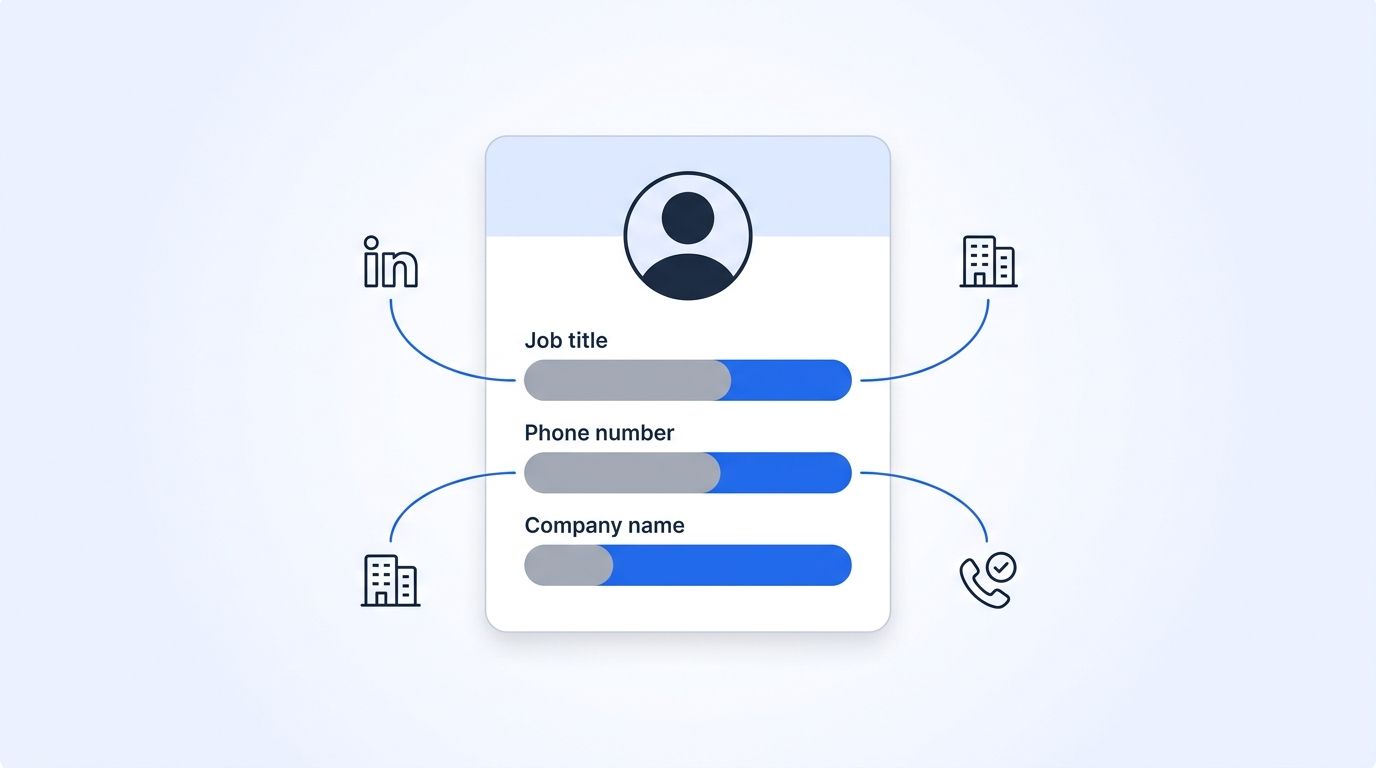
Why Does CRM Enrichment Matter So Much for HubSpot Users Right Now?
As of Q1 2026, HubSpot reports 299,458 paying customers across 135+ countries and $3.45B in annual recurring revenue (HubSpot Q1 2026 earnings, via Resonate, 2026). That much shared infrastructure means enrichment vendors compete hard for a spot in the same Marketplace, and the gap between a native app and a workaround shows up fast in your workflow list.
The pressure to close that gap is real: Gartner's May 2026 CSO survey found orgs that prioritize upskilling reps on AI tools are 2.4x more likely to post strong revenue growth, and the firm now projects 95% of sellers' research workflows will start with AI by 2027, up from under 20% in 2024 (Gartner, May 2026). None of that guidance means anything if the record a rep opens still shows a job title from two employers ago.
Citation capsule: Sales organizations that equip reps with AI-generated next-best-action guidance are 2.6x more likely to hit commercial growth targets, according to Gartner's May 2026 survey of 227 chief sales officers. The same survey found upskilling reps on AI tools independently drives a 2.4x likelihood of strong revenue growth - two separate levers, both dependent on clean underlying data.
For a deeper look at why this matters beyond HubSpot specifically, see how programmatic CRM enrichment changes the economics of keeping records current at scale.
How Did We Evaluate These HubSpot Enrichment Integrations?
We started from the full list of enrichment vendors with any public HubSpot presence and narrowed it to nine that pass a simple bar: a genuine native Marketplace app or first-party sync, not a Zapier bridge held together with someone's afternoon.
Each tool was scored on:
- What it enriches - contact fields, firmographic data, or intent/signal data
- Sync model - native app vs. third-party connector, one-way vs. bidirectional
- Update cadence - real-time/event-triggered vs. batch or nightly
- Pricing model - credit-based, seat-based, or usage-based
- Where it fits - which team and workflow it's actually built for
Most "best HubSpot enrichment" roundups treat every vendor as interchangeable because they all write to the same contact fields. They aren't. A nightly-batch intent tool like a topic-surge integration and an event-triggered contact enricher solve different problems on different timelines, and ranking them on the same axis - "best overall" - hides that distinction instead of explaining it.
1. HubSpot Breeze Intelligence: Why Is It Best for Native, Zero-Extra-Tool Enrichment?
Breeze Intelligence is HubSpot's own enrichment layer, built from the Clearbit acquisition HubSpot completed in December 2023, and it's the only tool on this list with zero setup friction because it already lives inside your portal. Standard contact and company enrichment now runs free on Core Seats, including website-visitor identification for company-level intent, a feature most third-party tools still charge extra for.
Why it's great: Standard contact and company enrichment now runs free on Core Seats, and it includes website-visitor identification for company-level intent - a feature most third-party tools charge extra for. Legacy free Clearbit tools sunset April 30, 2025, so anything you set up under the old Clearbit brand needs re-checking.
Best for: Teams that want enrichment inside HubSpot with no second vendor contract, second login, or second data-processing agreement to manage.
Key feature: "Smart Properties" use AI to infer custom fields beyond the standard set, but these draw on paid HubSpot credits (roughly $0.01 each) even though base enrichment is free.
Pricing: Free for standard enrichment on Core Seats; Smart Properties and bulk enrichment consume HubSpot Credits.
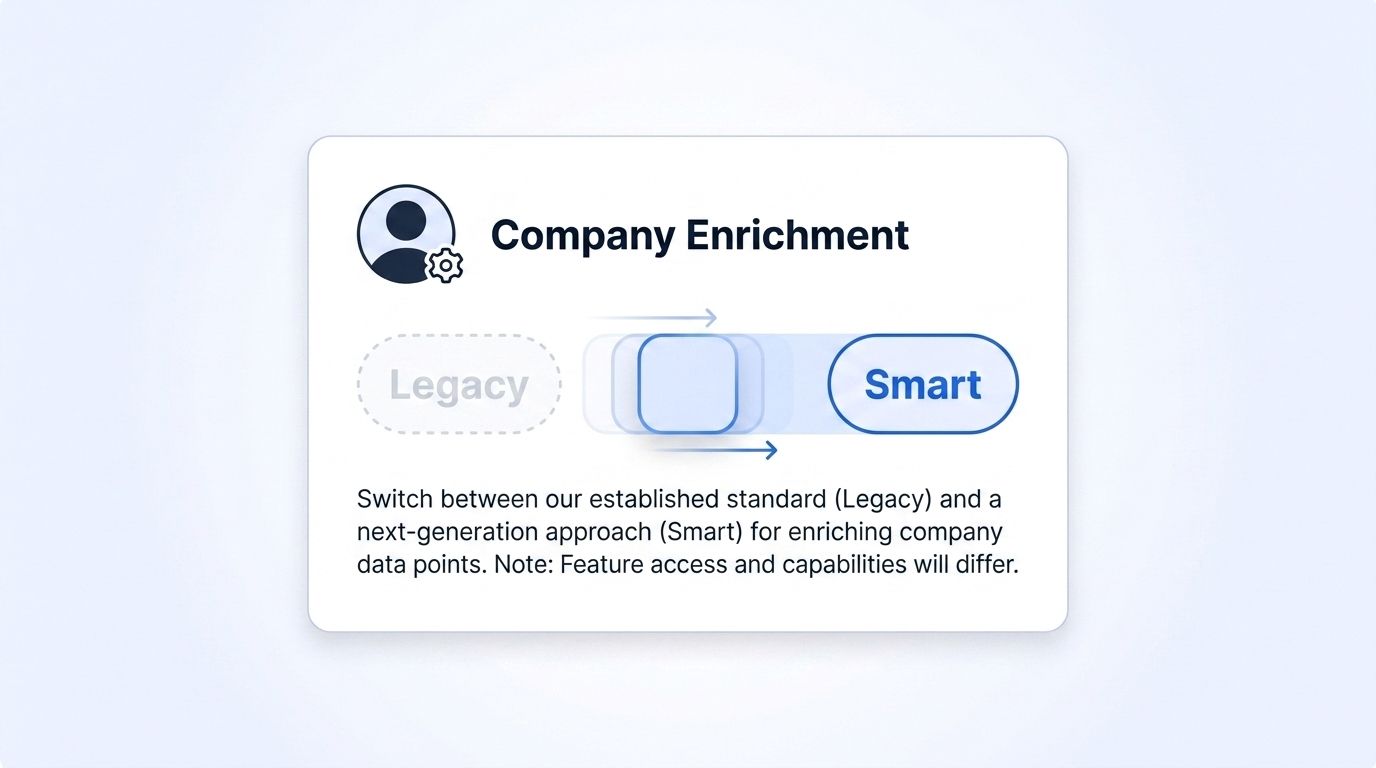
2. Clay: Why Is It Best for Waterfall Enrichment Across 150+ Providers?
Clay's HubSpot Marketplace app shows 12,000+ installs and connects to "150+ data providers and AI web research" directly inside HubSpot workflows (HubSpot Marketplace listing, retrieved 2026-07-21) - more provider coverage than any single vendor on this list offers alone. It runs as a native workflow action too, triggering on record creation or property change without ever leaving HubSpot.
Why it's great: Clay runs a waterfall: it queries the cheapest, fastest provider first and only falls through to the next source if a field comes back empty, instead of paying for every provider on every record.
Best for: RevOps teams who want one enrichment layer that can pull from Clearbit-style, Apollo-style, and People Data Labs-style sources without paying for three separate seats.
Key feature: Enrichment runs as a native HubSpot workflow action, so it triggers on record creation or property change without leaving HubSpot.
Pricing: Credit-based, consumption-priced per enrichment call across the underlying provider stack.
3. Datamagnet: Why Is It Best for Live LinkedIn Data and Job-Change Signal Webhooks?
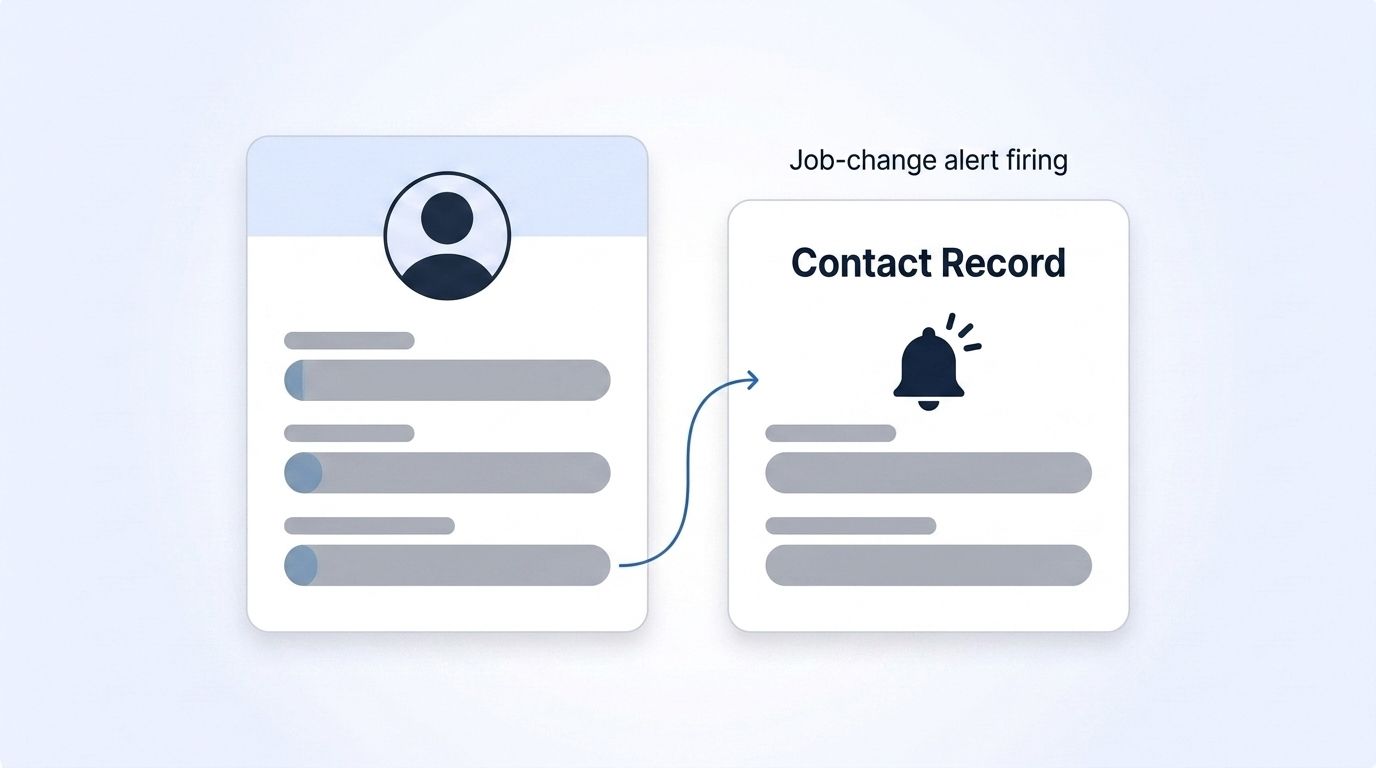
Datamagnet's HubSpot integration enriches contacts and companies with live LinkedIn data fetched at request time, then pushes job-change signal webhooks back into HubSpot the moment a tracked contact changes roles. Unlike tools that check a record once at creation, Datamagnet's signal monitors keep watching afterward, so stale employer or title fields get flagged automatically. That distinction matters most for GTM teams tracking champions or target accounts where a job change is the outreach trigger itself, not just a data-quality nuisance to clean up later.
Why it's great: Most enrichment tools on this list check a record once, at creation. Datamagnet's signal monitors keep watching after that, so a "current employer" field that goes stale six months later gets flagged automatically instead of waiting for the next re-enrichment run.
Best for: GTM teams tracking champions, executives, or target accounts where a job change is itself the trigger for outreach, not just a data-quality nuisance.
Key feature: The People Profile endpoint and Company Profile endpoint pull directly from a LinkedIn page at request time, so a rep sees today's headcount and title, not a snapshot from the last import.
Pricing: Pay-as-you-go credits, no seat minimums.
4. ZoomInfo: Why Is It Best for Verified Phone Numbers at Enterprise Scale?
ZoomInfo's native HubSpot app supports bidirectional sync - enriching HubSpot records and exporting HubSpot lists back into ZoomInfo for further filtering (ZoomInfo HubSpot Marketplace app; Storylane, retrieved 2026-07-21). That two-way flow is what enterprise sales teams lean on most: a list built in HubSpot can be pushed to ZoomInfo for deeper filtering against verified direct-dial numbers, firmographic data, and intent signals, then pulled back into HubSpot fully enriched at large record volumes.
Why it's great: ZoomInfo's newer "Waterfall Enrichment" inside GTM Studio queries 25+ third-party providers in parallel and returns the highest-confidence match, moving the company toward the same waterfall model Clay popularized (ZoomInfo).
Best for: Enterprise sales teams that need verified direct-dial phone numbers alongside firmographic and intent data at large record volumes.
Key feature: Bidirectional sync means a list built in HubSpot can be pushed to ZoomInfo for additional filtering, then pulled back enriched.
Pricing: Seat-based with usage tiers; enterprise contracts are the norm.
5. Apollo.io: Why Is It Best for Combining Enrichment With Prospecting?
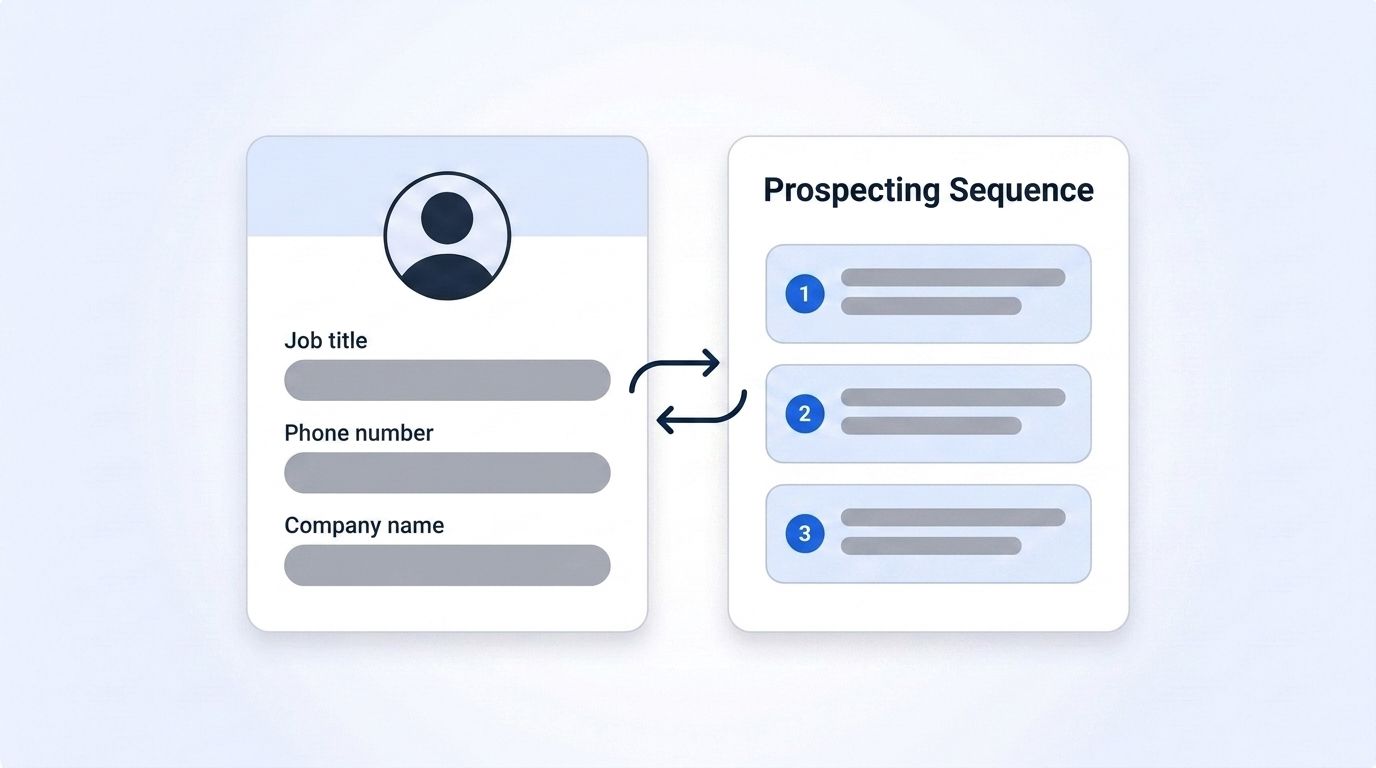
Apollo's native "Apollo Enrichment" HubSpot app draws on a 210M+ contact database and includes a dedicated setup mode that appends data to existing contacts without creating duplicate records (Apollo; Aptitude 8). Apollo folds enrichment, prospecting, and sequencing into one workspace, so a rep who spots a gap in a HubSpot record can fill it and launch outreach without switching tools. Bidirectional sync plus that duplicate-safe append mode matters once a portal has years of overlapping imports behind it.
Why it's great: Apollo consolidates enrichment, prospecting, and sequencing into one workspace, so a rep who finds a gap in a HubSpot record can fill it and start outreach without switching tools.
Best for: SMB and mid-market teams that want enrichment and outbound prospecting under a single subscription instead of three.
Key feature: Bidirectional sync plus a duplicate-safe append mode, which matters once a HubSpot portal has years of overlapping imports.
Pricing: Seat-based, with credit-metered enrichment and prospecting bundled into each plan tier.
6. Cognism: Why Is It Best for Compliance-First Mobile Verification?
Cognism launched a native "2-Way Sync" for HubSpot in February 2026, giving real-time bidirectional visibility of contacts and companies and ingesting opt-outs directly for compliance (Cognism Newsroom, Feb 17, 2026). Verified mobile numbers paired with automatic opt-out ingestion is the real differentiator here, especially for teams selling into GDPR-sensitive markets that can't afford to track consent withdrawals in a spreadsheet. One-click export of new HubSpot records into Cognism removes the manual CSV round-trip most compliance-first workflows still rely on.
Why it's great: Cognism itself projects the sync can cut duplicate records by up to 80%, speed data entry by 50-70%, and lift daily SDR outreach volume 20-30% - vendor-stated figures worth treating as directional, not audited, but the compliance-first design (verified mobiles plus opt-out ingestion) is the real differentiator.
Best for: Teams selling into GDPR-sensitive markets that need opt-out data flowing back into HubSpot automatically, not tracked in a spreadsheet.
Key feature: One-click export of new HubSpot records straight into Cognism for enrichment, without a manual CSV round-trip.
Pricing: Seat-based subscription with credit allowances for enrichment and mobile verification.
7. Lusha: Why Is It Best for Real-Time Enrichment at the Point of Contact Creation?
Lusha's native integration maps directly to standard HubSpot contact and company fields with no middleware layer, and supports webhooks that auto-enrich a record the moment it's created (Lusha docs). Lusha markets explicitly against connector latency, firing enrichment the moment a rep clicks save rather than waiting on a nightly batch job most competitors still run. That's the difference that matters for fast-moving SDR teams, where a lead left untouched for even an hour can go cold.
Why it's great: Lusha markets explicitly against connector latency - enrichment fires "the moment a rep clicks save," rather than waiting on a nightly batch job most competitors still run.
Best for: Fast-moving SDR teams where a lead sits untouched for even an hour if enrichment doesn't happen at the instant of creation.
Key feature: Self-reported 98% email accuracy and 86% phone accuracy (Lusha blog) - vendor claims, not independently audited, but consistent with Lusha's real-time-only positioning.
Pricing: Credit-based per enrichment/reveal, with seat tiers for team plans.
8. 6sense - Best for Account-Level Intent Scoring
6sense runs two separate native apps for HubSpot: one syncs CRM and marketing-automation data into 6sense, and a second Enrichment App pushes intent scores and buying-stage signals back, on a nightly sync cadence (6sense integrations; 6sense docs). Unlike the contact-level tools earlier on this list, 6sense isn't enriching individual fields at all. It's surfacing which target accounts are actively researching a relevant topic before anyone on that account has even filled out a form, which is a fundamentally different job than field-level enrichment.
Why it's great: 6sense isn't a contact-detail enricher - it's an ABM layer that surfaces which target accounts are actively researching a relevant topic before anyone on that account has filled out a form.
Best for: ABM programs that need account-level buying-stage visibility, not another field on the contact record.
Key feature: Predictive account scoring runs against your defined ICP, so intent signals arrive pre-filtered to accounts that already match your target profile.
Pricing: Enterprise, usage/account-volume-based; typically sold as a platform subscription rather than per-credit.
9. Bombora - Best for Company-Level Topic-Surge Intent Data
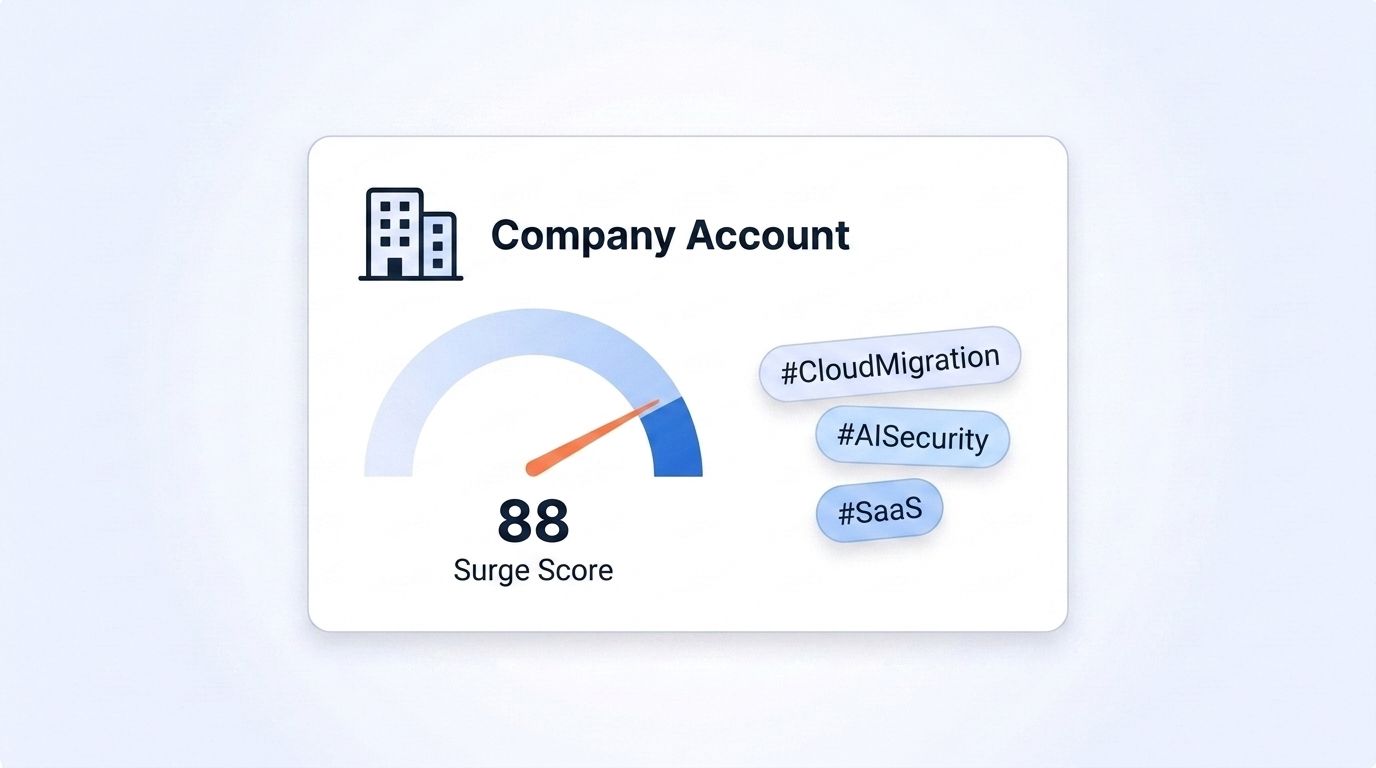
Bombora's native HubSpot integration writes Company Surge® scores and topic clusters to the account record in near real-time (Bombora HubSpot integration; Bombora blog). Bombora's intent data comes from a co-op tracking roughly 5,000 business websites across 12,000+ topic clusters, a consent-based cooperative model that's distinct from crawled or single-source intent providers. That co-op structure is why marketing and RevOps teams lean on Bombora specifically for topic-level surge signals feeding lead-scoring already built in HubSpot.
Why it's great: Bombora's intent data comes from a co-op tracking roughly 5,000 business websites across 12,000+ topic clusters - a consent-based cooperative model, distinct from crawled or single-source intent providers.
Best for: Marketing and RevOps teams that want topic-level surge signals attached to the account record, feeding lead-scoring or ABM segmentation already built in HubSpot.
Key feature: Topic clusters map to your own defined keywords, so a surge score reflects research activity specific to what you sell, not a generic industry trend.
Pricing: Subscription-based, typically licensed by topic-cluster volume and account coverage.
What About People Data Labs?
People Data Labs has no native HubSpot app - one review states plainly that "People Data Labs does not integrate with HubSpot, Salesforce, Pipedrive, or any CRM" (SyncGTM). It's API/dataset-only, reaching HubSpot only through middleware like a Clay waterfall step or a custom Zapier/Pipedream connector (Pipedream). Worth knowing as a data source, not worth installing as a standalone HubSpot app.
Comparison Table
| Integration | Data Enriched | Sync Type | Update Cadence | Pricing Model |
|---|---|---|---|---|
| HubSpot Breeze Intelligence | Contact + company + visitor intent | Native (first-party) | Real-time | Free base tier, credits for AI fields |
| Clay | Contact + company, waterfall across 150+ sources | Native app | Real-time (workflow-triggered) | Credit-based |
| Datamagnet | Live LinkedIn contact + company + job-change signals | Native workflow + webhooks | Real-time + continuous monitoring | Pay-as-you-go credits |
| ZoomInfo | Contact + company + intent | Native, bidirectional | Real-time/waterfall (GTM Studio) | Seat-based, enterprise |
| Apollo.io | Contact + company + prospecting | Native, bidirectional | Real-time | Seat-based + credits |
| Cognism | Contact (verified mobile) + compliance data | Native 2-Way Sync | Real-time | Seat-based + credits |
| Lusha | Contact + company | Native | Real-time (on record creation) | Credit-based |
| 6sense | Account-level intent + predictive scoring | Two native apps | Nightly | Enterprise/usage |
| Bombora | Company-level topic-surge intent | Native | Near real-time | Subscription |
Lining up sync cadence across all nine shows a clean split: six run real-time or workflow-triggered enrichment, while 6sense's account-sync layer explicitly runs nightly. That's not a flaw - account-level intent doesn't need second-by-second freshness the way a contact record does - but it means "real-time" isn't actually the default across this category yet, whatever the marketing copy on each page claims.
Frequently Asked Questions
What is the best CRM enrichment integration for HubSpot overall?
For most teams, HubSpot Breeze Intelligence is the strongest starting point since standard enrichment now runs free on Core Seats with zero extra vendor setup. Teams that need broader provider coverage or job-change monitoring typically layer on Clay or a signal-based tool like Datamagnet alongside it.
Is HubSpot's built-in Breeze Intelligence enough, or do I need a third-party tool?
Breeze Intelligence covers standard contact and company fields well, but it's a single-source enrichment layer. Teams that need waterfall coverage across 150+ providers (Clay), verified mobile numbers (Cognism), or continuous job-change monitoring (Datamagnet) still need a dedicated tool for those specific gaps.
What's the difference between contact enrichment and intent data?
Contact enrichment fills in fields on a specific person or company record - title, phone, headcount. Intent data (6sense, Bombora) scores which accounts are actively researching a relevant topic, independent of any single contact record, and is typically used to prioritize which accounts get outreach first.
Do any of these integrations update in true real time?
Six of the nine trigger on record creation or property change rather than a batch schedule, per each vendor's own documentation. 6sense's account-sync layer is the clear exception, running on a nightly cadence by design - intentional for account-level scoring, not a limitation to work around.
How often should I re-check this list?
HubSpot's Marketplace adds new native apps regularly, and pricing/sync models shift with vendor product releases - Cognism's 2-Way Sync itself only shipped in February 2026. Re-verify integration status and pricing directly against each vendor's HubSpot Marketplace listing before signing a contract.
Pick the Integration That Matches Your Sync, Not Just Your Budget
HubSpot Breeze Intelligence covers the basics for free, but the real decision is cadence: real-time contact enrichment (Clay, Datamagnet, Lusha) solves a different problem than nightly account-level intent (6sense, Bombora). If a job change or new hire is itself your trigger to reach out, that's a signal problem, not a field problem - see how live LinkedIn data and job-change webhooks keep HubSpot records current and test it against your own contact list this week.
Sources
- HubSpot, Q1 2026 earnings data via Resonate, "HubSpot Market Share 2026," retrieved 2026-07-21, https://www.resonatehq.com/blog/hubspot-market-share
- HubSpot Community, "2,000+ Apps. 2.5M+ Active Installs," retrieved 2026-07-21, https://community.hubspot.com/t5/Releases-and-Updates/2-000-Apps-2-5M-Active-Installs/ba-p/1209474
- HubSpot Marketplace, Clay listing, retrieved 2026-07-21, https://ecosystem.hubspot.com/marketplace/listing/clay
- Gartner, "Gartner Survey Finds Sales Organizations That Provide AI-Enabled Next Best Actions Are 2.6x More Likely to Achieve Commercial Growth," May 20, 2026, retrieved 2026-07-21, https://www.gartner.com/en/newsroom/press-releases/2026-05-20-gartner-survey-finds-sales-organizations-that-provide-ai-enabled-next-best-actions-are-two-point-six-times-more-likely-to-achieve-commercial-growth
- MarTechCube, "Gartner Finds AI Sales Guidance Drives Business Growth," May 2026, retrieved 2026-07-21, https://www.martechcube.com/gartner-finds-ai-sales-guidance-drives-business-growth/
- Cognism Newsroom, "Cognism Launches 2-Way Sync For HubSpot," Feb 17, 2026, retrieved 2026-07-21, https://www.cognism.com/newsroom/cognism-launches-2-way-sync-for-hubspot
- ZoomInfo, HubSpot Marketplace app listing, retrieved 2026-07-21, https://market.zoominfo.com/app/hubspot
- ZoomInfo, "Waterfall Enrichment," retrieved 2026-07-21, https://www.zoominfo.com/products/waterfall-enrichment
- Apollo.io, "Best Data Enrichment Tool for HubSpot Users," retrieved 2026-07-21, https://www.apollo.io/insights/best-data-enrichment-tool-for-hubspot-users
- Lusha, HubSpot integration documentation, retrieved 2026-07-21, https://docs.lusha.com/user-guide/hubspot/hubspot-integration
- 6sense, HubSpot CRM integration page, retrieved 2026-07-21, https://6sense.com/integrations/hubspot-crm/
- Bombora, HubSpot native integration page, retrieved 2026-07-21, https://bombora.com/integration/hubspot/
- SyncGTM, "People Data Labs Review 2026," retrieved 2026-07-21, https://syncgtm.com/blog/people-data-labs-review
- Datamagnet, HubSpot integration, retrieved 2026-07-21, https://www.datamagnet.co/integrations/hubspot/
