
Disclosure: Datamagnet publishes this article. Product capabilities described below are based on public vendor documentation, retrieved July 19, 2026. Validate coverage, pricing, and integration depth with each vendor before committing budget.
Best API-First Sales Tools for GTM Engineers in 2026
A GTM engineer doesn't open a CRM and click through filters. They open a terminal, read an API reference, and wire three or four systems together so a signal in one tool becomes an action in another. That job barely existed five years ago — now it's the difference between a sales stack that scales and one that collapses under its own tool sprawl.
In 2025, 65.7% of teams named data integration as the single biggest hurdle in managing their martech stack, with data silos flagged as a growing concern by nearly a quarter of respondents (MarTech.org, 2025 State of Your Stack Survey). Point-and-click tools got GTM teams this far. API-first tools are what get them past the integration wall.
TL;DR
- 65.7% of martech teams say data integration — not features or price — is their top stack management hurdle (MarTech.org, 2025).
- In 2026, 41% of enterprise B2B teams run at least one AI SDR in production, up from 12% a year earlier (Salesforce, State of Sales 2026) — agentic execution now needs an API layer underneath it, not a UI.
- The modern outbound stack runs on 5-7 core tools instead of 20 scattered point solutions, and consolidated teams report far less redundant spend (River Editor, Outbound Sales Tech Stack Guide 2026).
- The best API-first tools share three traits: a documented REST API, webhook support for real-time events, and structured JSON output that plugs into scripts and AI agents without manual export/import steps.
- Clay, n8n, Apollo, HubSpot, Attio, and Datamagnet all made this list because GTM engineers can build on them directly, not just click through them.
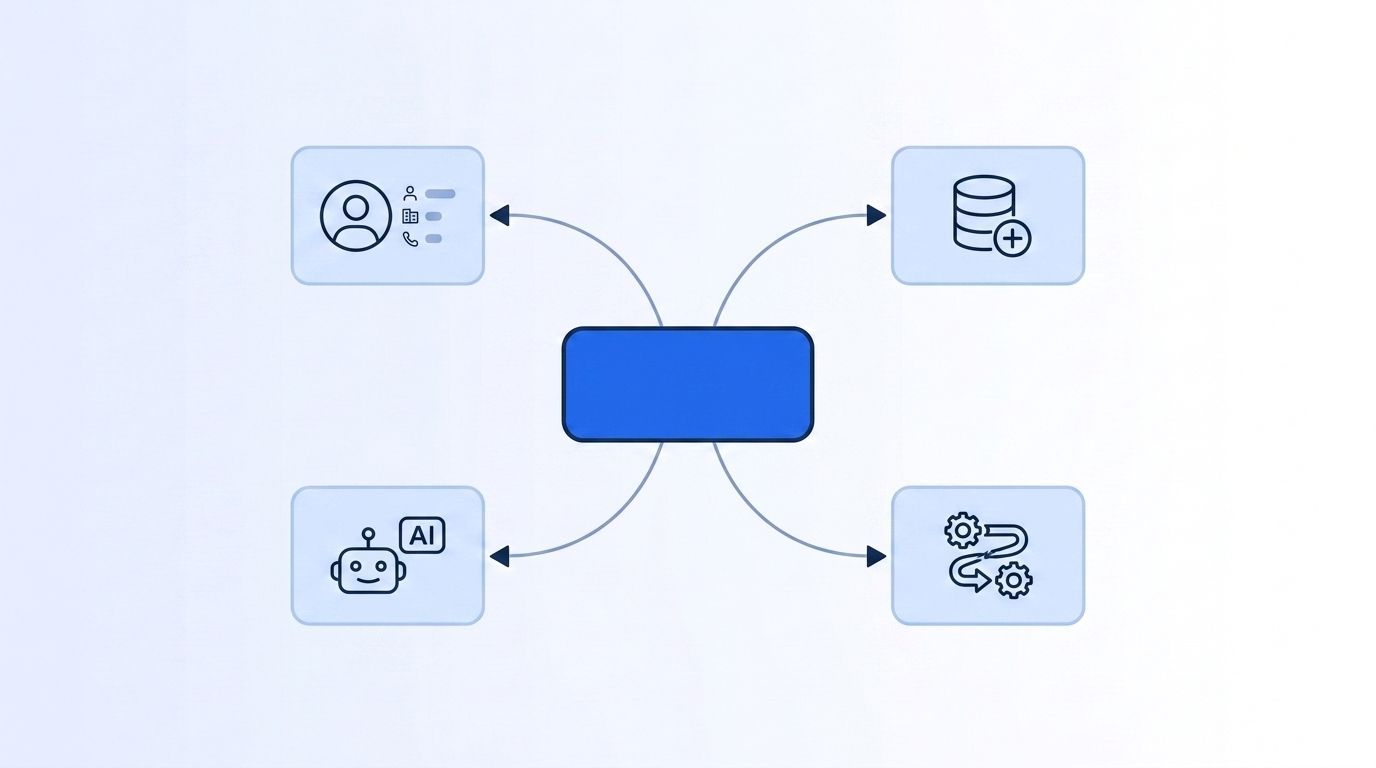
What Makes a Sales Tool "API-First" for a GTM Engineer?
A tool is API-first when the API is the product, not an afterthought bolted onto a UI. Point-and-click platforms often expose some API, but a GTM engineer needs documented endpoints, webhook events for real-time triggers, and predictable JSON schemas stable enough to build production workflows on top of.
Three traits separate an API-first tool from a UI-first tool with an API:
- A documented REST API as a first-class product, not a hidden enterprise add-on you have to request access to.
- Webhook support, so an event — a job change, a form fill, a reply — triggers a workflow instantly instead of waiting for a scheduled sync.
- Structured, predictable output that a script or an AI agent can parse without custom scraping logic for every field.
Most vendor comparisons score tools on feature count. That's the wrong lens for a GTM engineer. A tool with fewer features but a stable, well-documented API beats a feature-rich tool with an undocumented one — because the GTM engineer's job is to compose tools into a system, and a system is only as reliable as its flakiest integration point.
At a Glance: What Are the 10 Best API-First Sales Tools for GTM Engineers?
| Tool | Category | Best for | API depth |
|---|---|---|---|
| Clay | Orchestration + enrichment | Multi-provider waterfalls and AI research agents | Native API, 150+ integrations |
| n8n | Workflow automation | Self-hosted, open-source orchestration | Full REST API, webhook nodes, self-hostable |
| Zapier | Workflow automation | Fast point-and-click automation with growing AI Actions | REST API + AI Actions for agent tool use |
| Make.com | Workflow automation | Granular, visual control over every API call | Native HTTP/API modules per step |
| Apollo.io | Enrichment + engagement | Self-service prospecting with programmatic access | Public REST API for people/company enrichment |
| HubSpot | CRM + activation | API-native CRM with workflow-triggered enrichment | REST API, 1,400+ integrations |
| Attio | CRM | Fully composable, API-first CRM built for custom objects | API and data model exposed by design |
| Workato | Enterprise iPaaS | Governed automation across large, regulated orgs | Recipe-based API orchestration |
| Salesforce Agentforce SDR | Agentic AI execution | Autonomous outbound inside the system of record | API + Data Cloud context layer |
| Datamagnet | Programmable data layer | Real-time people, company, and signal data via API | API-first by design, webhook signals |
1. Clay: Best for Multi-Provider Enrichment Waterfalls
Clay is an orchestration platform built specifically for GTM engineers who don't want to accept one data provider's match rate as their ceiling. Clay documents CRM enrichment workflows that waterfall across 150+ integrations and AI research agents, then sync enriched records back to a CRM automatically (Clay, CRM Enrichment).
Why GTM engineers shortlist it: Clay lets you build precise logic — try a trusted source first, fall back to a second provider for a missing field, verify before write-back, then alert a rep only when something material changes. Pair Clay's HTTP enrichment step with Datamagnet's live LinkedIn enrichment column to pull person and company data fetched at run time instead of from a static snapshot.
Best fit: RevOps or GTM engineering teams with clear data contracts and the bandwidth to own workflow logic, not just click a template.
2. n8n: Why Is It Best for Self-Hosted, Open-Source Orchestration?
n8n is a workflow automation tool built around a visual canvas backed by a full REST API, native webhook triggers, and a self-hosted deployment option that most closed SaaS automation tools don't offer. That combination matters for GTM engineers who need to keep sensitive contact data inside their own infrastructure instead of a third-party cloud.
Why GTM engineers shortlist it: Every n8n node can call an HTTP endpoint directly, which means a signal API and an enrichment API can sit in the same workflow without a connector marketplace in between. Datamagnet's n8n integration calls the API from an HTTP Request node and receives job-change signal webhooks with n8n's Webhook node, so LinkedIn enrichment and job-change alerts run inside any workflow you already build.
Best fit: Technical GTM teams that want infrastructure ownership and are comfortable maintaining a self-hosted or managed n8n instance.
3. Zapier: Best for Fast Point-and-Click Automation With Growing Agent Support
Zapier remains the default on-ramp to automation for GTM teams that need a workflow live in minutes, not a sprint. Its core product is point-and-click "Zaps" connecting thousands of apps, but its newer AI Actions capability exposes Zapier's connector library as callable tools an AI agent can invoke directly, extending the platform beyond scheduled triggers into agent-driven execution.
Why GTM engineers shortlist it: Zapier's breadth of pre-built app connectors means a GTM engineer can prototype a workflow fast, then replace the slowest or most fragile step with a direct API call once the pattern proves out. It's the fastest path from idea to a working automation, even when it's not the final production architecture.
Best fit: Lean GTM teams validating a workflow idea before investing engineering time in a more code-heavy orchestration layer.
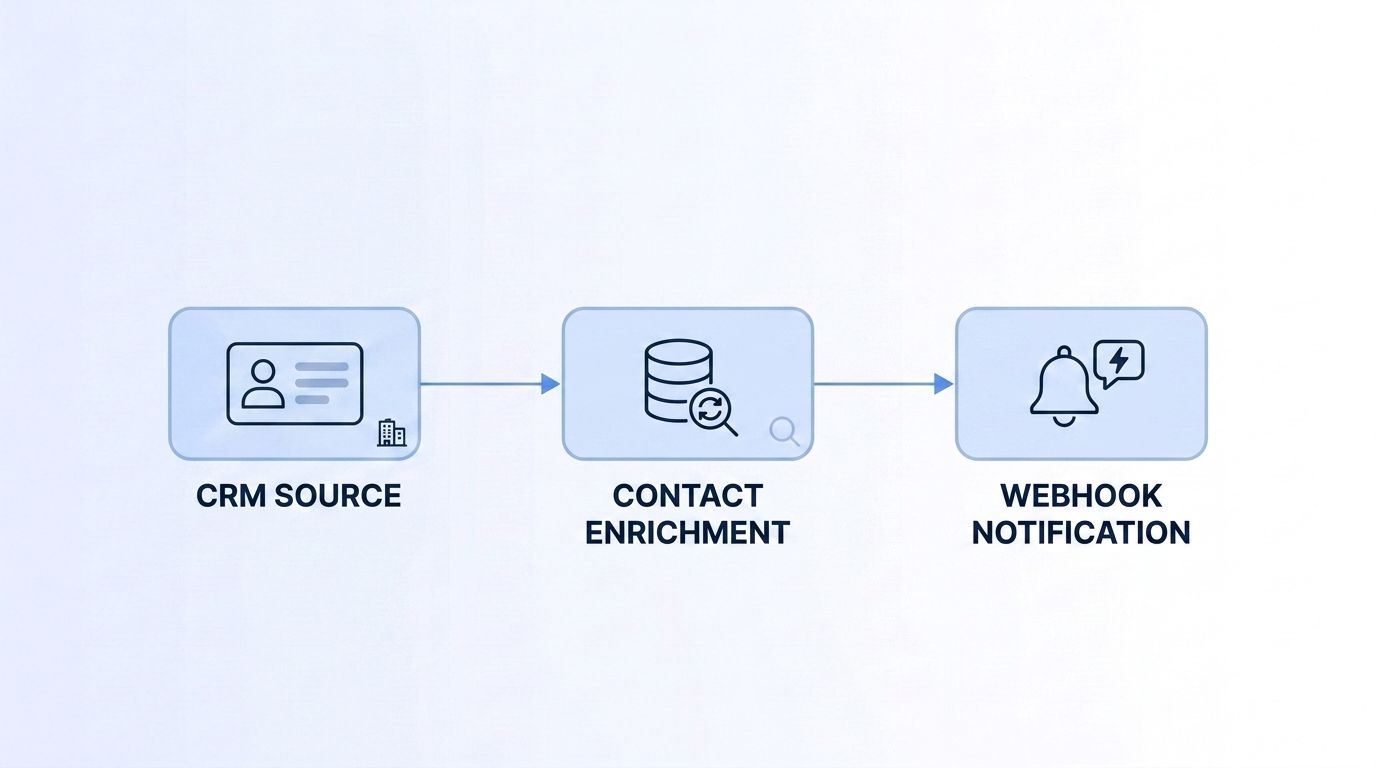
4. Make.com: Why Is It Best for Granular, Visual Control Over Every API Call?
Make.com (formerly Integromat) takes a more granular approach than Zapier: each module in a scenario maps closer to a raw API call, giving GTM engineers finer control over request parameters, error handling, and data transformation between steps.
Why GTM engineers shortlist it: When a workflow needs conditional branching, custom data mapping, or precise control over retry logic, Make's visual-but-technical approach sits between a no-code tool and hand-written integration code. That makes it a common choice for GTM engineers who want visual debugging without giving up API-level control.
Best fit: Teams that have outgrown simple trigger-action automation but aren't ready to maintain custom-coded integrations for every workflow.
5. Apollo.io: Best for Programmatic Prospecting and Enrichment in One Workspace
Apollo pairs a large self-service contact database with sequencing and a public enrichment API in a single product. Its 2026 database spans more than 210 million contacts and 30 million companies, with prospecting, enrichment, and calling available through both the UI and a documented API (Apollo.io, Pricing).
Why GTM engineers shortlist it: Apollo's People Enrichment API returns demographic and firmographic fields alongside an enrichment status a script can check before writing to a CRM, which lets a GTM engineer build enrichment into a pipeline rather than a manual export. See how Datamagnet compares as a live-data alternative to Apollo for teams that need request-time accuracy over a static database snapshot.
Best fit: Fast-scaling teams that want prospecting, enrichment, and outreach in one API-accessible workspace instead of stitching three separate tools.
6. HubSpot: Why Is It Best for an API-Native CRM With Workflow-Triggered Enrichment?
HubSpot's CRM exposes a REST API alongside 1,400+ marketplace integrations, and its data enrichment features support automatic, continuous enrichment that admins can trigger through workflow logic rather than a manual button click (HubSpot App Marketplace, 2026).
Why GTM engineers shortlist it: HubSpot's workflow engine can call an external webhook when a contact is created, which is exactly the trigger point a GTM engineer needs to fire off a live enrichment lookup. Datamagnet's HubSpot integration enriches contacts and companies with live LinkedIn data on create, then auto-updates records through job-change signal webhooks — no manual CSV import required.
Best fit: Teams already standardized on HubSpot who want enrichment and automation to run natively inside the CRM instead of a bolt-on tool.
7. Attio: Best for a Fully Composable, API-First CRM
Attio was built from the ground up as an API-first CRM — its data model, custom objects, and automation layer are designed to be extended programmatically rather than configured through a fixed set of admin screens. That's a meaningfully different starting point than a legacy CRM that added an API after its UI was already the product.
Why GTM engineers shortlist it: A GTM engineer can define custom objects and relationships that map to their actual go-to-market motion — not the generic "contact, company, deal" schema most CRMs force onto every team — and then build automations directly against that schema through the API.
Best fit: Technical GTM teams that want a CRM they can shape around their workflow instead of shaping their workflow around the CRM.
8. Workato: Why Is It Best for Enterprise Governance at Scale?
Workato is an enterprise integration platform (iPaaS) built for organizations that need automation with formal governance — audit trails, access controls, and approval workflows — layered on top of the same recipe-based automation concept as lighter tools like Zapier or Make.
Why GTM engineers shortlist it: Large, regulated GTM orgs need integration platforms that satisfy a security review, not just a workflow that works. Workato's recipe architecture still exposes granular API-call control, but wraps it in the governance controls that a Fortune 500 security team expects before approving a new data flow.
Best fit: Enterprise GTM engineering teams operating under compliance requirements that a lighter automation tool can't satisfy.
9. Salesforce Agentforce SDR: Best for Agentic Execution Inside the System of Record
Agentforce SDR turns Salesforce from a passive database into an active outbound participant. The agent sends personalized outbound emails, threads replies, shares calendar links, and books meetings on its own, updating BANT qualification fields in real time using Salesforce's Atlas reasoning engine and Data Cloud for context (Salesforce, Agentforce Lead Nurturing).
Why GTM engineers shortlist it: In 2026, 41% of enterprise B2B teams run at least one AI SDR in production, up from 12% a year earlier (Salesforce, State of Sales 2026), and Agentforce is the most direct path for Salesforce-native orgs to adopt agentic execution without standing up a separate agent framework. A newer entrant, Landbase, takes a similar agentic approach outside the CRM itself — it was named a Gartner Cool Vendor for AI in Marketing in November 2025 and has since raised a $30M Series A (Landbase, Landbase Named a Cool Vendor by Gartner).
Best fit: Salesforce-native orgs willing to invest in Data Cloud to give the agent accurate, trusted context to act on.
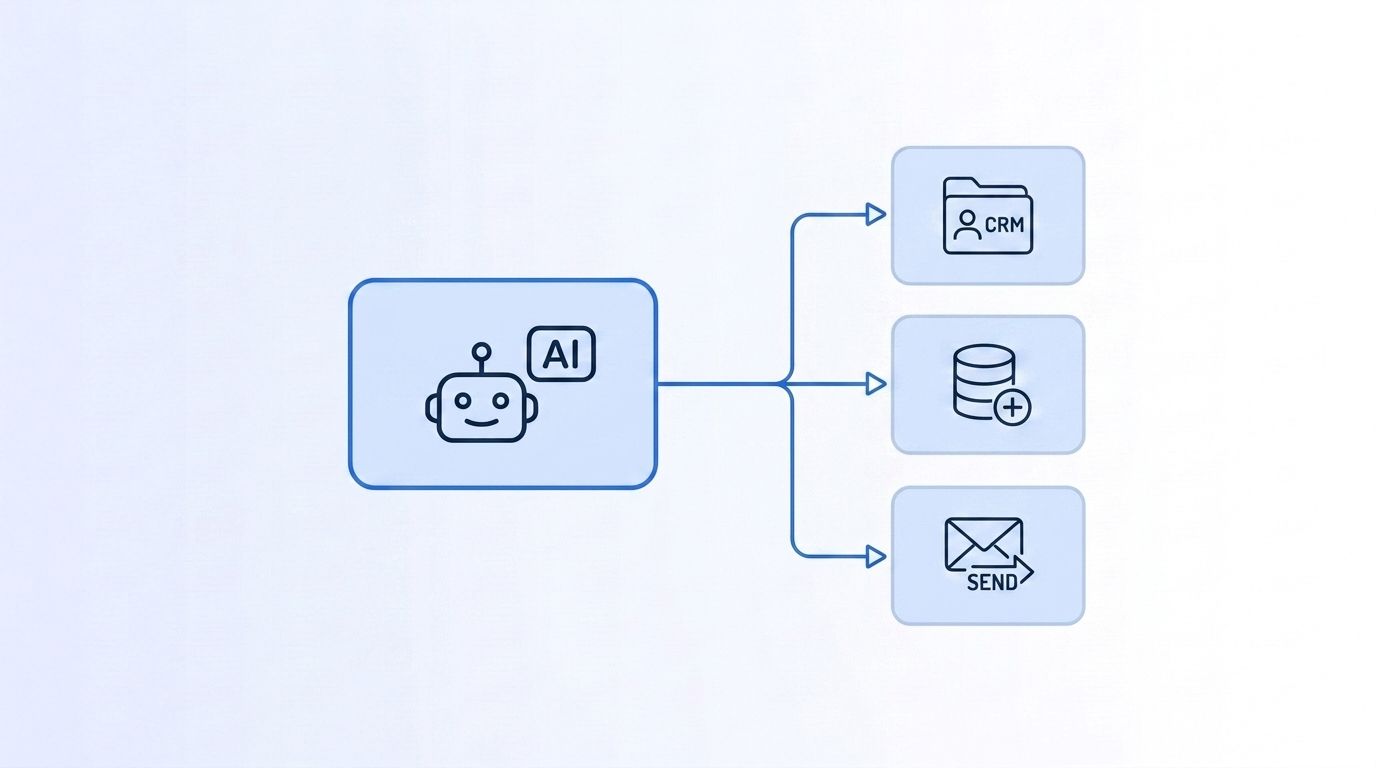
10. Datamagnet: Best for a Programmable People, Company, and Signal Data Layer
Datamagnet fills the layer none of the tools above fully own: a programmable API for real-time LinkedIn people, company, and activity data that a GTM engineer can wire into any of the platforms above instead of relying on a static database. Endpoints cover people profiles and company profiles with human-readable filters instead of opaque IDs, returning structured JSON at request time rather than from a stale snapshot.
Why GTM engineers shortlist it: Signal endpoints trigger on job changes or engagement events and push straight into whatever system your team already runs through webhooks. Because job changes and engagement events happen continuously, a data layer that fetches live beats one that syncs on a schedule — Lusha's live database tracked roughly 13,600 B2B contacts changing jobs per working day in early 2026 (Lusha, B2B Contact Mobility Report 2026), and a monthly refresh cycle is already behind by the time a record lands in your CRM.
Best fit: RevOps or GTM engineering teams building internal tools, custom scoring, or enrichment jobs on top of an existing stack rather than adding another seat-based UI. Start with the quickstart guide as you scale a workflow.
How Do You Build an API-First GTM Stack That Doesn't Collapse Under Sprawl?
You build it in layers, not all at once. Teams that try a full-stack cutover in one quarter usually spend the next two quarters untangling duplicate records and conflicting sequences. The modern outbound stack runs on 5-7 core tools rather than 20 scattered point solutions, and consolidated teams report far less redundant spend than teams running an unmanaged sprawl of overlapping subscriptions (River Editor, Outbound Sales Tech Stack Guide 2026).
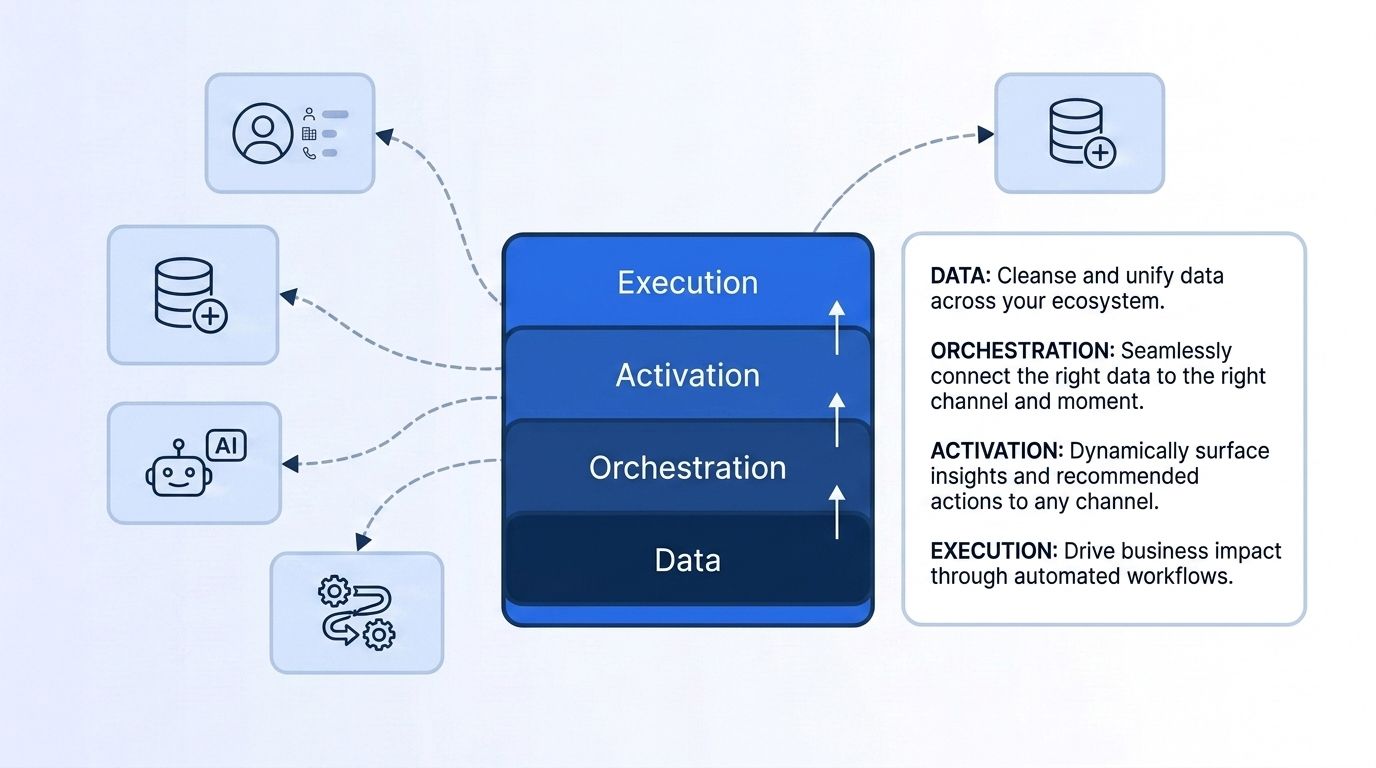
Start with the layer that's actually broken today — usually data quality or workflow orchestration — and prove it on one pod before expanding:
| Layer | Job | Tools from this list |
|---|---|---|
| Data | Programmable, real-time people and company data | Datamagnet, Apollo |
| Orchestration | Route data between systems, waterfall enrichment | Clay, n8n, Zapier, Make.com, Workato |
| Activation | Trigger CRM actions from live events | HubSpot, Attio |
| Execution | Agentic outbound and qualification | Salesforce Agentforce SDR |
Watching GTM teams roll out an API-first stack in the wrong order is a common pattern: they buy an agentic AI SDR tool first, expecting it to fix pipeline volume, only to find it's now sending personalized outreach off contact data that's months out of date. The data layer has to come first. An agent is only as good as what it's allowed to see.
Isn't it strange that teams will spend weeks debating which agentic AI tool to buy before checking whether the data feeding that agent is even current? A perfectly orchestrated workflow built on stale contacts just automates the mistake faster.
How Did We Select These Tools?
This is an editorial shortlist, not a paid ranking. We selected tools with public documentation showing a genuine, product-level API — not just a hidden enterprise add-on — and grouped them by the GTM function they serve best: orchestration, enrichment, activation, or agentic execution. No single tool on this list covers every layer alone.
We did not rank by database size, review score, or a universal price point, because those figures vary by region, plan tier, and contract length. Confirm current API coverage, rate limits, and pricing directly with each vendor before building a production workflow on top of it.
Frequently Asked Questions
What does "API-first" mean for a sales tool?
An API-first sales tool treats its API as the primary product interface, not an add-on to a UI. It exposes documented REST endpoints, supports webhooks for real-time events, and returns structured, predictable JSON that a script or AI agent can consume without custom scraping logic.
What tools do GTM engineers actually use day to day?
Most GTM engineering stacks combine an orchestration layer (Clay, n8n, Zapier, or Make.com), a programmable data layer (Datamagnet, Apollo), an API-native CRM (HubSpot or Attio), and increasingly an agentic execution layer like Salesforce Agentforce SDR for autonomous outbound.
Is agentic AI replacing GTM engineers in 2026?
No — it's changing what they build. In 2026, 41% of enterprise B2B teams run at least one AI SDR in production, up from 12% a year earlier (Salesforce, State of Sales 2026), but agents still need a GTM engineer to wire the data layer, guardrails, and handoff logic underneath them.
How many tools should an API-first GTM stack actually run?
Fewer than most teams think. The modern outbound stack runs on 5-7 core tools rather than 20 scattered point solutions, and teams that consolidate report far less redundant spend than an unmanaged sprawl of overlapping subscriptions (River Editor, Outbound Sales Tech Stack Guide 2026).
Why does data integration matter more than picking the "best" individual tool?
Because 65.7% of martech teams cite data integration, not individual tool quality, as their biggest stack management hurdle (MarTech.org, 2025 State of Your Stack Survey). A stack of ten "best" tools that don't share data cleanly performs worse than five tools with solid API contracts between them.
Why Start With the Data Layer, Then Orchestrate?
An API-first GTM stack isn't about picking the flashiest agentic AI tool first. It's about getting the data layer right, then layering orchestration, activation, and execution on top of it in that order. Data integration is the hurdle 65.7% of teams actually name as their biggest problem — start there.
If your bottleneck is programmable access to fresh people and company data rather than another seat-based UI, get a Datamagnet API key and make your first request in minutes to see how a live data layer fits underneath the rest of your stack.
Sources
- MarTech.org, 2025 State of Your Stack Survey, retrieved 2026-07-19, https://martech.org/these-are-the-challenges-and-barriers-impacting-your-martech-stack/
- Salesforce, State of Sales 2026, retrieved 2026-07-19, https://www.salesforce.com/
- River Editor, Outbound Sales Tech Stack Guide 2026 for SMBs, retrieved 2026-07-19, https://rivereditor.com/blogs/outbound-sales-tech-stack-2026-smb
- Lusha, B2B Contact Mobility Report 2026, retrieved 2026-07-19, https://www.lusha.com/blog/b2b-contact-mobility-report-2026/
- Clay, CRM Enrichment, retrieved 2026-07-19, https://www.clay.com/use-cases/crm-enrichment
- Apollo.io, Pricing, retrieved 2026-07-19, https://www.apollo.io/pricing
- HubSpot App Marketplace, retrieved 2026-07-19, https://ecosystem.hubspot.com/marketplace/apps
- Salesforce, Agentforce Lead Nurturing Overview, retrieved 2026-07-19, https://help.salesforce.com/s/articleView?id=sales.sales_agent_sdr_intro.htm
- Landbase, Landbase Named a Cool Vendor by Gartner, retrieved 2026-07-19, https://www.landbase.com/blog/landbase-named-a-cool-vendor-by-gartner
- Datamagnet, API documentation, retrieved 2026-07-19, https://docs.datamagnet.co/api-reference/introduction
