
Disclosure: This article is published by Datamagnet. Vendor claims are self-reported unless otherwise noted.
B2B Data Vendor Comparison 2026: Which Platform Fits Your Use Case?
There's no single "best" B2B data vendor. In 2026, the sales intelligence market is worth $4.85 billion and growing at an 11.10% annual clip (Fortune Business Insights, 2026), and most of that spend goes toward platforms picked for the wrong reason: a demo that looked slick, not a fit for how the team actually works.
The right vendor depends on your use case. An enterprise RevOps team juggling a dozen integrations needs something different than a two-person SMB sales team closing deals off a spreadsheet, and a developer wiring enrichment into a product needs something different than both. This guide breaks down five common use cases and the tradeoffs that actually decide fit.
TL;DR
- The sales intelligence market hit $4.85B in 2025, up from prior years, with North America holding 42.30% of the share (Fortune Business Insights, 2026).
- 63.5% of B2B companies never respond to an inbound lead at all, and only 3.1% respond within an hour (RevenueHero, 2024) — speed-to-lead is a real vendor differentiator, not a nice-to-have.
- Usage-based pricing companies post ~120% net revenue retention versus ~110% for subscription-only peers (Metronome, 2025), a signal worth weighing against seat-based contracts.
- 37% of CRM users report losing revenue directly to poor data quality (Validity, 2025), which makes CRM alignment a bigger factor than most buyers budget for.
What Actually Determines Vendor Fit?
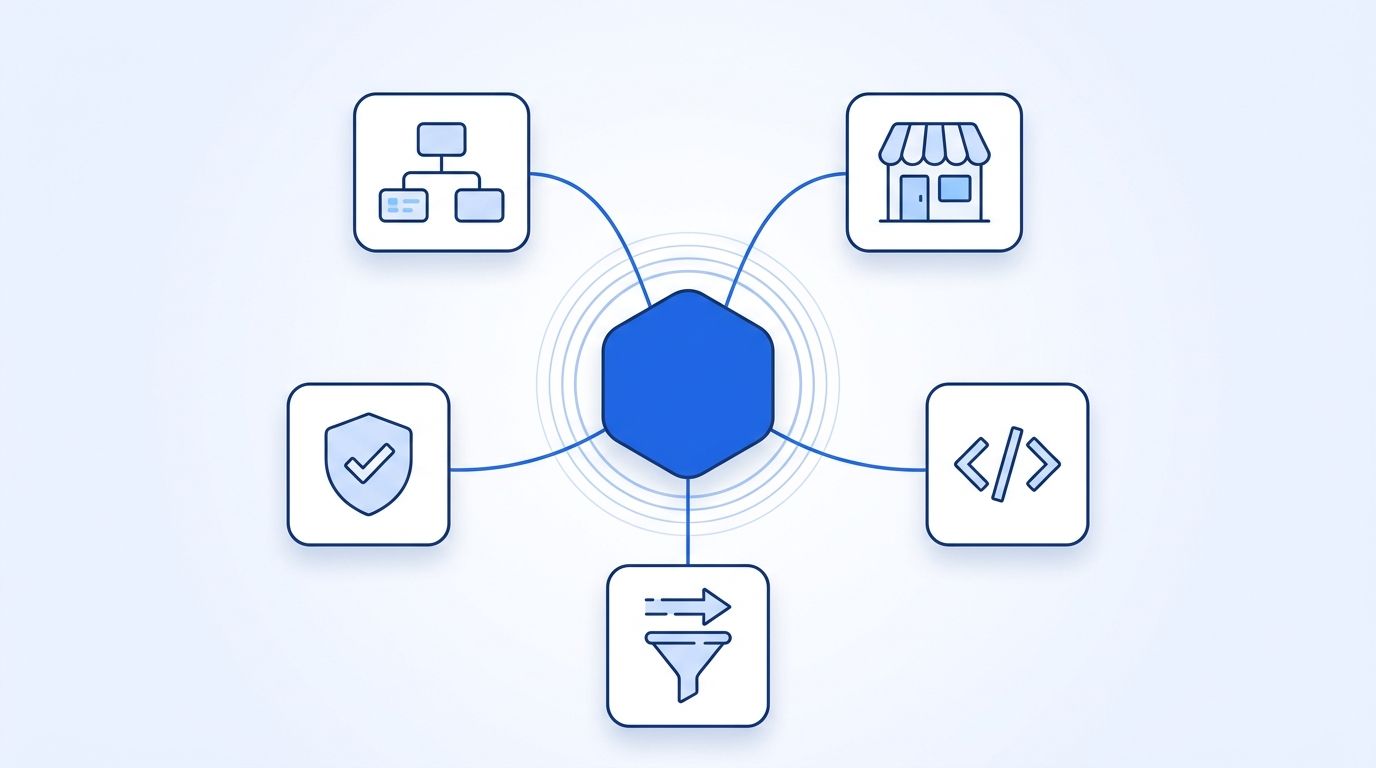
Vendor fit comes down to four variables: pricing model, regional data coverage, CRM alignment, and integration depth. Get these four right for your use case, and the "best" vendor question mostly answers itself.
Pricing model matters because it predicts behavior. A seat-based annual contract assumes stable headcount and predictable usage — great for a 200-person RevOps org, painful for a 4-person SMB team that needs to scale spend up and down monthly. In 2025, 77% of the largest software companies had built consumption- or usage-based pricing into their revenue models (Metronome, 2025), and that shift is reshaping how data vendors package access.
Regional coverage matters because a platform strong in North America can have real gaps in EMEA or APAC — a problem you only discover after go-live, not during the demo. CRM alignment matters because 76% of CRM users report that less than half their CRM data is accurate or complete (Validity, 2025), and a vendor that doesn't sync cleanly with your CRM's native fields just adds another data-quality problem instead of fixing one.
Most comparison guides rank vendors by feature count. That's the wrong axis. A platform with 40 features you'll never touch isn't a better fit than one with 8 features that map directly to your workflow — it's just more expensive shelfware waiting to happen.
Which Vendor Wins for Enterprise RevOps?
Enterprise RevOps teams need governance, deduplication, and workflow automation more than they need raw record count. As of 2025, 40% of enterprise companies run more than 16 tools in their RevOps stack, and a third of that spend qualifies as shelfware — paid for, rarely used (Rattle, "The State of RevOps 2025").
Platforms like ZoomInfo and Cognism are built for this segment: seat-based annual contracts, dedicated CS teams, and deep native integrations across Salesforce, Outreach, and Marketo. That depth comes at a price — long procurement cycles and contract terms that assume you won't churn mid-year. Clay sits at the automation-heavy end of this segment, letting RevOps teams orchestrate multiple data sources through a single workflow layer rather than committing to one vendor's full stack.
For teams evaluating whether their current enterprise vendor is worth the contract, our ZoomInfo comparison breaks down where a live-data, pay-as-you-go model changes the math versus a static seat-based database.
Which Platform Delivers Fast Time-to-Value for SMB Sales Teams?
SMB teams don't have a procurement department, and they can't afford a tool that takes a quarter to onboard. In 2026, 82% of organizations report adopting some level of API-first approach, up sharply from prior years (Postman, "2025 State of the API Report"), and that shift favors self-serve platforms over ones that require a sales call just to see pricing.
Apollo.io, Lusha, and RocketReach compete hardest in this segment because they publish credit-based, pay-as-you-go pricing that scales down as easily as it scales up. That's the opposite of the enterprise pattern — no annual minimums, no dedicated onboarding manager, just a card on file and a Chrome extension. The tradeoff is coverage depth: SMB-tier plans often cap monthly credits low enough that a single prospecting sprint can burn through an allotment fast.
If your team is weighing a credit-based SMB platform against a usage-based API, our Apollo comparison walks through where per-credit costs and per-request costs diverge once volume climbs.
Which API Fits Developer-First Workflows Best?
If your team is building enrichment into a product rather than a sales rep's browser tab, feature checklists matter less than uptime SLAs, response latency, and documentation quality. Developer-first buyers evaluate a vendor the way they'd evaluate any infrastructure dependency: can it handle production load, and will the docs answer a question at 2 a.m. without a support ticket.
This is where API-first vendors — Datamagnet, Coresignal, People Data Labs, Bright Data, and ScrapIn among them — separate from UI-first sales tools. Datamagnet's API documentation and quickstart guide are built around the same request-time model developers expect from any modern REST API: authenticate, call an endpoint, get structured JSON back — no batch exports, no waiting on a data refresh cycle.
That pattern shows up in the pricing model too: usage-based pricing adoption grew from 27% of SaaS companies in 2021 to 38% in 2025, and those companies post roughly 120% net revenue retention versus 110% for subscription-only peers (OpenView / High Alpha, 2025 SaaS Benchmarks Report). Developer-first vendors that bill per API call, like Datamagnet's pay-as-you-go pricing, align cost directly to usage instead of forcing a seat estimate upfront. For teams comparing raw data-provider APIs, our Coresignal comparison covers the difference between request-time collection and periodic database snapshots.
Which Vendor Handles Compliance-Focused Prospecting Best?
If your prospecting motion touches EU or California residents, vendor choice is a compliance decision as much as a sales-tooling one. GDPR enforcement isn't slowing down — cumulative fines reached 2,685 total fines and roughly €6.11 billion as of the March 2026 tracking cutoff, an increase of 440 fines and €487.6 million over the prior edition (CMS Law, "GDPR Enforcement Tracker Report 2026").
Consumer awareness is catching up too. In 2025, 75% of consumers said they know data brokers can sell personal information, often without explicit consent, and 91% supported stricter data-broker regulation (TrustArc, "2025 Privacy Pulse Survey"). That's the backdrop compliance-focused buyers are prospecting into — a vendor's data provenance story isn't a footnote anymore, it's a question legal will ask before signing.
Vendors that source exclusively from public data and document it — like Datamagnet's security and data practices page, which details public-sources-only collection and robots.txt compliance — give compliance teams an easier answer than vendors that blend multiple third-party data broker feeds without clear provenance. [PERSONAL EXPERIENCE] In conversations with GTM teams evaluating vendors, the compliance question almost always comes up after legal has already flagged a prior vendor's data sourcing as a black box — it's rarely the first question asked, but it's often the one that ends a deal.
Which Platform Wins for Inbound Routing and Lead Qualification?
Speed is the whole game here, and most teams are losing it badly. In 2024, researchers tested 1,000 B2B SaaS companies and found 63.5% never responded to an inbound lead at all; of the ones that did, average response time was over a day, and only 3.1% responded within an hour (RevenueHero, "We Tested Lead Response Times Of 1000 B2B Sales Teams"). That gap is exactly what a real-time enrichment layer is supposed to close.
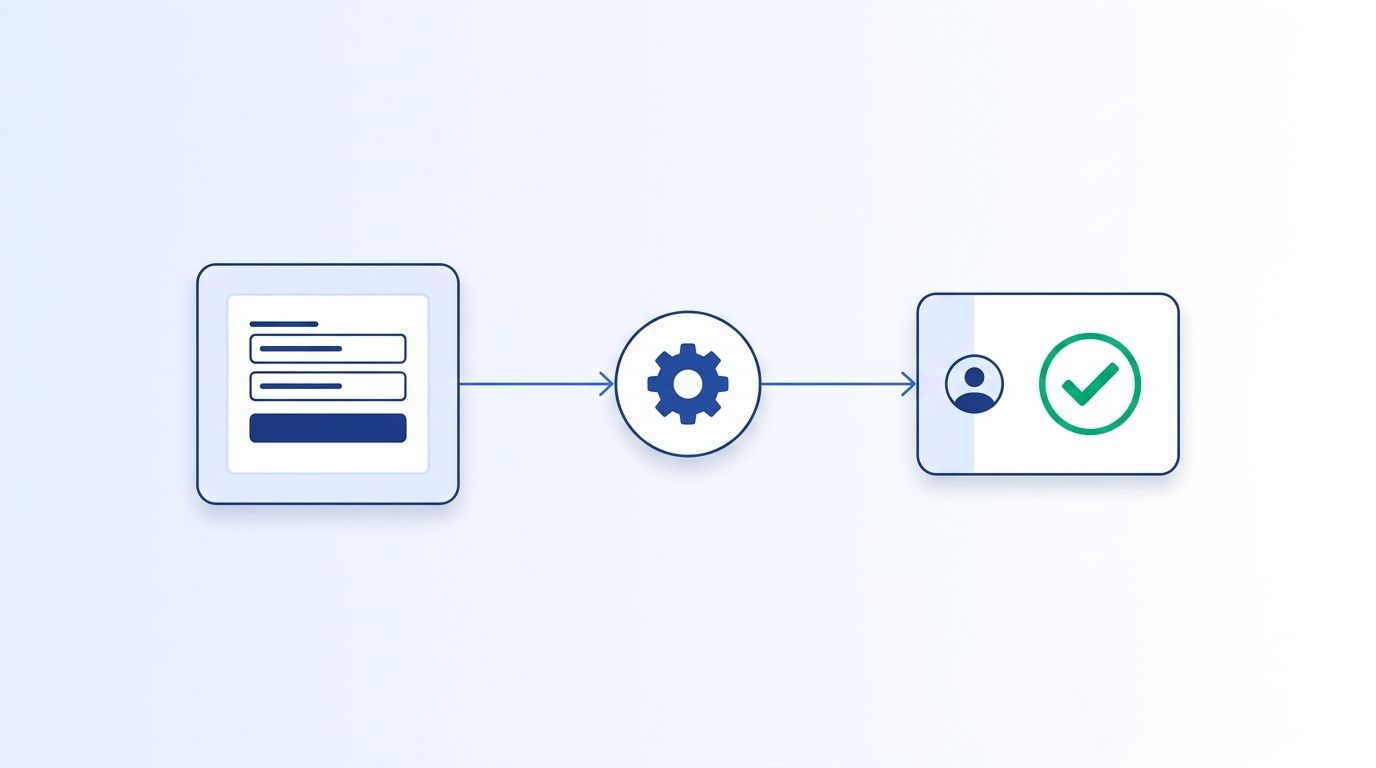
Platforms built around real-time signal triggers — like Datamagnet's signal monitoring, which can fire on job changes, keyword mentions, or company engagement events — enrich and route a lead the moment it's created rather than on the next batch sync. [UNIQUE INSIGHT] The vendors that win this use case aren't necessarily the ones with the biggest record count; they're the ones whose data pipeline is architected around "request-time" rather than "last-refreshed-Tuesday," because a stale record routed instantly is still a stale record.
Vendor Tradeoffs at a Glance
Here's how the four fit-determining factors line up across the five use cases covered above:
| Use Case | Best-Fit Pricing Model | Priority Factor | What to Check Before Signing |
|---|---|---|---|
| Enterprise RevOps | Seat-based annual contract | Governance & deduplication | Integration count vs. actual usage rate |
| SMB Sales Teams | Credit-based, pay-as-you-go | Fast time-to-value | Monthly credit caps vs. real prospecting volume |
| Developer-First Workflows | Usage-based, per API call | Uptime & documentation | SLA terms and request-time freshness |
| Compliance-Focused Prospecting | Either, but transparency matters more | Data provenance | Public documentation of sourcing and consent handling |
| Inbound Routing & Lead Qualification | Usage-based or event-based | Enrichment latency | Real-time trigger support vs. batch-only sync |
Ready to Match Your Stack to Your Use Case?
Picking a vendor by feature list gets teams into contracts they outgrow in a year. Picking by use case — pricing model, coverage, CRM alignment, and integration depth — gets a fit that scales with the workflow you actually run. See Datamagnet's API in action if your use case leans developer-first or inbound-routing heavy.
Frequently Asked Questions
What's the best B2B data vendor for enterprise RevOps teams?
Enterprise RevOps teams generally do best with seat-based platforms like ZoomInfo or Cognism that offer deep native CRM integrations and dedicated support. With 40% of enterprises running more than 16 tools and 33% of RevOps spend qualifying as shelfware (Rattle, 2025), prioritize integration depth over raw feature count.
Which sales intelligence platform is cheapest for SMB teams?
Credit-based, pay-as-you-go platforms like Apollo.io, Lusha, and RocketReach typically cost less upfront for SMB teams than enterprise seat contracts. They scale spend with usage rather than requiring an annual minimum, which matches teams whose prospecting volume varies month to month.
Do developer-first data APIs cost more than UI-based platforms?
Not necessarily — usage-based APIs bill per request, which often costs less than a seat license for teams that don't need a full sales UI. In 2025, 38% of SaaS companies used usage-based pricing, up from 27% in 2021 (OpenView / High Alpha, 2025 SaaS Benchmarks Report), reflecting broader buyer preference for pay-for-what-you-use models.
How do I check if a data vendor is GDPR/CCPA compliant?
Look for a public security or data-practices page that names the data sourcing method (public sources vs. third-party broker feeds), consent handling, and opt-out process. With GDPR fines reaching 2,685 cumulative cases by March 2026 (CMS Law, 2026), vendors without documented provenance are a growing legal risk.
Which vendor enriches leads fastest for inbound routing?
Platforms built on real-time, event-driven enrichment — triggered at form-fill or on signal events like a job change — enrich faster than platforms that rely on periodic database syncs. That matters given only 3.1% of B2B companies respond to inbound leads within an hour (RevenueHero, 2024).
Sources
- Fortune Business Insights, Sales Intelligence Market Size, Share & Statistics 2026–2034, retrieved 2026-07-20, https://www.fortunebusinessinsights.com/sales-intelligence-market-109103
- Postman, 2025 State of the API Report, retrieved 2026-07-20, https://www.postman.com/state-of-api/2025/
- Metronome (with Greyhound Capital), State of Usage-Based Pricing 2025 Report, retrieved 2026-07-20, https://metronome.com/state-of-usage-based-pricing-2025
- OpenView / High Alpha, 2025 SaaS Benchmarks Report, retrieved 2026-07-20, https://www.highalpha.com/saas-benchmarks
- CMS Law, GDPR Enforcement Tracker Report 2026, retrieved 2026-07-20, https://cms.law/en/int/publication/GDPR-Enforcement-Tracker-Report/numbers-and-figures
- TrustArc, 2025 Privacy Pulse Survey, retrieved 2026-07-20, https://trustarc.com/resource/expectation-reality-data-broker-use/
- RevenueHero, We Tested Lead Response Times Of 1000 B2B Sales Teams, retrieved 2026-07-20, https://www.revenuehero.io/blog/b2b-lead-response-times
- Validity, The State of CRM Data Management in 2025, retrieved 2026-07-20, https://www.validity.com/resource-center/the-state-of-crm-data-management-in-2025/
- Rattle, The State of RevOps 2025, retrieved 2026-07-20, https://try.gorattle.com/ebook-2025-state-of-revops-report-lp
- Salesforce (citing Gartner), State of Sales, 7th edition, retrieved 2026-07-20, https://www.salesforce.com/sales/state-of-sales/sales-statistics/
