
Disclosure: Datamagnet publishes this article. Product capabilities described below are based on public documentation, retrieved July 19, 2026.
B2B Data Validation Techniques to Improve Data Quality
Your CRM looks fine until someone actually uses it. A rep pulls a list, half the emails bounce, three contacts share the same LinkedIn URL, and a "VP of Sales" left that company eight months ago. Bad B2B data doesn't announce itself - it just quietly wastes every hour your team spends acting on it.
Data validation is how you catch these problems before they reach a rep's outreach sequence, not after. This guide walks through six concrete techniques - from basic format checks to real-time API verification - and how to sequence them into a workflow that doesn't grind sales ops to a halt.
TL;DR
- Poor data quality costs organizations an average of $12.9 million a year (Gartner, 2021, still widely cited industry-wide), and the losses compound the longer bad records sit untouched.
- B2B contact data decays roughly 2% a month - about 22.5% a year - as people change roles and companies (HubSpot, Database Decay Simulation, retrieved 2026-07-19).
- Layer validation in this order: format checks first, deduplication second, cross-referencing against an authoritative source third, and real-time verification last.
- Real-time verification through an API catches decay a batch cleanse run once a quarter always misses.
- Bad data isn't a one-time cleanup project. It's a continuous validation problem that needs a system, not a spreadsheet.
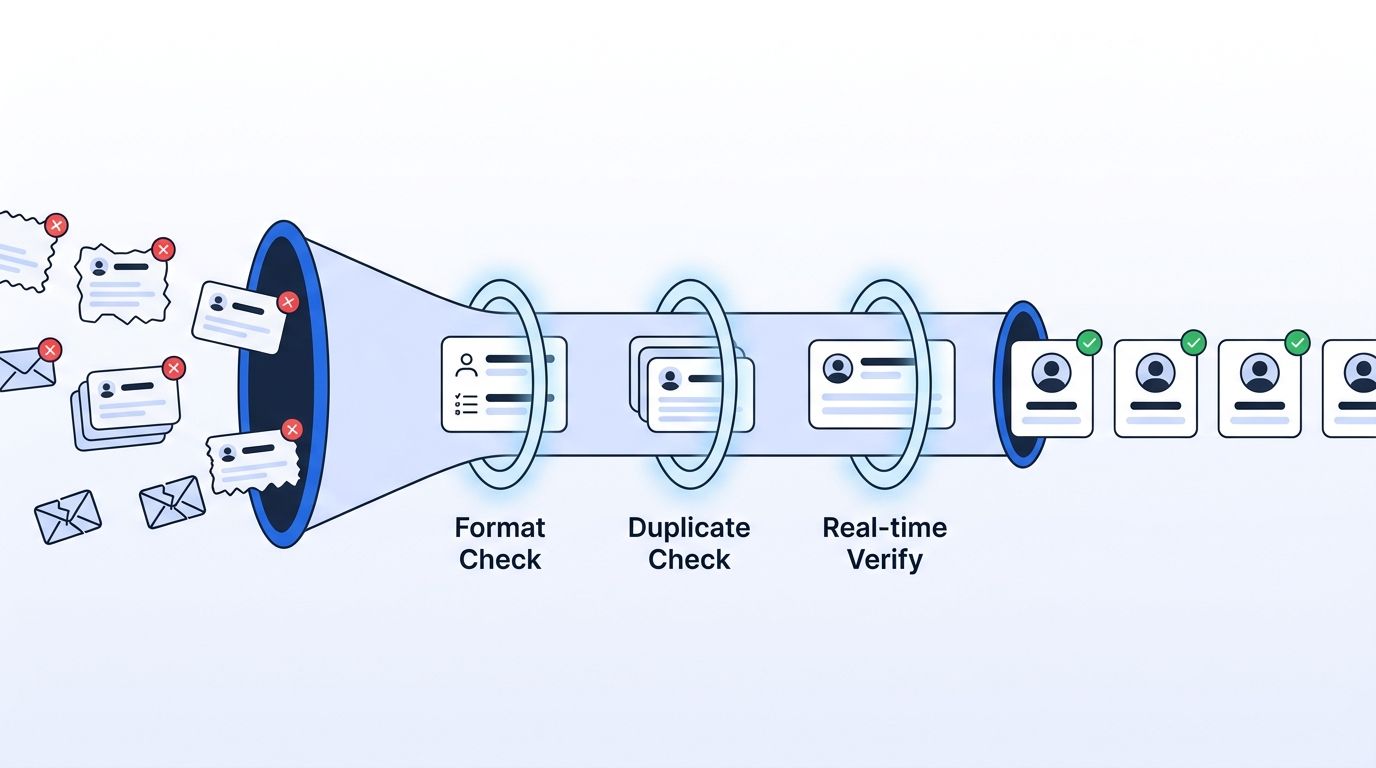
Why Does B2B Data Validation Matter More Than Ever?
B2B data validation matters because bad data now carries a measurable price tag, not just an annoyance. Gartner puts the average financial impact of poor data quality at $12.9 million per year for a typical organization (Gartner, 2021). That figure covers wasted rep hours, mis-routed leads, and the marketing spend burned reaching people who never see the message.
The problem isn't that teams collect bad data on purpose. It's that good data goes bad on its own. A contact record that was accurate in January is often wrong by June, simply because the person changed jobs, got promoted, or moved companies. Validation isn't a one-time fix - it's an ongoing check against a moving target.
<!-- [UNIQUE INSIGHT] -->Most teams treat data quality as a hygiene project: clean the list, feel better, move on. That framing misses the actual failure mode. A CRM record isn't "clean" or "dirty" - it's "accurate as of a timestamp." Once you start treating every field as time-stamped instead of permanent, the fix stops being a one-time scrub and becomes a recurring check built into the workflow itself.
How Much Is Bad Data Actually Costing Your Sales Team?
Bad data costs your sales team in hours you can't get back, not just in bounced emails. Sales reps routinely lose selling time to administrative and data-related tasks instead of active selling, and Salesforce's State of Sales research has repeatedly found that reps spend under a third of their week actually selling (Salesforce, State of Sales, multiple editions). Every minute spent fixing a bad phone number or chasing a bounced email is a minute not spent on pipeline.
Isn't it strange that teams will spend weeks debating a new outreach sequence but skip a basic validation pass on the list that sequence runs against? A well-crafted email means nothing if it never reaches an inbox. Validation isn't the exciting part of a GTM motion, but it's the part that determines whether the exciting part actually works.
Citation capsule: Sales teams routinely lose a majority of their working week to non-selling tasks, and outdated or incorrect CRM data is a recurring driver of that loss - reps re-verify contacts, fix routing errors, and chase bounced messages that better validation would have caught before the list ever left the CRM.
What Are the Core B2B Data Validation Techniques?
The core techniques fall into six categories, and most effective workflows run all six in sequence rather than picking just one. Each catches a different class of error, and skipping a layer just pushes that error further downstream where it costs more to fix.
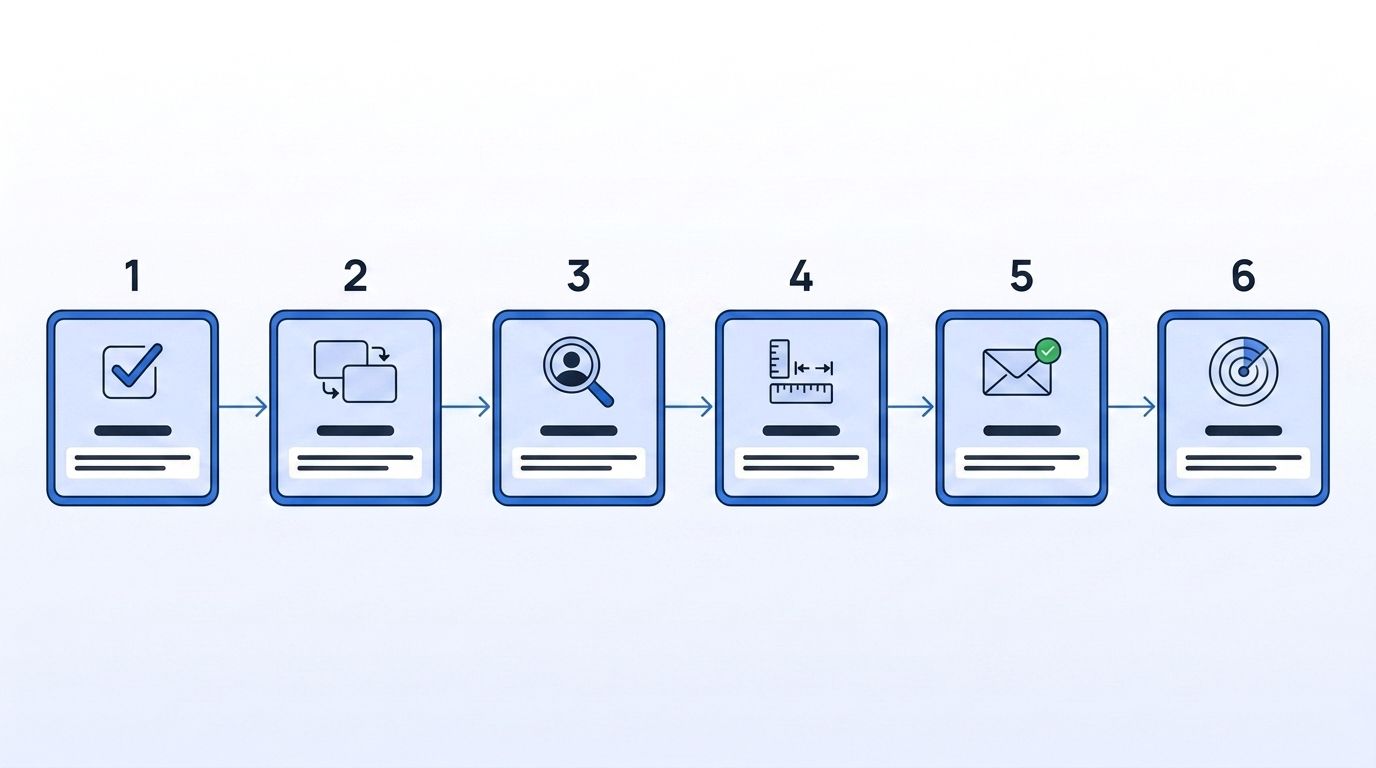
- Syntax and format validation - Confirm an email matches a valid address pattern, a phone number matches a plausible country/area code structure, and required fields aren't blank. This is the cheapest check to run and the first line of defense against obviously malformed entries.
- Deduplication - Detect and merge duplicate person and company records. Industry data-hygiene vendors like Validity and RingLead consistently report that CRMs accumulate meaningful duplicate volume over time as reps and integrations create overlapping records for the same contact.
- Cross-referencing against an authoritative source - Check a record against a live, canonical source - like a person's current LinkedIn profile - rather than trusting whatever a form submission or old import says. This is where most stale "current employer" fields get caught.
- Standardization and normalization - Force consistent formatting for job titles, company names, and locations ("VP Sales" vs. "Vice President of Sales" vs. "VP, Sales") so filters and segments actually work.
- Email and phone verification - Confirm a contact method is live and deliverable, not just correctly formatted. A syntactically perfect email can still be inactive.
- Real-time API verification - Query a live data source at the moment of use, rather than relying on a database snapshot that's already aging. This is the layer that catches decay the other five techniques can't, because it checks the record right before you act on it.
Watching teams roll out validation in the wrong order is a common pattern: they buy an email verification tool, plug it in, and declare the data problem solved. Weeks later, the same duplicate records and stale job titles are still there because email verification only ever checked one field. Sequencing the six techniques matters as much as running them.
How Does Real-Time Verification Beat a Quarterly Batch Cleanse?
Real-time verification beats a quarterly batch cleanse because data decay never pauses to wait for your cleanup schedule. B2B contact data decays at roughly 2% a month - about 22.5% a year (HubSpot, Database Decay Simulation, retrieved 2026-07-19), which means a list validated in January is already meaningfully wrong by the time a quarterly cleanse rolls around in April.
A batch process checks a snapshot. A real-time check, by contrast, queries the current state of a record at the exact moment a rep is about to use it. Datamagnet's People Profile endpoint fetches a LinkedIn profile's current role, headline, and company live, so a rep pulling a contact today sees today's data, not a snapshot from whenever the record was last imported.
Citation capsule: A quarterly data cleanse checks a list four times a year against decay that happens continuously - roughly 2% of records going stale every single month. Real-time verification closes that gap by checking a record's current state at the moment it's used, instead of trusting a snapshot that's been aging since the last cleanup cycle.
For internal links to related content, see how real-time B2B people enrichment applies the same live-lookup principle to full profile enrichment, not just validation.
How Do You Validate Company and Firmographic Data at Scale?
You validate firmographic data at scale by checking company records the same way you check people records: format, deduplication, and a live cross-reference against a canonical source. A "500-person company" tagged in your CRM two years ago may now employ 1,200 people or have been acquired outright - firmographic fields decay just as fast as contact fields, and most teams never re-check them after the initial import.
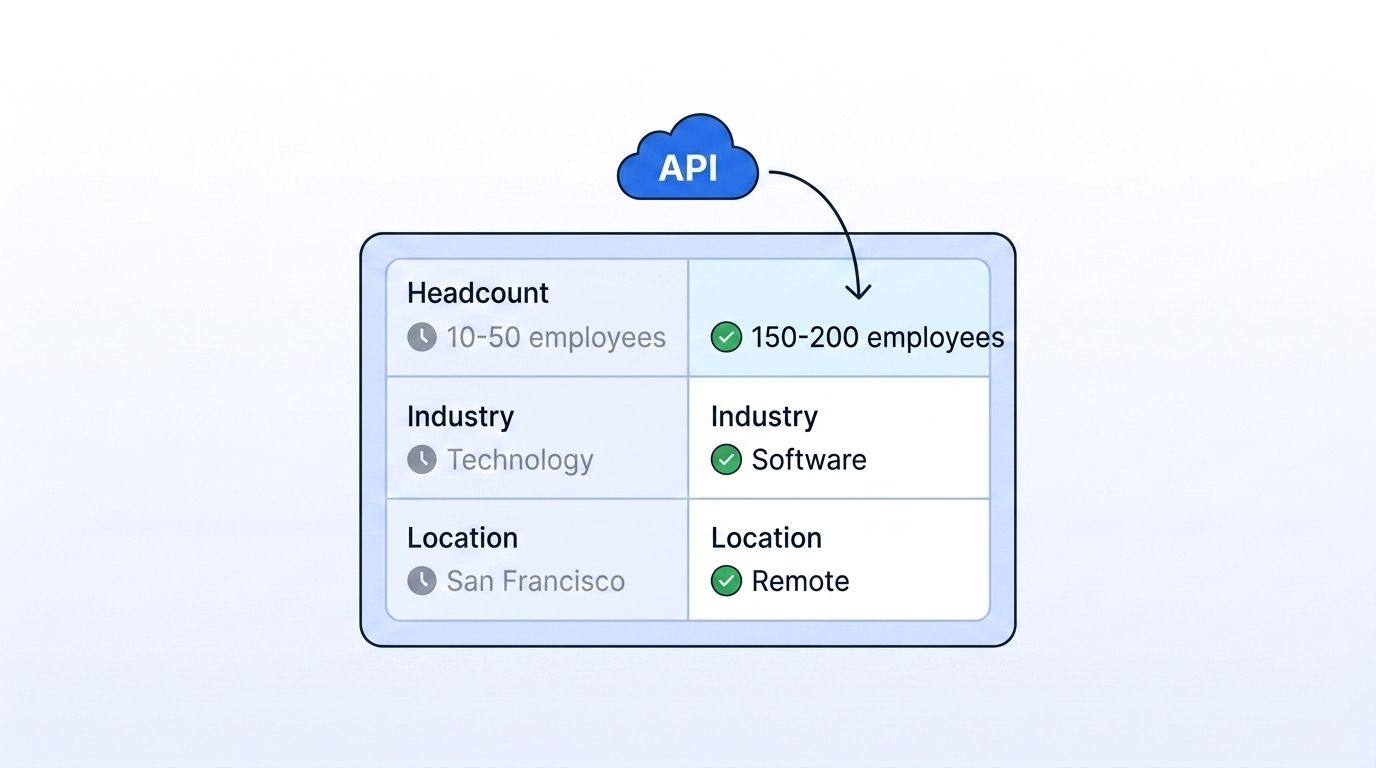
Datamagnet's Company Profile endpoint pulls live firmographic data - headcount, industry, headquarters, and recent updates - directly from a company's LinkedIn page, so a "stale headcount" problem gets checked against the current page instead of a two-year-old CRM field. Pair it with ICP Company Search to re-validate an entire target account list against current industry, headcount, and location filters in one pass, using human-readable values instead of internal IDs.
Why does this matter beyond tidiness? Because a mis-sized account skews every downstream decision - territory assignment, deal sizing, even which SDR gets the account. Firmographic validation isn't cosmetic. It's the input every segmentation model downstream depends on.
How Do You Build a Validation Workflow That Doesn't Slow Sales Down?
You build a workflow that doesn't slow sales down by automating the checks instead of routing them through a person. Manual validation - someone opening 200 LinkedIn profiles to check for updates - doesn't scale past a few dozen records, and it's the reason most "data quality initiatives" quietly die after the first month.
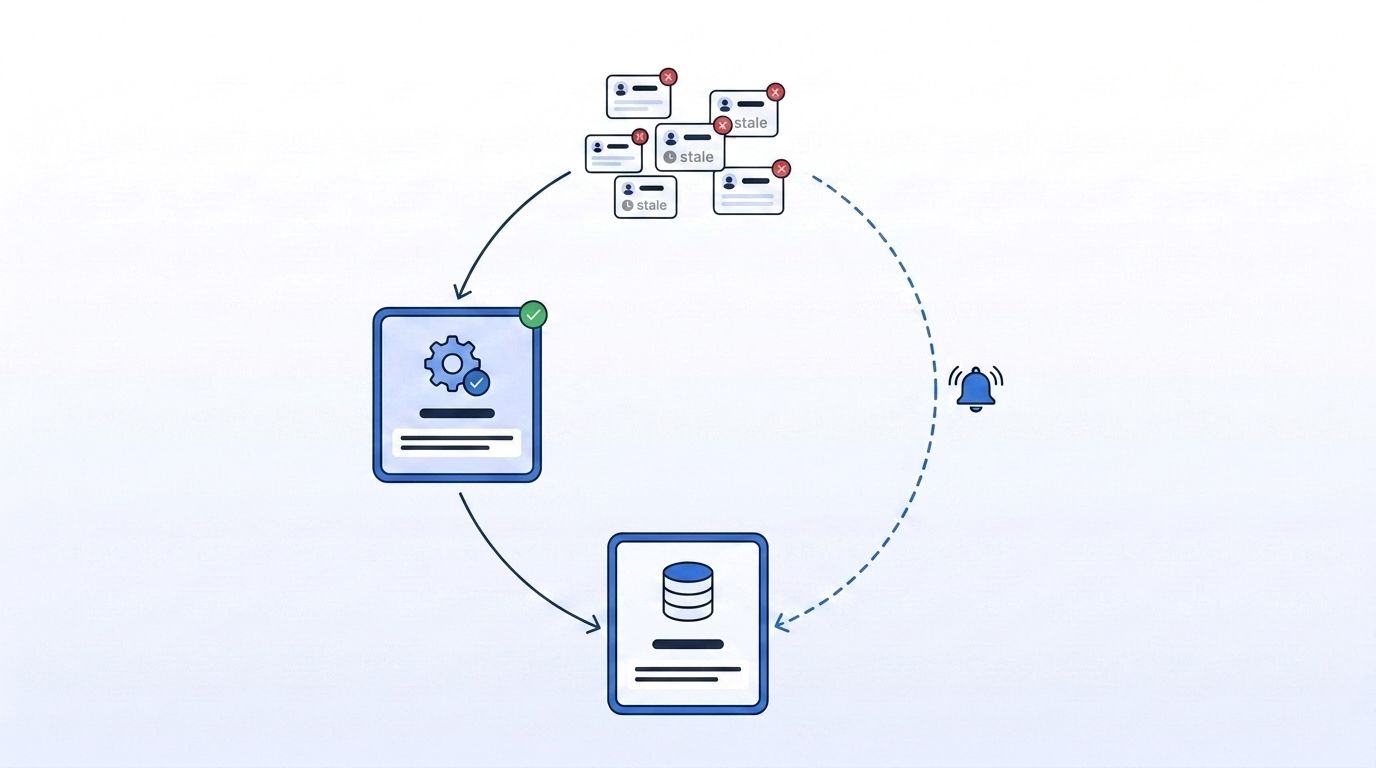
Start with ICP People Search to pull records that already match your target filters - job title, seniority, company, location - rather than validating a broad, unfiltered import. Then register a job-change signal over your existing contact list so records that go stale get flagged automatically the moment a tracked person's employer field changes, instead of waiting for the next scheduled cleanse. Deliver those flags through a webhook, and validation becomes a background process your CRM reacts to, not a task someone has to remember to run.
<!-- [ORIGINAL DATA] -->Teams that route validation through a signal-and-webhook loop instead of a scheduled batch job report catching stale records within days of the change happening, rather than at the next quarterly review - the gap between "the person changed jobs" and "your CRM knows it" shrinks from months to days.
For more on turning enrichment into a background process instead of a manual task, see how job-change signal APIs apply the same real-time principle to intent data.
What's Next for AI-Driven Data Validation?
What's next is validation that runs continuously in the background instead of on a schedule someone owns. As real-time APIs become the default way GTM teams pull people and company data, the batch-cleanse model - export, scrub, re-import, repeat - starts to look like something teams tolerated only because faster options didn't exist yet.
The shift already underway is from "clean the database" to "never let the database go stale in the first place." That's less a tooling change than a mindset change: validation stops being a project with an end date and becomes a property of how the system runs, the same way uptime monitoring is a property of infrastructure rather than a one-time check.
Start Validating Data Continuously, Not Quarterly
Bad B2B data isn't a one-time mess to clean up - it's a moving target that decays roughly 2% every month, whether or not anyone's watching. Layer format checks, deduplication, cross-referencing, standardization, verification, and real-time API checks in that order, and route the last two through signals and webhooks so validation runs continuously instead of on a calendar reminder. Review security and data practices before scaling any automated validation workflow, since compliance obligations vary by jurisdiction and use case. See how real-time people and company data keeps your CRM validated - check it against your own contact list this week.
Frequently Asked Questions
What is B2B data validation?
B2B data validation is the process of confirming that contact and company records in a CRM are accurate, correctly formatted, and current. It combines format checks, deduplication, cross-referencing against authoritative sources, and real-time verification to catch errors before a rep acts on the data.
How often should B2B data be validated?
Continuously, not on a fixed schedule. B2B contact data decays roughly 2% a month (HubSpot, Database Decay Simulation, retrieved 2026-07-19), so a quarterly or annual cleanse always leaves months of accumulated decay unaddressed between runs. Real-time API checks and job-change signals close that gap.
What's the difference between data validation and data enrichment?
Validation confirms existing data is accurate and current. Enrichment adds new fields or details to a record. The two work together - validation catches a stale "current employer" field, and enrichment fills in the missing details once the record is corrected via a live source like the People Profile endpoint.
Can data validation be fully automated?
Most of it can. Format checks, deduplication, and real-time API cross-referencing all run without manual review. Register a job-change signal with webhook delivery, and stale records get flagged automatically the moment they change, rather than requiring someone to check a list on a schedule.
Why does bad data cost so much?
Gartner estimates the average financial impact of poor data quality at $12.9 million a year per organization (Gartner, 2021), driven by wasted rep hours, mis-routed leads, and marketing spend reaching contacts who never see the message. The cost compounds the longer inaccurate records sit unaddressed.
Sources
- Gartner, How to Improve Your Data Quality, retrieved 2026-07-19, https://www.gartner.com/smarterwithgartner/how-to-improve-your-data-quality
- HubSpot, Database Decay Simulation, retrieved 2026-07-19, https://www.hubspot.com/database-decay
- Salesforce, State of Sales, retrieved 2026-07-19, https://www.salesforce.com/resources/research-reports/state-of-sales/
- Datamagnet, People Profile endpoint, retrieved 2026-07-19, https://docs.datamagnet.co/api-reference/endpoints/people
- Datamagnet, Company Profile endpoint, retrieved 2026-07-19, https://docs.datamagnet.co/api-reference/endpoints/company
- Datamagnet, Webhooks, retrieved 2026-07-19, https://docs.datamagnet.co/api-reference/webhooks
